

298 Seismology and Plate Tectonics
No seismicity
No seismicity
Normal
fault
Normal
fault
Ridge
Strike-slip fault
(left-lateral)
Strike-slip fault
(right-lateral)
Ridge
Transform
Transform
Fracture zone
Pacific Ocean
Canada
Yellowstone
A b s o lu t e m o t io n
Snake River Plain
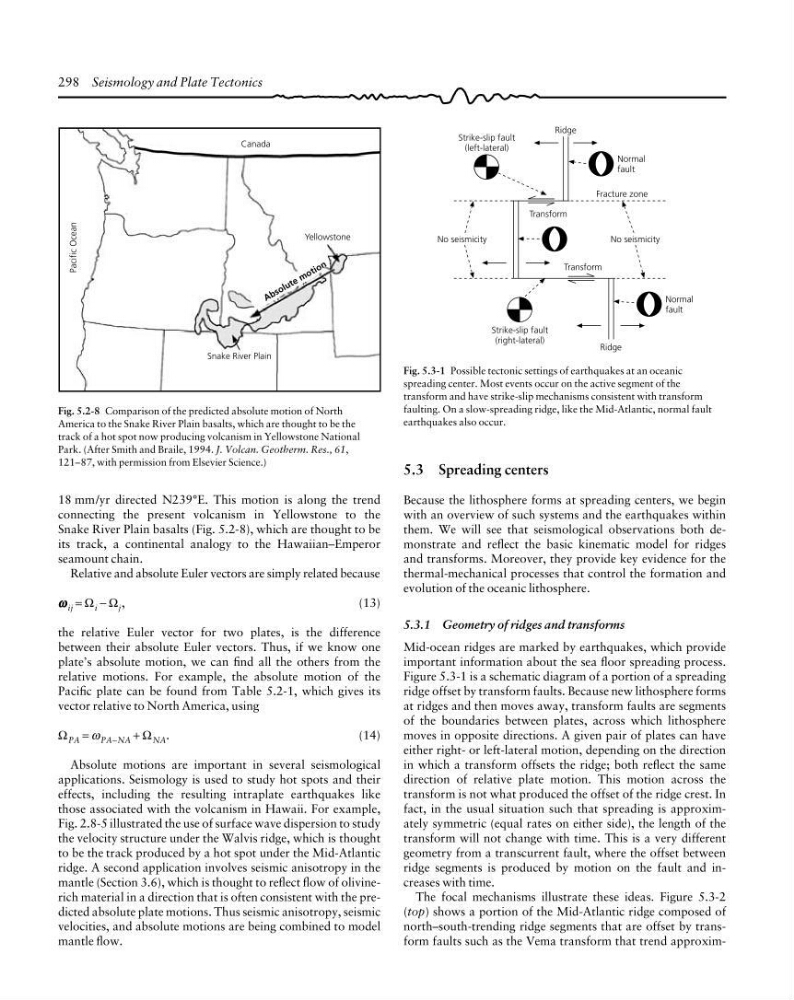
Fig. 5.2-8 Comparison of the predicted absolute motion of North
America to the Snake River Plain basalts, which are thought to be the
track of a hot spot now producing volcanism in Yellowstone National
Park. (After Smith and Braile, 1994. J. Volcan. Geotherm. Res., 61,
121–87, with permission from Elsevier Science.)
Fig. 5.3-1 Possible tectonic settings of earthquakes at an oceanic
spreading center. Most events occur on the active segment of the
transform and have strike-slip mechanisms consistent with transform
faulting. On a slow-spreading ridge, like the Mid-Atlantic, normal fault
earthquakes also occur.
5.3 Spreading centers
Because the lithosphere forms at spreading centers, we begin
with an overview of such systems and the earthquakes within
them. We will see that seismological observations both demonstrate and reflect the basic kinematic model for ridges
and transforms. Moreover, they provide key evidence for the
thermal-mechanical processes that control the formation and
evolution of the oceanic lithosphere.
5.3.1 Geometry of ridges and transforms
Mid-ocean ridges are marked by earthquakes, which provide
important information about the sea floor spreading process.
Figure 5.3-1 is a schematic diagram of a portion of a spreading
ridge offset by transform faults. Because new lithosphere forms
at ridges and then moves away, transform faults are segments
of the boundaries between plates, across which lithosphere
moves in opposite directions. A given pair of plates can have
either right- or left-lateral motion, depending on the direction
in which a transform offsets the ridge; both reflect the same
direction of relative plate motion. This motion across the
transform is not what produced the offset of the ridge crest. In
fact, in the usual situation such that spreading is approximately symmetric (equal rates on either side), the length of the
transform will not change with time. This is a very different
geometry from a transcurrent fault, where the offset between
ridge segments is produced by motion on the fault and increases with time.
The focal mechanisms illustrate these ideas. Figure 5.3-2
(top) shows a portion of the Mid-Atlantic ridge composed of
north–south-trending ridge segments that are offset by transform faults such as the Vema transform that trend approxim18 mm/yr directed N239°E. This motion is along the trend
connecting the present volcanism in Yellowstone to the
Snake River Plain basalts (Fig. 5.2-8), which are thought to be
its track, a continental analogy to the Hawaiian–Emperor
seamount chain.
Relative and absolute Euler vectors are simply related because
ω
ω ω
ω ω ij = Ω i − Ω j ,
(13)
the relative Euler vector for two plates, is the difference
between their absolute Euler vectors. Thus, if we know one
plate’s absolute motion, we can find all the others from the
relative motions. For example, the absolute motion of the
Pacific plate can be found from Table 5.2-1, which gives its
vector relative to North America, using
Ω PA = ω PA−NA + Ω NA .
(14)
Absolute motions are important in several seismological
applications. Seismology is used to study hot spots and their
effects, including the resulting intraplate earthquakes like
those associated with the volcanism in Hawaii. For example,
Fig. 2.8-5 illustrated the use of surface wave dispersion to study
the velocity structure under the Walvis ridge, which is thought
to be the track produced by a hot spot under the Mid-Atlantic
ridge. A second application involves seismic anisotropy in the
mantle (Section 3.6), which is thought to reflect flow of olivinerich material in a direction that is often consistent with the predicted absolute plate motions. Thus seismic anisotropy, seismic
velocities, and absolute motions are being combined to model
mantle flow.
No seismicity
No seismicity
Normal
fault
Normal
fault
Ridge
Strike-slip fault
(left-lateral)
Strike-slip fault
(right-lateral)
Ridge
Transform
Transform
Fracture zone
Pacific Ocean
Canada
Yellowstone
A b s o lu t e m o t io n
Snake River Plain
Fig. 5.2-8 Comparison of the predicted absolute motion of North
America to the Snake River Plain basalts, which are thought to be the
track of a hot spot now producing volcanism in Yellowstone National
Park. (After Smith and Braile, 1994. J. Volcan. Geotherm. Res., 61,
121–87, with permission from Elsevier Science.)
Fig. 5.3-1 Possible tectonic settings of earthquakes at an oceanic
spreading center. Most events occur on the active segment of the
transform and have strike-slip mechanisms consistent with transform
faulting. On a slow-spreading ridge, like the Mid-Atlantic, normal fault
earthquakes also occur.
5.3 Spreading centers
Because the lithosphere forms at spreading centers, we begin
with an overview of such systems and the earthquakes within
them. We will see that seismological observations both demonstrate and reflect the basic kinematic model for ridges
and transforms. Moreover, they provide key evidence for the
thermal-mechanical processes that control the formation and
evolution of the oceanic lithosphere.
5.3.1 Geometry of ridges and transforms
Mid-ocean ridges are marked by earthquakes, which provide
important information about the sea floor spreading process.
Figure 5.3-1 is a schematic diagram of a portion of a spreading
ridge offset by transform faults. Because new lithosphere forms
at ridges and then moves away, transform faults are segments
of the boundaries between plates, across which lithosphere
moves in opposite directions. A given pair of plates can have
either right- or left-lateral motion, depending on the direction
in which a transform offsets the ridge; both reflect the same
direction of relative plate motion. This motion across the
transform is not what produced the offset of the ridge crest. In
fact, in the usual situation such that spreading is approximately symmetric (equal rates on either side), the length of the
transform will not change with time. This is a very different
geometry from a transcurrent fault, where the offset between
ridge segments is produced by motion on the fault and increases with time.
The focal mechanisms illustrate these ideas. Figure 5.3-2
(top) shows a portion of the Mid-Atlantic ridge composed of
north–south-trending ridge segments that are offset by transform faults such as the Vema transform that trend approxim18 mm/yr directed N239°E. This motion is along the trend
connecting the present volcanism in Yellowstone to the
Snake River Plain basalts (Fig. 5.2-8), which are thought to be
its track, a continental analogy to the Hawaiian–Emperor
seamount chain.
Relative and absolute Euler vectors are simply related because
ω
ω ω
ω ω ij = Ω i − Ω j ,
(13)
the relative Euler vector for two plates, is the difference
between their absolute Euler vectors. Thus, if we know one
plate’s absolute motion, we can find all the others from the
relative motions. For example, the absolute motion of the
Pacific plate can be found from Table 5.2-1, which gives its
vector relative to North America, using
Ω PA = ω PA−NA + Ω NA .
(14)
Absolute motions are important in several seismological
applications. Seismology is used to study hot spots and their
effects, including the resulting intraplate earthquakes like
those associated with the volcanism in Hawaii. For example,
Fig. 2.8-5 illustrated the use of surface wave dispersion to study
the velocity structure under the Walvis ridge, which is thought
to be the track produced by a hot spot under the Mid-Atlantic
ridge. A second application involves seismic anisotropy in the
mantle (Section 3.6), which is thought to reflect flow of olivinerich material in a direction that is often consistent with the predicted absolute plate motions. Thus seismic anisotropy, seismic
velocities, and absolute motions are being combined to model
mantle flow.