

Average displacement (m)
10
1
10
–1
10
–2
log (AD) = –1.43 + 0.88 * log (SRL)
strike slip
reverse
normal
1
10
100
10
3
Moment magnitude (M
w )
9
8
7
6
5
4
M w = 5.08 + 1.16 * log (SRL)
1
10
100
10
3
strike slip
reverse
normal
Surface rupture length (km)
Surface rupture length (km)
4.6 Source parameters 269
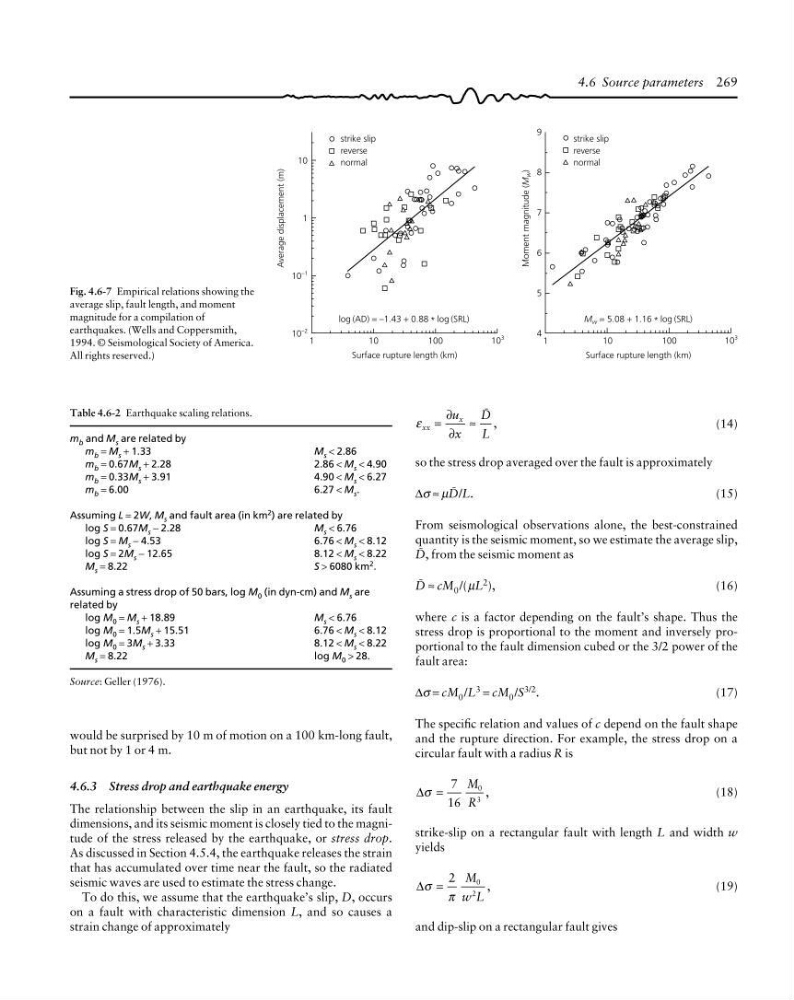
Fig. 4.6-7 Empirical relations showing the
average slip, fault length, and moment
magnitude for a compilation of
earthquakes. (Wells and Coppersmith,
1994. © Seismological Society of America.
All rights reserved.)
would be surprised by 10 m of motion on a 100 km-long fault,
but not by 1 or 4 m.
4.6.3 Stress drop and earthquake energy
The relationship between the slip in an earthquake, its fault
dimensions, and its seismic moment is closely tied to the magnitude of the stress released by the earthquake, or stress drop.
As discussed in Section 4.5.4, the earthquake releases the strain
that has accumulated over time near the fault, so the radiated
seismic waves are used to estimate the stress change.
To do this, we assume that the earthquake’s slip, D, occurs
on a fault with characteristic dimension L, and so causes a
strain change of approximately
ε xx
x
u
x
L
=
≈ ,
∂
∂
C
(14)
so the stress drop averaged over the fault is approximately
∆σ ≈ µC/L.
(15)
From seismological observations alone, the best-constrained
quantity is the seismic moment, so we estimate the average slip,
C, from the seismic moment as
C ≈ cM 0 /(µL
2 ),
(16)
where c is a factor depending on the fault’s shape. Thus the
stress drop is proportional to the moment and inversely proportional to the fault dimension cubed or the 3/2 power of the
fault area:
∆σ = cM 0 /L 3 = cM 0 /S 3/2 .
(17)
The specific relation and values of c depend on the fault shape
and the rupture direction. For example, the stress drop on a
circular fault with a radius R is
∆σ
,
=
7
16
0
3
M
R
(18)
strike-slip on a rectangular fault with length L and width w
yields
∆σ π
,
=
2
0
2
M
w L
(19)
and dip-slip on a rectangular fault gives
Table 4.6-2 Earthquake scaling relations.
m b and M s are related by
m b = M s + 1.33
M s < 2.86
m b = 0.67M s + 2.28
2.86 < M s < 4.90
m b = 0.33M s + 3.91
4.90 < M s < 6.27
m b = 6.00
6.27 < M s .
Assuming L = 2W, M s and fault area (in km
2 ) are related by
log S = 0.67M s − 2.28
M s < 6.76
log S = M s − 4.53
6.76 < M s < 8.12
log S = 2M s − 12.65
8.12 < M s < 8.22
M s = 8.22
S > 6080 km
2 .
Assuming a stress drop of 50 bars, log M 0 (in dyn-cm) and M s are
related by
log M 0 = M s + 18.89
M s < 6.76
log M 0 = 1.5M s + 15.51
6.76 < M s < 8.12
log M 0 = 3M s + 3.33
8.12 < M s < 8.22
M s = 8.22
log M 0 > 28.
Source: Geller (1976).
10
1
10
–1
10
–2
log (AD) = –1.43 + 0.88 * log (SRL)
strike slip
reverse
normal
1
10
100
10
3
Moment magnitude (M
w )
9
8
7
6
5
4
M w = 5.08 + 1.16 * log (SRL)
1
10
100
10
3
strike slip
reverse
normal
Surface rupture length (km)
Surface rupture length (km)
4.6 Source parameters 269
Fig. 4.6-7 Empirical relations showing the
average slip, fault length, and moment
magnitude for a compilation of
earthquakes. (Wells and Coppersmith,
1994. © Seismological Society of America.
All rights reserved.)
would be surprised by 10 m of motion on a 100 km-long fault,
but not by 1 or 4 m.
4.6.3 Stress drop and earthquake energy
The relationship between the slip in an earthquake, its fault
dimensions, and its seismic moment is closely tied to the magnitude of the stress released by the earthquake, or stress drop.
As discussed in Section 4.5.4, the earthquake releases the strain
that has accumulated over time near the fault, so the radiated
seismic waves are used to estimate the stress change.
To do this, we assume that the earthquake’s slip, D, occurs
on a fault with characteristic dimension L, and so causes a
strain change of approximately
ε xx
x
u
x
L
=
≈ ,
∂
∂
C
(14)
so the stress drop averaged over the fault is approximately
∆σ ≈ µC/L.
(15)
From seismological observations alone, the best-constrained
quantity is the seismic moment, so we estimate the average slip,
C, from the seismic moment as
C ≈ cM 0 /(µL
2 ),
(16)
where c is a factor depending on the fault’s shape. Thus the
stress drop is proportional to the moment and inversely proportional to the fault dimension cubed or the 3/2 power of the
fault area:
∆σ = cM 0 /L 3 = cM 0 /S 3/2 .
(17)
The specific relation and values of c depend on the fault shape
and the rupture direction. For example, the stress drop on a
circular fault with a radius R is
∆σ
,
=
7
16
0
3
M
R
(18)
strike-slip on a rectangular fault with length L and width w
yields
∆σ π
,
=
2
0
2
M
w L
(19)
and dip-slip on a rectangular fault gives
Table 4.6-2 Earthquake scaling relations.
m b and M s are related by
m b = M s + 1.33
M s < 2.86
m b = 0.67M s + 2.28
2.86 < M s < 4.90
m b = 0.33M s + 3.91
4.90 < M s < 6.27
m b = 6.00
6.27 < M s .
Assuming L = 2W, M s and fault area (in km
2 ) are related by
log S = 0.67M s − 2.28
M s < 6.76
log S = M s − 4.53
6.76 < M s < 8.12
log S = 2M s − 12.65
8.12 < M s < 8.22
M s = 8.22
S > 6080 km
2 .
Assuming a stress drop of 50 bars, log M 0 (in dyn-cm) and M s are
related by
log M 0 = M s + 18.89
M s < 6.76
log M 0 = 1.5M s + 15.51
6.76 < M s < 8.12
log M 0 = 3M s + 3.33
8.12 < M s < 8.22
M s = 8.22
log M 0 > 28.
Source: Geller (1976).