

Another class of non-double-couple seismic sources are compensated linear vector dipoles (CLVDs). These are sets of three
force dipoles that are compensated, with one dipole −2 times
the magnitude of the others:
M
/
/
.
=
−
⎛
⎝
⎜
⎜
⎞
⎠
⎟
⎟
λ
λ
λ
0
0
0
2 0
0
0
2
(18)
The trace of the moment tensor is zero, so there is no isotropic
component. CLVDs are illustrated by the strange-looking
bottom two rows in Fig. 4.4-6. By contrast with the beachballlooking focal mechanisms of double couples, the first motions
for CLVDs look like baseballs (fifth row) or eyeballs (sixth
row). Although sources with large CLVD components are
rare, they have been identified in several complicated tectonic
environments.
Two primary explanations have been offered for CLVD
mechanisms. Especially in volcanic areas, it is natural to
think of an inflating magma dike, which can be modeled as a
crack opening under tension. The moment tensor is for such a
crack is 3
M
,
=
+
⎛
⎝
⎜
⎜
⎞
⎠
⎟
⎟
λ
λ
λ
µ
0
0
0
0
0 0
2
(19)
where λ and µ are the Lamé elastic constants (Eqn 2.3.69). The
trace of this tensor is 3λ + 2µ, which is positive because the crack
opened. Thus we can decompose the tensor into two terms:
λ
λ
λ
µ
µ
µ
µ
0
0
0
0
0 0
2
0 0
0
0
0 0
2 3
0
0
0
23
0
0
0
43
/
/
/
.
+
⎛
⎝
⎜
⎜
⎞
⎠
⎟
⎟
=
⎛
⎝
⎜
⎜
⎞
⎠
⎟
⎟
+
−
−
⎛
⎝
⎜
⎜ ⎜
⎞
⎠
⎟
⎟ ⎟
E
E
E
(20)
The first term is an isotropic tensor whose diagonal components E = λ + 2/3µ are one-third of the trace, and the second
term is a CLVD. Because, as we will see shortly, inversion of
moment tensors for shallow earthquakes cannot resolve the
isotropic component, the seismic waves from such a crack
would look like a CLVD.
An alternative explanation is that CLVDs are due to nearsimultaneous earthquakes on nearby faults of different geometries. For example, consider the sum of two double-couple
sources with moments M 0 and 2M 0 , expressed in the principal
axis coordinate system (Eqn 16):
M
M
M
M
M
M
M
0
0
0
0
0
0
0
0
0
0 0
0
0 0
0
0
0
0 2
0
0
0
2
0
0
0
2
0
0
0
−
⎛
⎝
⎜
⎜
⎜
⎞
⎠
⎟
⎟
⎟
+
−
⎛
⎝
⎜
⎜
⎜
⎞
⎠
⎟
⎟
⎟
=
−
⎛
⎝
⎜
⎜
⎜
⎞
⎠
⎟
⎟
⎟
.
(21)
4.4 Moment tensors 245
Explosion
M zz
M yy
M xx
Triple dipole
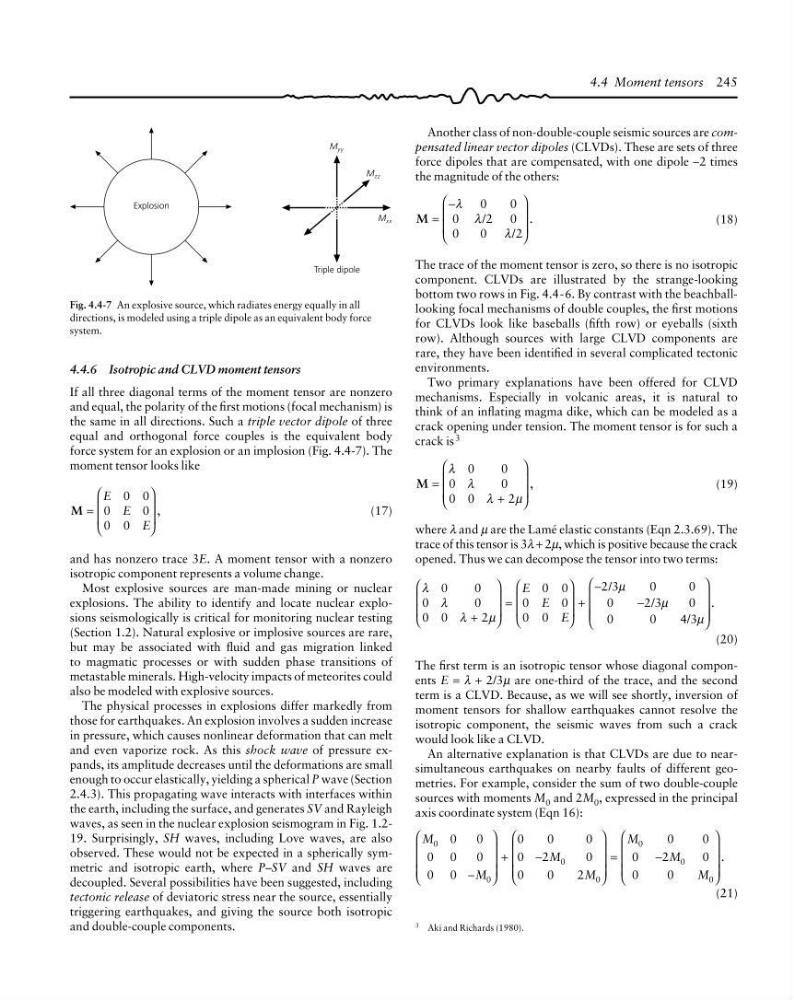
Fig. 4.4-7 An explosive source, which radiates energy equally in all
directions, is modeled using a triple dipole as an equivalent body force
system.
4.4.6 Isotropic and CLVD moment tensors
If all three diagonal terms of the moment tensor are nonzero
and equal, the polarity of the first motions (focal mechanism) is
the same in all directions. Such a triple vector dipole of three
equal and orthogonal force couples is the equivalent body
force system for an explosion or an implosion (Fig. 4.4-7). The
moment tensor looks like
M
,
=
⎛
⎝
⎜
⎜
⎞
⎠
⎟
⎟
E
E
E
0 0
0
0
0 0
(17)
and has nonzero trace 3E. A moment tensor with a nonzero
isotropic component represents a volume change.
Most explosive sources are man-made mining or nuclear
explosions. The ability to identify and locate nuclear explosions seismologically is critical for monitoring nuclear testing
(Section 1.2). Natural explosive or implosive sources are rare,
but may be associated with fluid and gas migration linked
to magmatic processes or with sudden phase transitions of
metastable minerals. High-velocity impacts of meteorites could
also be modeled with explosive sources.
The physical processes in explosions differ markedly from
those for earthquakes. An explosion involves a sudden increase
in pressure, which causes nonlinear deformation that can melt
and even vaporize rock. As this shock wave of pressure expands, its amplitude decreases until the deformations are small
enough to occur elastically, yielding a spherical P wave (Section
2.4.3). This propagating wave interacts with interfaces within
the earth, including the surface, and generates SV and Rayleigh
waves, as seen in the nuclear explosion seismogram in Fig. 1.219. Surprisingly, SH waves, including Love waves, are also
observed. These would not be expected in a spherically symmetric and isotropic earth, where P–SV and SH waves are
decoupled. Several possibilities have been suggested, including
tectonic release of deviatoric stress near the source, essentially
triggering earthquakes, and giving the source both isotropic
and double-couple components.
3 Aki and Richards (1980).
force dipoles that are compensated, with one dipole −2 times
the magnitude of the others:
M
/
/
.
=
−
⎛
⎝
⎜
⎜
⎞
⎠
⎟
⎟
λ
λ
λ
0
0
0
2 0
0
0
2
(18)
The trace of the moment tensor is zero, so there is no isotropic
component. CLVDs are illustrated by the strange-looking
bottom two rows in Fig. 4.4-6. By contrast with the beachballlooking focal mechanisms of double couples, the first motions
for CLVDs look like baseballs (fifth row) or eyeballs (sixth
row). Although sources with large CLVD components are
rare, they have been identified in several complicated tectonic
environments.
Two primary explanations have been offered for CLVD
mechanisms. Especially in volcanic areas, it is natural to
think of an inflating magma dike, which can be modeled as a
crack opening under tension. The moment tensor is for such a
crack is 3
M
,
=
+
⎛
⎝
⎜
⎜
⎞
⎠
⎟
⎟
λ
λ
λ
µ
0
0
0
0
0 0
2
(19)
where λ and µ are the Lamé elastic constants (Eqn 2.3.69). The
trace of this tensor is 3λ + 2µ, which is positive because the crack
opened. Thus we can decompose the tensor into two terms:
λ
λ
λ
µ
µ
µ
µ
0
0
0
0
0 0
2
0 0
0
0
0 0
2 3
0
0
0
23
0
0
0
43
/
/
/
.
+
⎛
⎝
⎜
⎜
⎞
⎠
⎟
⎟
=
⎛
⎝
⎜
⎜
⎞
⎠
⎟
⎟
+
−
−
⎛
⎝
⎜
⎜ ⎜
⎞
⎠
⎟
⎟ ⎟
E
E
E
(20)
The first term is an isotropic tensor whose diagonal components E = λ + 2/3µ are one-third of the trace, and the second
term is a CLVD. Because, as we will see shortly, inversion of
moment tensors for shallow earthquakes cannot resolve the
isotropic component, the seismic waves from such a crack
would look like a CLVD.
An alternative explanation is that CLVDs are due to nearsimultaneous earthquakes on nearby faults of different geometries. For example, consider the sum of two double-couple
sources with moments M 0 and 2M 0 , expressed in the principal
axis coordinate system (Eqn 16):
M
M
M
M
M
M
M
0
0
0
0
0
0
0
0
0
0 0
0
0 0
0
0
0
0 2
0
0
0
2
0
0
0
2
0
0
0
−
⎛
⎝
⎜
⎜
⎜
⎞
⎠
⎟
⎟
⎟
+
−
⎛
⎝
⎜
⎜
⎜
⎞
⎠
⎟
⎟
⎟
=
−
⎛
⎝
⎜
⎜
⎜
⎞
⎠
⎟
⎟
⎟
.
(21)
4.4 Moment tensors 245
Explosion
M zz
M yy
M xx
Triple dipole
Fig. 4.4-7 An explosive source, which radiates energy equally in all
directions, is modeled using a triple dipole as an equivalent body force
system.
4.4.6 Isotropic and CLVD moment tensors
If all three diagonal terms of the moment tensor are nonzero
and equal, the polarity of the first motions (focal mechanism) is
the same in all directions. Such a triple vector dipole of three
equal and orthogonal force couples is the equivalent body
force system for an explosion or an implosion (Fig. 4.4-7). The
moment tensor looks like
M
,
=
⎛
⎝
⎜
⎜
⎞
⎠
⎟
⎟
E
E
E
0 0
0
0
0 0
(17)
and has nonzero trace 3E. A moment tensor with a nonzero
isotropic component represents a volume change.
Most explosive sources are man-made mining or nuclear
explosions. The ability to identify and locate nuclear explosions seismologically is critical for monitoring nuclear testing
(Section 1.2). Natural explosive or implosive sources are rare,
but may be associated with fluid and gas migration linked
to magmatic processes or with sudden phase transitions of
metastable minerals. High-velocity impacts of meteorites could
also be modeled with explosive sources.
The physical processes in explosions differ markedly from
those for earthquakes. An explosion involves a sudden increase
in pressure, which causes nonlinear deformation that can melt
and even vaporize rock. As this shock wave of pressure expands, its amplitude decreases until the deformations are small
enough to occur elastically, yielding a spherical P wave (Section
2.4.3). This propagating wave interacts with interfaces within
the earth, including the surface, and generates SV and Rayleigh
waves, as seen in the nuclear explosion seismogram in Fig. 1.219. Surprisingly, SH waves, including Love waves, are also
observed. These would not be expected in a spherically symmetric and isotropic earth, where P–SV and SH waves are
decoupled. Several possibilities have been suggested, including
tectonic release of deviatoric stress near the source, essentially
triggering earthquakes, and giving the source both isotropic
and double-couple components.
3 Aki and Richards (1980).