

220 Earthquakes
Fault
plane
x 3
x 1
x 2
x 3
x 2
x 1
Auxiliary
plane
x 3
x 1
x 2
Double-couple
forces
N u ll
ax is
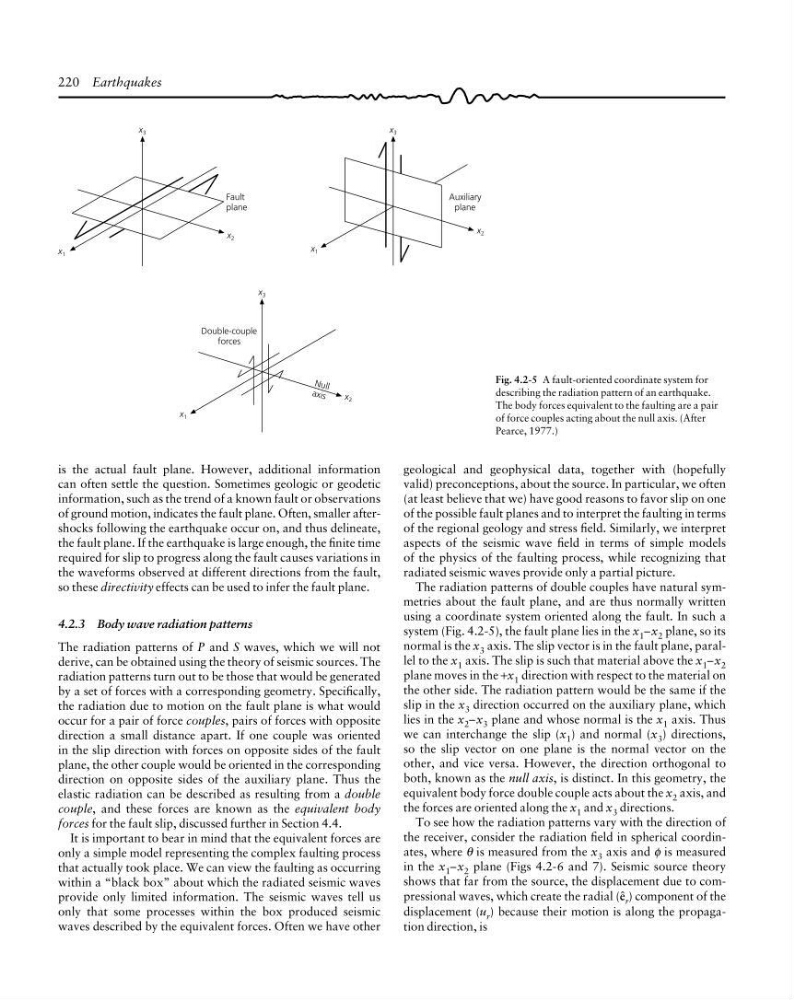
Fig. 4.2-5 A fault-oriented coordinate system for
describing the radiation pattern of an earthquake.
The body forces equivalent to the faulting are a pair
of force couples acting about the null axis. (After
Pearce, 1977.)
geological and geophysical data, together with (hopefully
valid) preconceptions, about the source. In particular, we often
(at least believe that we) have good reasons to favor slip on one
of the possible fault planes and to interpret the faulting in terms
of the regional geology and stress field. Similarly, we interpret
aspects of the seismic wave field in terms of simple models
of the physics of the faulting process, while recognizing that
radiated seismic waves provide only a partial picture.
The radiation patterns of double couples have natural symmetries about the fault plane, and are thus normally written
using a coordinate system oriented along the fault. In such a
system (Fig. 4.2-5), the fault plane lies in the x 1 –x 2 plane, so its
normal is the x 3 axis. The slip vector is in the fault plane, parallel to the x 1 axis. The slip is such that material above the x 1 –x 2
plane moves in the +x 1 direction with respect to the material on
the other side. The radiation pattern would be the same if the
slip in the x 3 direction occurred on the auxiliary plane, which
lies in the x 2 –x 3 plane and whose normal is the x 1 axis. Thus
we can interchange the slip (x 1 ) and normal (x 3 ) directions,
so the slip vector on one plane is the normal vector on the
other, and vice versa. However, the direction orthogonal to
both, known as the null axis, is distinct. In this geometry, the
equivalent body force double couple acts about the x 2 axis, and
the forces are oriented along the x 1 and x 3 directions.
To see how the radiation patterns vary with the direction of
the receiver, consider the radiation field in spherical coordinates, where θ is measured from the x 3 axis and φ is measured
in the x 1 –x 2 plane (Figs 4.2-6 and 7). Seismic source theory
shows that far from the source, the displacement due to compressional waves, which create the radial (ê r ) component of the
displacement (u r ) because their motion is along the propagation direction, is
is the actual fault plane. However, additional information
can often settle the question. Sometimes geologic or geodetic
information, such as the trend of a known fault or observations
of ground motion, indicates the fault plane. Often, smaller aftershocks following the earthquake occur on, and thus delineate,
the fault plane. If the earthquake is large enough, the finite time
required for slip to progress along the fault causes variations in
the waveforms observed at different directions from the fault,
so these directivity effects can be used to infer the fault plane.
4.2.3 Body wave radiation patterns
The radiation patterns of P and S waves, which we will not
derive, can be obtained using the theory of seismic sources. The
radiation patterns turn out to be those that would be generated
by a set of forces with a corresponding geometry. Specifically,
the radiation due to motion on the fault plane is what would
occur for a pair of force couples, pairs of forces with opposite
direction a small distance apart. If one couple was oriented
in the slip direction with forces on opposite sides of the fault
plane, the other couple would be oriented in the corresponding
direction on opposite sides of the auxiliary plane. Thus the
elastic radiation can be described as resulting from a double
couple, and these forces are known as the equivalent body
forces for the fault slip, discussed further in Section 4.4.
It is important to bear in mind that the equivalent forces are
only a simple model representing the complex faulting process
that actually took place. We can view the faulting as occurring
within a “black box” about which the radiated seismic waves
provide only limited information. The seismic waves tell us
only that some processes within the box produced seismic
waves described by the equivalent forces. Often we have other
Fault
plane
x 3
x 1
x 2
x 3
x 2
x 1
Auxiliary
plane
x 3
x 1
x 2
Double-couple
forces
N u ll
ax is
Fig. 4.2-5 A fault-oriented coordinate system for
describing the radiation pattern of an earthquake.
The body forces equivalent to the faulting are a pair
of force couples acting about the null axis. (After
Pearce, 1977.)
geological and geophysical data, together with (hopefully
valid) preconceptions, about the source. In particular, we often
(at least believe that we) have good reasons to favor slip on one
of the possible fault planes and to interpret the faulting in terms
of the regional geology and stress field. Similarly, we interpret
aspects of the seismic wave field in terms of simple models
of the physics of the faulting process, while recognizing that
radiated seismic waves provide only a partial picture.
The radiation patterns of double couples have natural symmetries about the fault plane, and are thus normally written
using a coordinate system oriented along the fault. In such a
system (Fig. 4.2-5), the fault plane lies in the x 1 –x 2 plane, so its
normal is the x 3 axis. The slip vector is in the fault plane, parallel to the x 1 axis. The slip is such that material above the x 1 –x 2
plane moves in the +x 1 direction with respect to the material on
the other side. The radiation pattern would be the same if the
slip in the x 3 direction occurred on the auxiliary plane, which
lies in the x 2 –x 3 plane and whose normal is the x 1 axis. Thus
we can interchange the slip (x 1 ) and normal (x 3 ) directions,
so the slip vector on one plane is the normal vector on the
other, and vice versa. However, the direction orthogonal to
both, known as the null axis, is distinct. In this geometry, the
equivalent body force double couple acts about the x 2 axis, and
the forces are oriented along the x 1 and x 3 directions.
To see how the radiation patterns vary with the direction of
the receiver, consider the radiation field in spherical coordinates, where θ is measured from the x 3 axis and φ is measured
in the x 1 –x 2 plane (Figs 4.2-6 and 7). Seismic source theory
shows that far from the source, the displacement due to compressional waves, which create the radial (ê r ) component of the
displacement (u r ) because their motion is along the propagation direction, is
is the actual fault plane. However, additional information
can often settle the question. Sometimes geologic or geodetic
information, such as the trend of a known fault or observations
of ground motion, indicates the fault plane. Often, smaller aftershocks following the earthquake occur on, and thus delineate,
the fault plane. If the earthquake is large enough, the finite time
required for slip to progress along the fault causes variations in
the waveforms observed at different directions from the fault,
so these directivity effects can be used to infer the fault plane.
4.2.3 Body wave radiation patterns
The radiation patterns of P and S waves, which we will not
derive, can be obtained using the theory of seismic sources. The
radiation patterns turn out to be those that would be generated
by a set of forces with a corresponding geometry. Specifically,
the radiation due to motion on the fault plane is what would
occur for a pair of force couples, pairs of forces with opposite
direction a small distance apart. If one couple was oriented
in the slip direction with forces on opposite sides of the fault
plane, the other couple would be oriented in the corresponding
direction on opposite sides of the auxiliary plane. Thus the
elastic radiation can be described as resulting from a double
couple, and these forces are known as the equivalent body
forces for the fault slip, discussed further in Section 4.4.
It is important to bear in mind that the equivalent forces are
only a simple model representing the complex faulting process
that actually took place. We can view the faulting as occurring
within a “black box” about which the radiated seismic waves
provide only limited information. The seismic waves tell us
only that some processes within the box produced seismic
waves described by the equivalent forces. Often we have other