

206 Seismology and Earth Structure
Lithosphere
[Olivine, orthopyroxene, clinopyroxene, spinel (amphibole, garnet)]
Depth (km)
0
200
400
600
800
1000
1200
1400
1600
1800
Olivine
Orthopyroxene
Clinopyroxene
Pyrope garnet
Low-velocity
zone
20° discontinuity
Pyroxene
Olivine
680 km discontinuity
Mg garnet → Ilmenite
[Mg, Fe, Ca]SiO 3 [Perovskite solid solution]
MgSiO 3 Al 2 O 3 [Ilmenite solid solution]
[Mg, Fe]O [Rocksalt]
NaAlSiO 4 [Calcium ferrite structure]
[Ca, Mg, Fe]SiO 3 Perovskite structure
NaAlSiO 4 Calcium ferrite structure
[Mg, Fe]Al 2 O 4 Calcium ferrite structure
[Mg, Fe]O Rocksalt structure
Fe 3 O 4 h.p.p.
3.0
Zero pressure density (g/cm
3 )
3.2
3.4
3.6
3.8
4.0
4.2
4.4
4.6
Percent
60
24
14
2
[Mg, Fe] 2 SiO 4 57 percent
Garnet solid solution (Si)
VI
43 percent
β
∼1 percent partial melting
Percent
57
17
12
14
β
γ Mg 2 SiO 4 → MgSiO 3 + MgO
β → γ [Mg, Fe] 2 SiO 4 (spinel)?
Co, Fe garnet → Perovskite
β γ
Garnet structure
phase
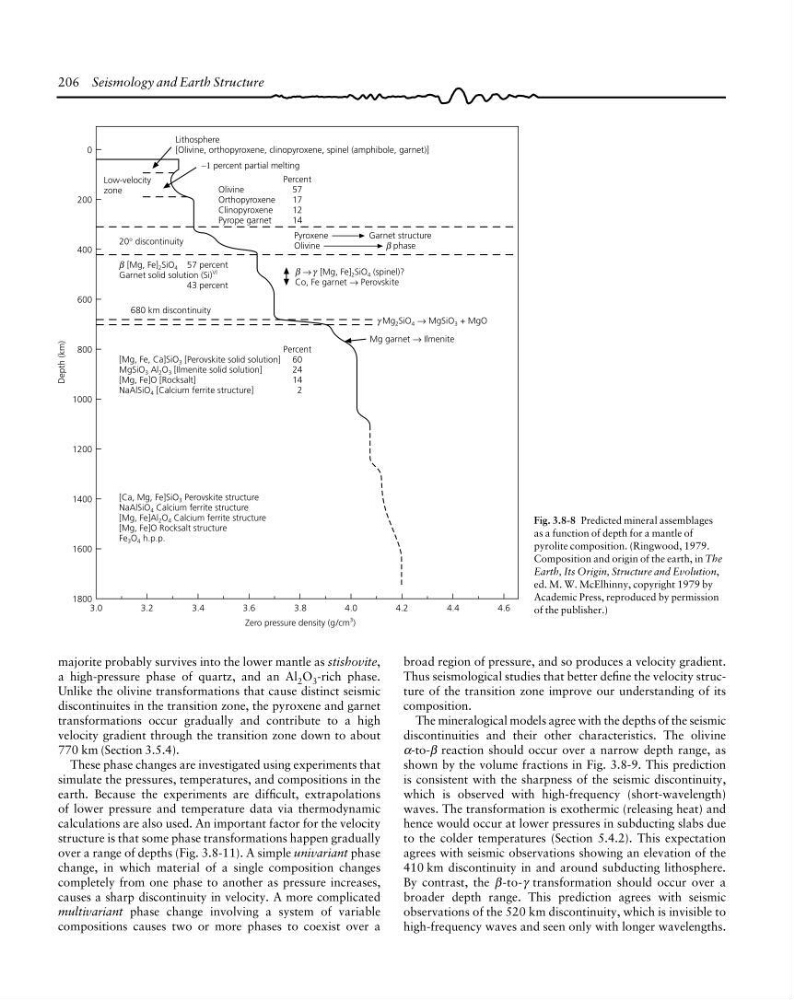
Fig. 3.8-8 Predicted mineral assemblages
as a function of depth for a mantle of
pyrolite composition. (Ringwood, 1979.
Composition and origin of the earth, in The
Earth, Its Origin, Structure and Evolution,
ed. M. W. McElhinny, copyright 1979 by
Academic Press, reproduced by permission
of the publisher.)
majorite probably survives into the lower mantle as stishovite,
a high-pressure phase of quartz, and an Al 2 O 3 -rich phase.
Unlike the olivine transformations that cause distinct seismic
discontinuites in the transition zone, the pyroxene and garnet
transformations occur gradually and contribute to a high
velocity gradient through the transition zone down to about
770 km (Section 3.5.4).
These phase changes are investigated using experiments that
simulate the pressures, temperatures, and compositions in the
earth. Because the experiments are difficult, extrapolations
of lower pressure and temperature data via thermodynamic
calculations are also used. An important factor for the velocity
structure is that some phase transformations happen gradually
over a range of depths (Fig. 3.8-11). A simple univariant phase
change, in which material of a single composition changes
completely from one phase to another as pressure increases,
causes a sharp discontinuity in velocity. A more complicated
multivariant phase change involving a system of variable
compositions causes two or more phases to coexist over a
broad region of pressure, and so produces a velocity gradient.
Thus seismological studies that better define the velocity structure of the transition zone improve our understanding of its
composition.
The mineralogical models agree with the depths of the seismic
discontinuities and their other characteristics. The olivine
α-to-β reaction should occur over a narrow depth range, as
shown by the volume fractions in Fig. 3.8-9. This prediction
is consistent with the sharpness of the seismic discontinuity,
which is observed with high-frequency (short-wavelength)
waves. The transformation is exothermic (releasing heat) and
hence would occur at lower pressures in subducting slabs due
to the colder temperatures (Section 5.4.2). This expectation
agrees with seismic observations showing an elevation of the
410 km discontinuity in and around subducting lithosphere.
By contrast, the β-to-γ transformation should occur over a
broader depth range. This prediction agrees with seismic
observations of the 520 km discontinuity, which is invisible to
high-frequency waves and seen only with longer wavelengths.
Lithosphere
[Olivine, orthopyroxene, clinopyroxene, spinel (amphibole, garnet)]
Depth (km)
0
200
400
600
800
1000
1200
1400
1600
1800
Olivine
Orthopyroxene
Clinopyroxene
Pyrope garnet
Low-velocity
zone
20° discontinuity
Pyroxene
Olivine
680 km discontinuity
Mg garnet → Ilmenite
[Mg, Fe, Ca]SiO 3 [Perovskite solid solution]
MgSiO 3 Al 2 O 3 [Ilmenite solid solution]
[Mg, Fe]O [Rocksalt]
NaAlSiO 4 [Calcium ferrite structure]
[Ca, Mg, Fe]SiO 3 Perovskite structure
NaAlSiO 4 Calcium ferrite structure
[Mg, Fe]Al 2 O 4 Calcium ferrite structure
[Mg, Fe]O Rocksalt structure
Fe 3 O 4 h.p.p.
3.0
Zero pressure density (g/cm
3 )
3.2
3.4
3.6
3.8
4.0
4.2
4.4
4.6
Percent
60
24
14
2
[Mg, Fe] 2 SiO 4 57 percent
Garnet solid solution (Si)
VI
43 percent
β
∼1 percent partial melting
Percent
57
17
12
14
β
γ Mg 2 SiO 4 → MgSiO 3 + MgO
β → γ [Mg, Fe] 2 SiO 4 (spinel)?
Co, Fe garnet → Perovskite
β γ
Garnet structure
phase
Fig. 3.8-8 Predicted mineral assemblages
as a function of depth for a mantle of
pyrolite composition. (Ringwood, 1979.
Composition and origin of the earth, in The
Earth, Its Origin, Structure and Evolution,
ed. M. W. McElhinny, copyright 1979 by
Academic Press, reproduced by permission
of the publisher.)
majorite probably survives into the lower mantle as stishovite,
a high-pressure phase of quartz, and an Al 2 O 3 -rich phase.
Unlike the olivine transformations that cause distinct seismic
discontinuites in the transition zone, the pyroxene and garnet
transformations occur gradually and contribute to a high
velocity gradient through the transition zone down to about
770 km (Section 3.5.4).
These phase changes are investigated using experiments that
simulate the pressures, temperatures, and compositions in the
earth. Because the experiments are difficult, extrapolations
of lower pressure and temperature data via thermodynamic
calculations are also used. An important factor for the velocity
structure is that some phase transformations happen gradually
over a range of depths (Fig. 3.8-11). A simple univariant phase
change, in which material of a single composition changes
completely from one phase to another as pressure increases,
causes a sharp discontinuity in velocity. A more complicated
multivariant phase change involving a system of variable
compositions causes two or more phases to coexist over a
broad region of pressure, and so produces a velocity gradient.
Thus seismological studies that better define the velocity structure of the transition zone improve our understanding of its
composition.
The mineralogical models agree with the depths of the seismic
discontinuities and their other characteristics. The olivine
α-to-β reaction should occur over a narrow depth range, as
shown by the volume fractions in Fig. 3.8-9. This prediction
is consistent with the sharpness of the seismic discontinuity,
which is observed with high-frequency (short-wavelength)
waves. The transformation is exothermic (releasing heat) and
hence would occur at lower pressures in subducting slabs due
to the colder temperatures (Section 5.4.2). This expectation
agrees with seismic observations showing an elevation of the
410 km discontinuity in and around subducting lithosphere.
By contrast, the β-to-γ transformation should occur over a
broader depth range. This prediction agrees with seismic
observations of the 520 km discontinuity, which is invisible to
high-frequency waves and seen only with longer wavelengths.