

14
12
10
8
6
4
2
27 Co
Core
Mantle
0
Density (g/cm
3
)
12 Mg
4 Be
3 Li
13 Al
19 K
11 Na
22 Ti 23 V
24 Cr
(20.1) Fe 3 O 4
Fe 2 Si
Dunite
(14.3)
20 Ca
2
4
6
8
10
12
14
Φ
1/2
(km/s)
26 Fe
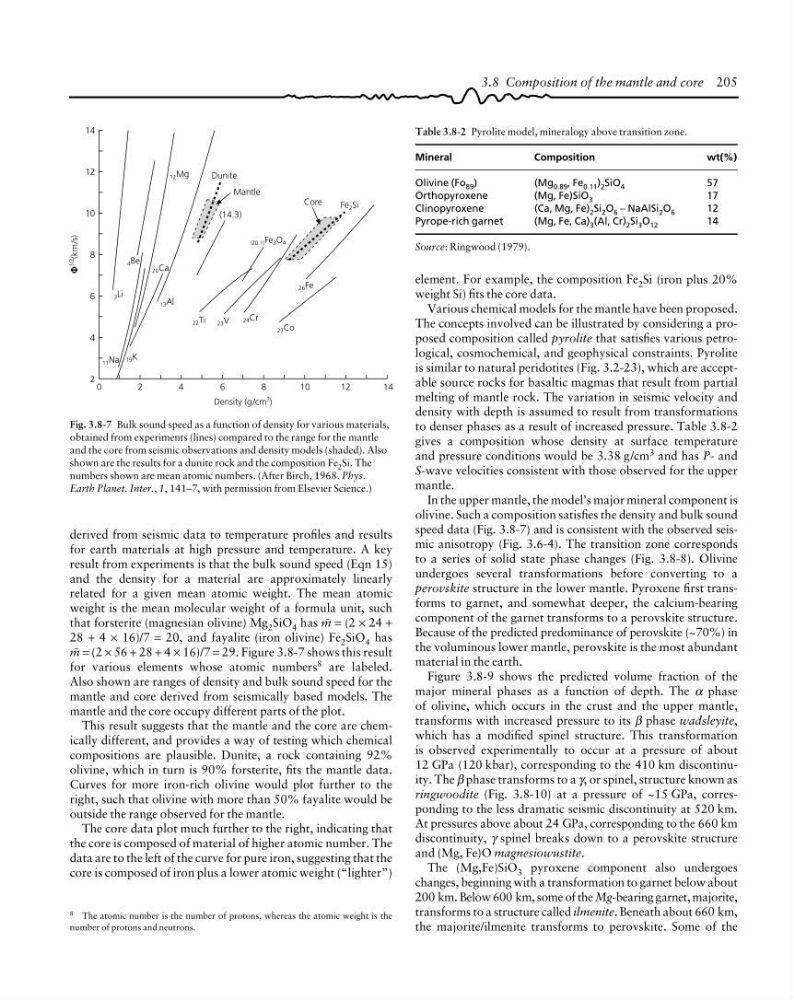
Fig. 3.8-7 Bulk sound speed as a function of density for various materials,
obtained from experiments (lines) compared to the range for the mantle
and the core from seismic observations and density models (shaded). Also
shown are the results for a dunite rock and the composition Fe 2 Si. The
numbers shown are mean atomic numbers. (After Birch, 1968. Phys.
Earth Planet. Inter., 1, 141–7, with permission from Elsevier Science.)
Table 3.8-2 Pyrolite model, mineralogy above transition zone.
Mineral
Composition
wt(%)
Olivine (Fo 89 )
(Mg 0.89 , Fe 0.11 ) 2 SiO 4
57
Orthopyroxene
(Mg, Fe)SiO 3
17
Clinopyroxene
(Ca, Mg, Fe) 2 Si 2 O 6 − NaAlSi 2 O 6
12
Pyrope-rich garnet
(Mg, Fe, Ca) 3 (Al, Cr) 2 Si 3 O 12
14
Source: Ringwood (1979).
3.8 Composition of the mantle and core 205
8 The atomic number is the number of protons, whereas the atomic weight is the
number of protons and neutrons.
derived from seismic data to temperature profiles and results
for earth materials at high pressure and temperature. A key
result from experiments is that the bulk sound speed (Eqn 15)
and the density for a material are approximately linearly
related for a given mean atomic weight. The mean atomic
weight is the mean molecular weight of a formula unit, such
that forsterite (magnesian olivine) Mg 2 SiO 4 has H = (2 × 24 +
28 + 4 × 16)/7 = 20, and fayalite (iron olivine) Fe 2 SiO 4 has
H = (2 × 56 + 28 + 4 × 16)/7 = 29. Figure 3.8-7 shows this result
for various elements whose atomic numbers 8 are labeled.
Also shown are ranges of density and bulk sound speed for the
mantle and core derived from seismically based models. The
mantle and the core occupy different parts of the plot.
This result suggests that the mantle and the core are chemically different, and provides a way of testing which chemical
compositions are plausible. Dunite, a rock containing 92%
olivine, which in turn is 90% forsterite, fits the mantle data.
Curves for more iron-rich olivine would plot further to the
right, such that olivine with more than 50% fayalite would be
outside the range observed for the mantle.
The core data plot much further to the right, indicating that
the core is composed of material of higher atomic number. The
data are to the left of the curve for pure iron, suggesting that the
core is composed of iron plus a lower atomic weight (“lighter”)
element. For example, the composition Fe 2 Si (iron plus 20%
weight Si) fits the core data.
Various chemical models for the mantle have been proposed.
The concepts involved can be illustrated by considering a proposed composition called pyrolite that satisfies various petrological, cosmochemical, and geophysical constraints. Pyrolite
is similar to natural peridotites (Fig. 3.2-23), which are acceptable source rocks for basaltic magmas that result from partial
melting of mantle rock. The variation in seismic velocity and
density with depth is assumed to result from transformations
to denser phases as a result of increased pressure. Table 3.8-2
gives a composition whose density at surface temperature
and pressure conditions would be 3.38 g/cm 3 and has P- and
S-wave velocities consistent with those observed for the upper
mantle.
In the upper mantle, the model’s major mineral component is
olivine. Such a composition satisfies the density and bulk sound
speed data (Fig. 3.8-7) and is consistent with the observed seismic anisotropy (Fig. 3.6-4). The transition zone corresponds
to a series of solid state phase changes (Fig. 3.8-8). Olivine
undergoes several transformations before converting to a
perovskite structure in the lower mantle. Pyroxene first transforms to garnet, and somewhat deeper, the calcium-bearing
component of the garnet transforms to a perovskite structure.
Because of the predicted predominance of perovskite (~70%) in
the voluminous lower mantle, perovskite is the most abundant
material in the earth.
Figure 3.8-9 shows the predicted volume fraction of the
major mineral phases as a function of depth. The α phase
of olivine, which occurs in the crust and the upper mantle,
transforms with increased pressure to its β phase wadsleyite,
which has a modified spinel structure. This transformation
is observed experimentally to occur at a pressure of about
12 GPa (120 kbar), corresponding to the 410 km discontinuity. The β phase transforms to a γ, or spinel, structure known as
ringwoodite (Fig. 3.8-10) at a pressure of ~15 GPa, corresponding to the less dramatic seismic discontinuity at 520 km.
At pressures above about 24 GPa, corresponding to the 660 km
discontinuity, γ spinel breaks down to a perovskite structure
and (Mg, Fe)O magnesiowustite.
The (Mg,Fe)SiO 3 pyroxene component also undergoes
changes, beginning with a transformation to garnet below about
200 km. Below 600 km, some of the Mg-bearing garnet, majorite,
transforms to a structure called ilmenite. Beneath about 660 km,
the majorite/ilmenite transforms to perovskite. Some of the
12
10
8
6
4
2
27 Co
Core
Mantle
0
Density (g/cm
3
)
12 Mg
4 Be
3 Li
13 Al
19 K
11 Na
22 Ti 23 V
24 Cr
(20.1) Fe 3 O 4
Fe 2 Si
Dunite
(14.3)
20 Ca
2
4
6
8
10
12
14
Φ
1/2
(km/s)
26 Fe
Fig. 3.8-7 Bulk sound speed as a function of density for various materials,
obtained from experiments (lines) compared to the range for the mantle
and the core from seismic observations and density models (shaded). Also
shown are the results for a dunite rock and the composition Fe 2 Si. The
numbers shown are mean atomic numbers. (After Birch, 1968. Phys.
Earth Planet. Inter., 1, 141–7, with permission from Elsevier Science.)
Table 3.8-2 Pyrolite model, mineralogy above transition zone.
Mineral
Composition
wt(%)
Olivine (Fo 89 )
(Mg 0.89 , Fe 0.11 ) 2 SiO 4
57
Orthopyroxene
(Mg, Fe)SiO 3
17
Clinopyroxene
(Ca, Mg, Fe) 2 Si 2 O 6 − NaAlSi 2 O 6
12
Pyrope-rich garnet
(Mg, Fe, Ca) 3 (Al, Cr) 2 Si 3 O 12
14
Source: Ringwood (1979).
3.8 Composition of the mantle and core 205
8 The atomic number is the number of protons, whereas the atomic weight is the
number of protons and neutrons.
derived from seismic data to temperature profiles and results
for earth materials at high pressure and temperature. A key
result from experiments is that the bulk sound speed (Eqn 15)
and the density for a material are approximately linearly
related for a given mean atomic weight. The mean atomic
weight is the mean molecular weight of a formula unit, such
that forsterite (magnesian olivine) Mg 2 SiO 4 has H = (2 × 24 +
28 + 4 × 16)/7 = 20, and fayalite (iron olivine) Fe 2 SiO 4 has
H = (2 × 56 + 28 + 4 × 16)/7 = 29. Figure 3.8-7 shows this result
for various elements whose atomic numbers 8 are labeled.
Also shown are ranges of density and bulk sound speed for the
mantle and core derived from seismically based models. The
mantle and the core occupy different parts of the plot.
This result suggests that the mantle and the core are chemically different, and provides a way of testing which chemical
compositions are plausible. Dunite, a rock containing 92%
olivine, which in turn is 90% forsterite, fits the mantle data.
Curves for more iron-rich olivine would plot further to the
right, such that olivine with more than 50% fayalite would be
outside the range observed for the mantle.
The core data plot much further to the right, indicating that
the core is composed of material of higher atomic number. The
data are to the left of the curve for pure iron, suggesting that the
core is composed of iron plus a lower atomic weight (“lighter”)
element. For example, the composition Fe 2 Si (iron plus 20%
weight Si) fits the core data.
Various chemical models for the mantle have been proposed.
The concepts involved can be illustrated by considering a proposed composition called pyrolite that satisfies various petrological, cosmochemical, and geophysical constraints. Pyrolite
is similar to natural peridotites (Fig. 3.2-23), which are acceptable source rocks for basaltic magmas that result from partial
melting of mantle rock. The variation in seismic velocity and
density with depth is assumed to result from transformations
to denser phases as a result of increased pressure. Table 3.8-2
gives a composition whose density at surface temperature
and pressure conditions would be 3.38 g/cm 3 and has P- and
S-wave velocities consistent with those observed for the upper
mantle.
In the upper mantle, the model’s major mineral component is
olivine. Such a composition satisfies the density and bulk sound
speed data (Fig. 3.8-7) and is consistent with the observed seismic anisotropy (Fig. 3.6-4). The transition zone corresponds
to a series of solid state phase changes (Fig. 3.8-8). Olivine
undergoes several transformations before converting to a
perovskite structure in the lower mantle. Pyroxene first transforms to garnet, and somewhat deeper, the calcium-bearing
component of the garnet transforms to a perovskite structure.
Because of the predicted predominance of perovskite (~70%) in
the voluminous lower mantle, perovskite is the most abundant
material in the earth.
Figure 3.8-9 shows the predicted volume fraction of the
major mineral phases as a function of depth. The α phase
of olivine, which occurs in the crust and the upper mantle,
transforms with increased pressure to its β phase wadsleyite,
which has a modified spinel structure. This transformation
is observed experimentally to occur at a pressure of about
12 GPa (120 kbar), corresponding to the 410 km discontinuity. The β phase transforms to a γ, or spinel, structure known as
ringwoodite (Fig. 3.8-10) at a pressure of ~15 GPa, corresponding to the less dramatic seismic discontinuity at 520 km.
At pressures above about 24 GPa, corresponding to the 660 km
discontinuity, γ spinel breaks down to a perovskite structure
and (Mg, Fe)O magnesiowustite.
The (Mg,Fe)SiO 3 pyroxene component also undergoes
changes, beginning with a transformation to garnet below about
200 km. Below 600 km, some of the Mg-bearing garnet, majorite,
transforms to a structure called ilmenite. Beneath about 660 km,
the majorite/ilmenite transforms to perovskite. Some of the