

174 Seismology and Earth Structure
118°
SKS
Inner core
Outer core
Mantle
SKPdS
SPdKS
the CMB is likely to be the site of many processes involving
lateral and vertical motions and vigorous chemical reactions.
An analogy might be that D″ is a thermal boundary between
the mantle and the core, analogous to the lithosphere, which
is the thermal boundary layer at the top of the mantle. The
high-velocity layer at the base of D″ may be a chemical layer,
analogous to the crust. These complexities have led the CMB
to be called the graveyard of ancient ocean lithosphere, the
birthplace of mantle plumes, and the region that most significantly controls the outer core convection patterns and thus the
earth’s magnetic field. The fact that we study this region largely
via seismic “remote sensing” through 2890 km of heterogeneous mantle may limit the degree to which it can be understood. 9
3.5.5 Visualizing body waves
To end our discussion of body waves, it is worth considering
their physical nature. We have treated body wave arrivals like S
and ScS as geometric rays. However, although it is convenient
to describe these waves as rays and to show their paths through
ray tracing, this approximation does not fully describe their
behavior.
To see this, we consider a numerical simulation showing
time snapshots of the SH shear wave field generated by a
600 km-deep earthquake (Fig. 3.5-19). The wave field is
synthesized by summing 28,000 torsional normal modes
(Section 2.8) with periods above 12 s. The calculations show
accurate relative amplitudes, with light and dark shades representing displacements into and out of the paper, respectively.
Although the normal mode solution is itself an approximation
to the actual wave field in the laterally heterogeneous earth, it
is much closer to reality than geometric rays.
80
60
40
20
0
–20
–40
–60
–80
Latitude (°)
African
plume
360
China high
Equatorial plume group
Tethys trough
Pangea
trench
Longitude (°)
320
280
240
200
160
120
80
40
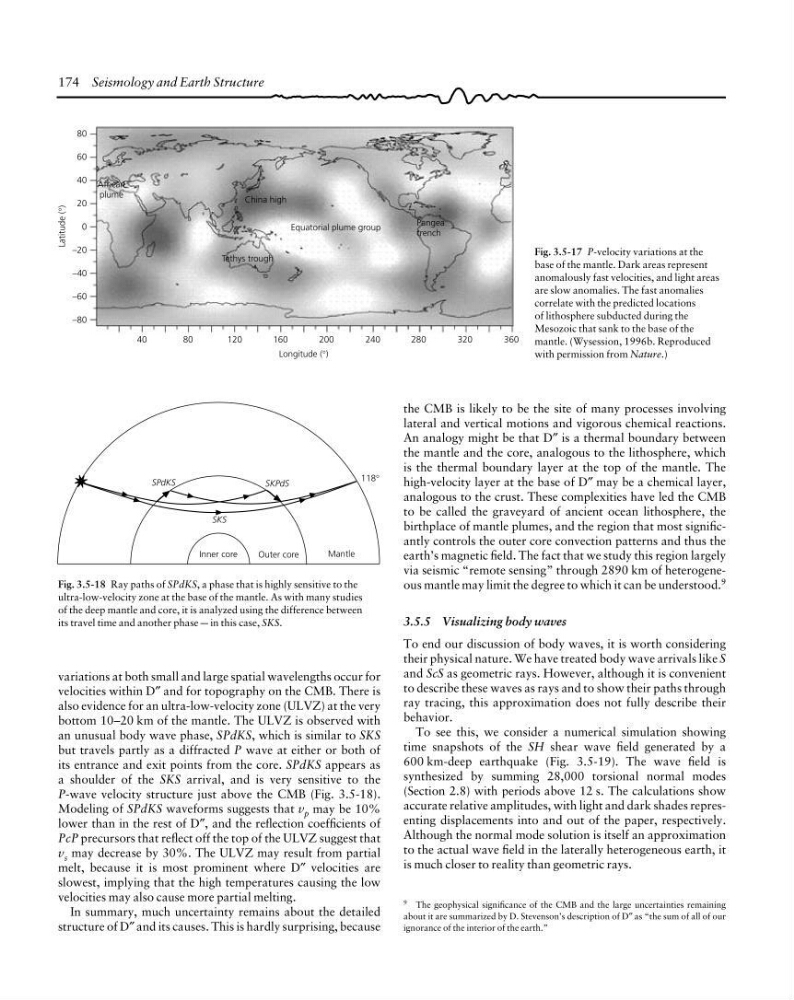
Fig. 3.5-17 P-velocity variations at the
base of the mantle. Dark areas represent
anomalously fast velocities, and light areas
are slow anomalies. The fast anomalies
correlate with the predicted locations
of lithosphere subducted during the
Mesozoic that sank to the base of the
mantle. (Wysession, 1996b. Reproduced
with permission from Nature.)
Fig. 3.5-18 Ray paths of SPdKS, a phase that is highly sensitive to the
ultra-low-velocity zone at the base of the mantle. As with many studies
of the deep mantle and core, it is analyzed using the difference between
its travel time and another phase — in this case, SKS.
variations at both small and large spatial wavelengths occur for
velocities within D″ and for topography on the CMB. There is
also evidence for an ultra-low-velocity zone (ULVZ) at the very
bottom 10–20 km of the mantle. The ULVZ is observed with
an unusual body wave phase, SPdKS, which is similar to SKS
but travels partly as a diffracted P wave at either or both of
its entrance and exit points from the core. SPdKS appears as
a shoulder of the SKS arrival, and is very sensitive to the
P-wave velocity structure just above the CMB (Fig. 3.5-18).
Modeling of SPdKS waveforms suggests that v p may be 10%
lower than in the rest of D″, and the reflection coefficients of
PcP precursors that reflect off the top of the ULVZ suggest that
v s may decrease by 30%. The ULVZ may result from partial
melt, because it is most prominent where D″ velocities are
slowest, implying that the high temperatures causing the low
velocities may also cause more partial melting.
In summary, much uncertainty remains about the detailed
structure of D″ and its causes. This is hardly surprising, because
9 The geophysical significance of the CMB and the large uncertainties remaining
about it are summarized by D. Stevenson’s description of D″ as “the sum of all of our
ignorance of the interior of the earth.”
118°
SKS
Inner core
Outer core
Mantle
SKPdS
SPdKS
the CMB is likely to be the site of many processes involving
lateral and vertical motions and vigorous chemical reactions.
An analogy might be that D″ is a thermal boundary between
the mantle and the core, analogous to the lithosphere, which
is the thermal boundary layer at the top of the mantle. The
high-velocity layer at the base of D″ may be a chemical layer,
analogous to the crust. These complexities have led the CMB
to be called the graveyard of ancient ocean lithosphere, the
birthplace of mantle plumes, and the region that most significantly controls the outer core convection patterns and thus the
earth’s magnetic field. The fact that we study this region largely
via seismic “remote sensing” through 2890 km of heterogeneous mantle may limit the degree to which it can be understood. 9
3.5.5 Visualizing body waves
To end our discussion of body waves, it is worth considering
their physical nature. We have treated body wave arrivals like S
and ScS as geometric rays. However, although it is convenient
to describe these waves as rays and to show their paths through
ray tracing, this approximation does not fully describe their
behavior.
To see this, we consider a numerical simulation showing
time snapshots of the SH shear wave field generated by a
600 km-deep earthquake (Fig. 3.5-19). The wave field is
synthesized by summing 28,000 torsional normal modes
(Section 2.8) with periods above 12 s. The calculations show
accurate relative amplitudes, with light and dark shades representing displacements into and out of the paper, respectively.
Although the normal mode solution is itself an approximation
to the actual wave field in the laterally heterogeneous earth, it
is much closer to reality than geometric rays.
80
60
40
20
0
–20
–40
–60
–80
Latitude (°)
African
plume
360
China high
Equatorial plume group
Tethys trough
Pangea
trench
Longitude (°)
320
280
240
200
160
120
80
40
Fig. 3.5-17 P-velocity variations at the
base of the mantle. Dark areas represent
anomalously fast velocities, and light areas
are slow anomalies. The fast anomalies
correlate with the predicted locations
of lithosphere subducted during the
Mesozoic that sank to the base of the
mantle. (Wysession, 1996b. Reproduced
with permission from Nature.)
Fig. 3.5-18 Ray paths of SPdKS, a phase that is highly sensitive to the
ultra-low-velocity zone at the base of the mantle. As with many studies
of the deep mantle and core, it is analyzed using the difference between
its travel time and another phase — in this case, SKS.
variations at both small and large spatial wavelengths occur for
velocities within D″ and for topography on the CMB. There is
also evidence for an ultra-low-velocity zone (ULVZ) at the very
bottom 10–20 km of the mantle. The ULVZ is observed with
an unusual body wave phase, SPdKS, which is similar to SKS
but travels partly as a diffracted P wave at either or both of
its entrance and exit points from the core. SPdKS appears as
a shoulder of the SKS arrival, and is very sensitive to the
P-wave velocity structure just above the CMB (Fig. 3.5-18).
Modeling of SPdKS waveforms suggests that v p may be 10%
lower than in the rest of D″, and the reflection coefficients of
PcP precursors that reflect off the top of the ULVZ suggest that
v s may decrease by 30%. The ULVZ may result from partial
melt, because it is most prominent where D″ velocities are
slowest, implying that the high temperatures causing the low
velocities may also cause more partial melting.
In summary, much uncertainty remains about the detailed
structure of D″ and its causes. This is hardly surprising, because
9 The geophysical significance of the CMB and the large uncertainties remaining
about it are summarized by D. Stevenson’s description of D″ as “the sum of all of our
ignorance of the interior of the earth.”