

Body wave travel time studies 175
Time = 300 s
S
ScS
sS
ScS
S
sScS
Time = 60 s
Time = 900 s
Time = 600 s
sScS
sS
SS
S
ScS
Time = 1200 s
Time = 1500 s
ScS2
S
ScS
sS
sScS
SSS
SS
SS
S diff
Time = 1800 s
sS diff
S diff
S
sS
SS
sScS
SSS
sScS2
ScS2
ScS 670 S
ScS 400 S
ScS 220 S
sScS2
ScS2
ScS2
S4
SSS
sS
SS
S 220 S
S 400 S
S 670 S
sS diff
S diff
S diff
SS
S 220 S
S 400 S
S 670 S
sS diff
SSS
sScS2
S4
S5
ScS2
SS
S diff S diff
a.
b.
c.
d.
e.
f.
g.
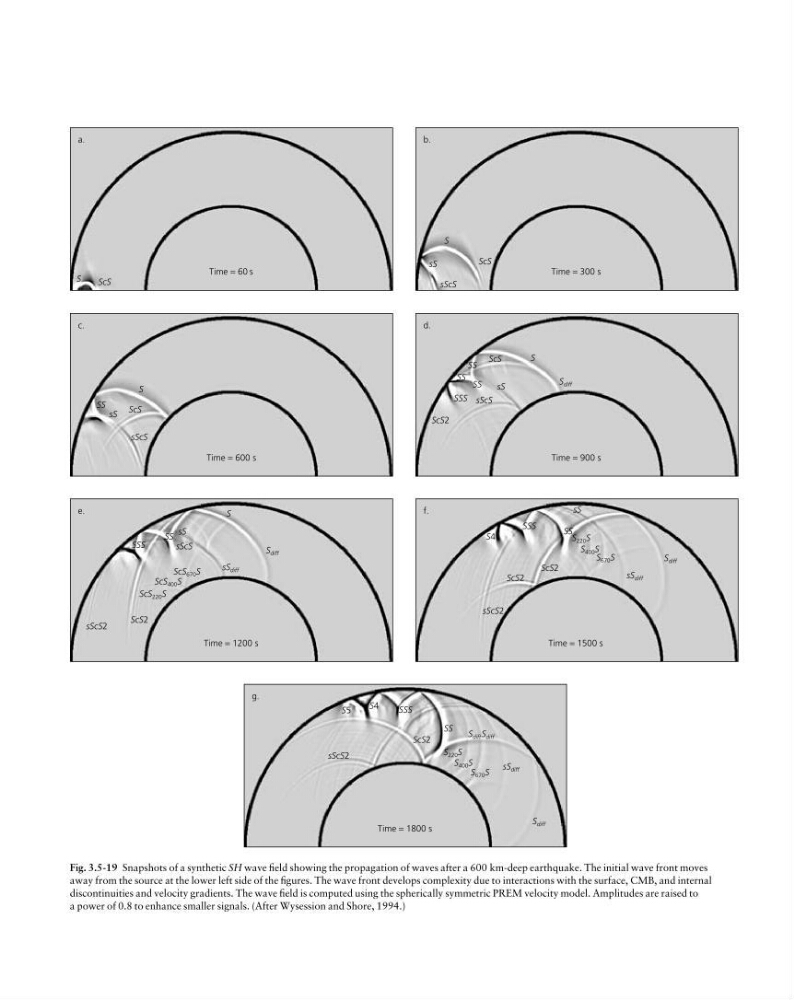
Fig. 3.5-19 Snapshots of a synthetic SH wave field showing the propagation of waves after a 600 km-deep earthquake. The initial wave front moves
away from the source at the lower left side of the figures. The wave front develops complexity due to interactions with the surface, CMB, and internal
discontinuities and velocity gradients. The wave field is computed using the spherically symmetric PREM velocity model. Amplitudes are raised to
a power of 0.8 to enhance smaller signals. (After Wysession and Shore, 1994.)
Time = 300 s
S
ScS
sS
ScS
S
sScS
Time = 60 s
Time = 900 s
Time = 600 s
sScS
sS
SS
S
ScS
Time = 1200 s
Time = 1500 s
ScS2
S
ScS
sS
sScS
SSS
SS
SS
S diff
Time = 1800 s
sS diff
S diff
S
sS
SS
sScS
SSS
sScS2
ScS2
ScS 670 S
ScS 400 S
ScS 220 S
sScS2
ScS2
ScS2
S4
SSS
sS
SS
S 220 S
S 400 S
S 670 S
sS diff
S diff
S diff
SS
S 220 S
S 400 S
S 670 S
sS diff
SSS
sScS2
S4
S5
ScS2
SS
S diff S diff
a.
b.
c.
d.
e.
f.
g.
Fig. 3.5-19 Snapshots of a synthetic SH wave field showing the propagation of waves after a 600 km-deep earthquake. The initial wave front moves
away from the source at the lower left side of the figures. The wave front develops complexity due to interactions with the surface, CMB, and internal
discontinuities and velocity gradients. The wave field is computed using the spherically symmetric PREM velocity model. Amplitudes are raised to
a power of 0.8 to enhance smaller signals. (After Wysession and Shore, 1994.)