

132 Seismology and Earth Structure
Land (20−40 km)
45−45 km
45−50 km
50−60 km
60−70 km
>70 km
USGS 1999
Seconds
14
15
16
0
5
10
15
Kilometers
West
East
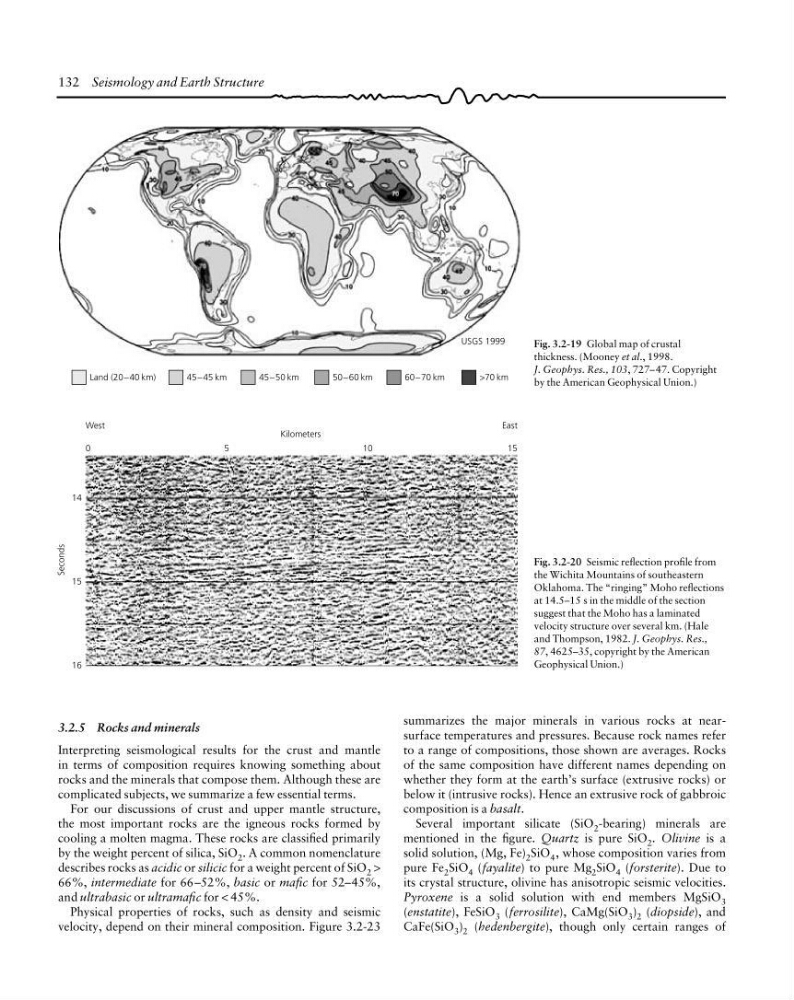
Fig. 3.2-20 Seismic reflection profile from
the Wichita Mountains of southeastern
Oklahoma. The “ringing” Moho reflections
at 14.5–15 s in the middle of the section
suggest that the Moho has a laminated
velocity structure over several km. (Hale
and Thompson, 1982. J. Geophys. Res.,
87, 4625–35, copyright by the American
Geophysical Union.)
Fig. 3.2-19 Global map of crustal
thickness. (Mooney et al., 1998.
J. Geophys. Res., 103, 727–47. Copyright
by the American Geophysical Union.)
3.2.5 Rocks and minerals
Interpreting seismological results for the crust and mantle
in terms of composition requires knowing something about
rocks and the minerals that compose them. Although these are
complicated subjects, we summarize a few essential terms.
For our discussions of crust and upper mantle structure,
the most important rocks are the igneous rocks formed by
cooling a molten magma. These rocks are classified primarily
by the weight percent of silica, SiO 2 . A common nomenclature
describes rocks as acidic or silicic for a weight percent of SiO 2 >
66%, intermediate for 66–52%, basic or mafic for 52–45%,
and ultrabasic or ultramafic for < 45%.
Physical properties of rocks, such as density and seismic
velocity, depend on their mineral composition. Figure 3.2-23
summarizes the major minerals in various rocks at nearsurface temperatures and pressures. Because rock names refer
to a range of compositions, those shown are averages. Rocks
of the same composition have different names depending on
whether they form at the earth’s surface (extrusive rocks) or
below it (intrusive rocks). Hence an extrusive rock of gabbroic
composition is a basalt.
Several important silicate (SiO 2 -bearing) minerals are
mentioned in the figure. Quartz is pure SiO 2 . Olivine is a
solid solution, (Mg, Fe) 2 SiO 4 , whose composition varies from
pure Fe 2 SiO 4 (fayalite) to pure Mg 2 SiO 4 (forsterite). Due to
its crystal structure, olivine has anisotropic seismic velocities.
Pyroxene is a solid solution with end members MgSiO 3
(enstatite), FeSiO 3 (ferrosilite), CaMg(SiO 3 ) 2 (diopside), and
CaFe(SiO 3 ) 2 (hedenbergite), though only certain ranges of
Land (20−40 km)
45−45 km
45−50 km
50−60 km
60−70 km
>70 km
USGS 1999
Seconds
14
15
16
0
5
10
15
Kilometers
West
East
Fig. 3.2-20 Seismic reflection profile from
the Wichita Mountains of southeastern
Oklahoma. The “ringing” Moho reflections
at 14.5–15 s in the middle of the section
suggest that the Moho has a laminated
velocity structure over several km. (Hale
and Thompson, 1982. J. Geophys. Res.,
87, 4625–35, copyright by the American
Geophysical Union.)
Fig. 3.2-19 Global map of crustal
thickness. (Mooney et al., 1998.
J. Geophys. Res., 103, 727–47. Copyright
by the American Geophysical Union.)
3.2.5 Rocks and minerals
Interpreting seismological results for the crust and mantle
in terms of composition requires knowing something about
rocks and the minerals that compose them. Although these are
complicated subjects, we summarize a few essential terms.
For our discussions of crust and upper mantle structure,
the most important rocks are the igneous rocks formed by
cooling a molten magma. These rocks are classified primarily
by the weight percent of silica, SiO 2 . A common nomenclature
describes rocks as acidic or silicic for a weight percent of SiO 2 >
66%, intermediate for 66–52%, basic or mafic for 52–45%,
and ultrabasic or ultramafic for < 45%.
Physical properties of rocks, such as density and seismic
velocity, depend on their mineral composition. Figure 3.2-23
summarizes the major minerals in various rocks at nearsurface temperatures and pressures. Because rock names refer
to a range of compositions, those shown are averages. Rocks
of the same composition have different names depending on
whether they form at the earth’s surface (extrusive rocks) or
below it (intrusive rocks). Hence an extrusive rock of gabbroic
composition is a basalt.
Several important silicate (SiO 2 -bearing) minerals are
mentioned in the figure. Quartz is pure SiO 2 . Olivine is a
solid solution, (Mg, Fe) 2 SiO 4 , whose composition varies from
pure Fe 2 SiO 4 (fayalite) to pure Mg 2 SiO 4 (forsterite). Due to
its crystal structure, olivine has anisotropic seismic velocities.
Pyroxene is a solid solution with end members MgSiO 3
(enstatite), FeSiO 3 (ferrosilite), CaMg(SiO 3 ) 2 (diopside), and
CaFe(SiO 3 ) 2 (hedenbergite), though only certain ranges of