

been reported for the mitigation of nitrates, hydrogen sulfide, and phosphates
(Mohammed et al. 2018). As exemplary evidence, Luo et al. (2019) manufactured
CNFs, by applying mechanical shearing to a pristine bamboo pulp. Predetermined
doses of ferric chloride solution and sodium hydroxide solution were added to the
CNFs suspension. The entire suspension was stirred and centrifuged before freezedrying. The nanocellulose /Fe(OH) 3 composites were shown to be very effective for
addressing low-concentration phosphorus-containing wastewater (Fig. 4.6a). On the
other hand, the scaling phenomenon is a serious concern, particularly in water-based
industries. The conventionally used anti-scaling materials based on nitrogen, phosphorous, and sulfur are interlaced with potential hazardous ecological consequences.
In this regard, hairy nanocellulose (characterized by dicarboxylated amorphous
cellulosic chains) coating onto planar silica surfaces could inhibit the nucleation
and subsequent growth of CaCO 3 , a common industrial scale (Sheikhi et al. 2018),
thereby establishing the potential of NC in developing green antiscalant.
The readers may also easily perceive the impetus received by green and renewable electronics as well as green energy technology (Resch et al. 2008) in the
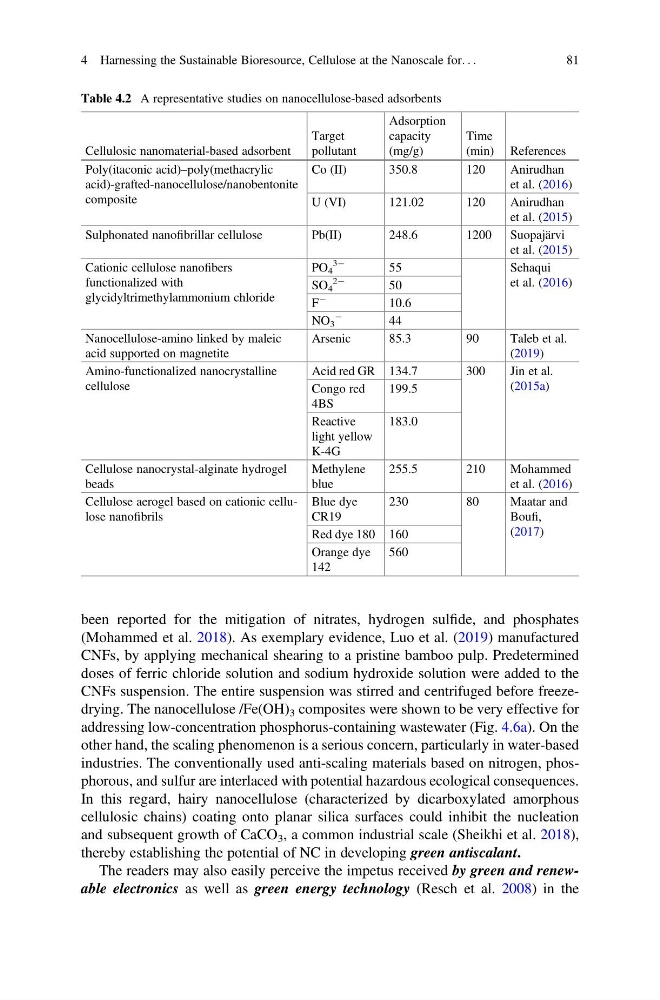
Table 4.2 A representative studies on nanocellulose-based adsorbents
Cellulosic nanomaterial-based adsorbent
Target
pollutant
Adsorption
capacity
(mg/g)
Time
(min) References
Poly(itaconic acid)–poly(methacrylic
acid)-grafted-nanocellulose/nanobentonite
composite
Co (II)
350.8
120
Anirudhan
et al. (2016)
U (VI)
121.02
120
Anirudhan
et al. (2015)
Sulphonated nanofibrillar cellulose
Pb(II)
248.6
1200 Suopajärvi
et al. (2015)
Cationic cellulose nanofibers
functionalized with
glycidyltrimethylammonium chloride
PO 4
3À
55
Sehaqui
et al. (2016)
SO 4
2À
50
F
À
10.6
NO 3
À
44
Nanocellulose-amino linked by maleic
acid supported on magnetite
Arsenic
85.3
90
Taleb et al.
(2019)
Amino-functionalized nanocrystalline
cellulose
Acid red GR 134.7
300
Jin et al.
(2015a)
Congo red
4BS
199.5
Reactive
light yellow
K-4G
183.0
Cellulose nanocrystal-alginate hydrogel
beads
Methylene
blue
255.5
210
Mohammed
et al. (2016)
Cellulose aerogel based on cationic cellulose nanofibrils
Blue dye
CR19
230
80
Maatar and
Boufi,
(2017)
Red dye 180 160
Orange dye
142
560
4 Harnessing the Sustainable Bioresource, Cellulose at the Nanoscale for. . .
81
(Mohammed et al. 2018). As exemplary evidence, Luo et al. (2019) manufactured
CNFs, by applying mechanical shearing to a pristine bamboo pulp. Predetermined
doses of ferric chloride solution and sodium hydroxide solution were added to the
CNFs suspension. The entire suspension was stirred and centrifuged before freezedrying. The nanocellulose /Fe(OH) 3 composites were shown to be very effective for
addressing low-concentration phosphorus-containing wastewater (Fig. 4.6a). On the
other hand, the scaling phenomenon is a serious concern, particularly in water-based
industries. The conventionally used anti-scaling materials based on nitrogen, phosphorous, and sulfur are interlaced with potential hazardous ecological consequences.
In this regard, hairy nanocellulose (characterized by dicarboxylated amorphous
cellulosic chains) coating onto planar silica surfaces could inhibit the nucleation
and subsequent growth of CaCO 3 , a common industrial scale (Sheikhi et al. 2018),
thereby establishing the potential of NC in developing green antiscalant.
The readers may also easily perceive the impetus received by green and renewable electronics as well as green energy technology (Resch et al. 2008) in the
Table 4.2 A representative studies on nanocellulose-based adsorbents
Cellulosic nanomaterial-based adsorbent
Target
pollutant
Adsorption
capacity
(mg/g)
Time
(min) References
Poly(itaconic acid)–poly(methacrylic
acid)-grafted-nanocellulose/nanobentonite
composite
Co (II)
350.8
120
Anirudhan
et al. (2016)
U (VI)
121.02
120
Anirudhan
et al. (2015)
Sulphonated nanofibrillar cellulose
Pb(II)
248.6
1200 Suopajärvi
et al. (2015)
Cationic cellulose nanofibers
functionalized with
glycidyltrimethylammonium chloride
PO 4
3À
55
Sehaqui
et al. (2016)
SO 4
2À
50
F
À
10.6
NO 3
À
44
Nanocellulose-amino linked by maleic
acid supported on magnetite
Arsenic
85.3
90
Taleb et al.
(2019)
Amino-functionalized nanocrystalline
cellulose
Acid red GR 134.7
300
Jin et al.
(2015a)
Congo red
4BS
199.5
Reactive
light yellow
K-4G
183.0
Cellulose nanocrystal-alginate hydrogel
beads
Methylene
blue
255.5
210
Mohammed
et al. (2016)
Cellulose aerogel based on cationic cellulose nanofibrils
Blue dye
CR19
230
80
Maatar and
Boufi,
(2017)
Red dye 180 160
Orange dye
142
560
4 Harnessing the Sustainable Bioresource, Cellulose at the Nanoscale for. . .
81