

5 Conclusion and Future Perspectives
Industrialized agriculture has increased the application of agrochemicals in an
unprecedented manner. The augmented use of these synthetic chemicals has
influenced the soil parameters as far as the major soil species, nutrient content,
functions of enzymes within the soil, functional and structural variability of microorganism populations are concerned. These observations project on agricultural
management and the strategy of a critical emphasis on the influence of industrialized
agriculture on soil quality as indispensable needs of the hour. The time-consuming
practice of the conventional methods and the negative implications related to high
quantity use of synthetic agrochemicals are serious concerns. In another way, the
rapid development of biotechnological tools like genotyping, genetic engineering,
and genomics offers considerable advantages in opposite to classical approaches to
reduce the agrochemical impact on soil quality, ultimately to ensure sustainable
agriculture. Among one of the biotechnological tools, genotyping microbial strains
can improve phosphorous solubilizing microorganism (PSM) and nitrogen-fixing
bacteria for efficient nutrient uptake as well as promoting plant growth. Plant
molecular breeding also improves NuUE, which is a crucial component for agronomic and environmental perspective, interlaced with an accelerated polygenic
nature understanding of complex traits. Genomics studies can identify various
metabolic pathways and genes or direct markers for agronomically important traits.
These identified genes may also remain used for genetic engineering of plant species.
As part of biotechnological tools, RNAi based technology could be applied for the
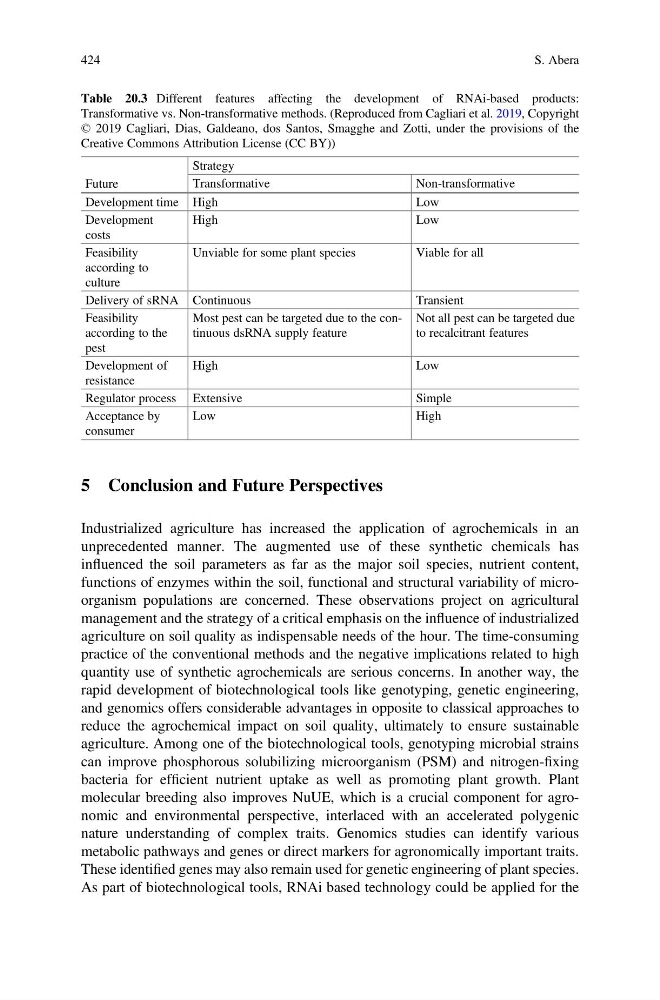
Table 20.3 Different features affecting the development of RNAi-based products:
Transformative vs. Non-transformative methods. (Reproduced from Cagliari et al. 2019, Copyright
© 2019 Cagliari, Dias, Galdeano, dos Santos, Smagghe and Zotti, under the provisions of the
Creative Commons Attribution License (CC BY))
Future
Strategy
Transformative
Non-transformative
Development time High
Low
Development
costs
High
Low
Feasibility
according to
culture
Unviable for some plant species
Viable for all
Delivery of sRNA Continuous
Transient
Feasibility
according to the
pest
Most pest can be targeted due to the continuous dsRNA supply feature
Not all pest can be targeted due
to recalcitrant features
Development of
resistance
High
Low
Regulator process Extensive
Simple
Acceptance by
consumer
Low
High
424
S. Abera
Industrialized agriculture has increased the application of agrochemicals in an
unprecedented manner. The augmented use of these synthetic chemicals has
influenced the soil parameters as far as the major soil species, nutrient content,
functions of enzymes within the soil, functional and structural variability of microorganism populations are concerned. These observations project on agricultural
management and the strategy of a critical emphasis on the influence of industrialized
agriculture on soil quality as indispensable needs of the hour. The time-consuming
practice of the conventional methods and the negative implications related to high
quantity use of synthetic agrochemicals are serious concerns. In another way, the
rapid development of biotechnological tools like genotyping, genetic engineering,
and genomics offers considerable advantages in opposite to classical approaches to
reduce the agrochemical impact on soil quality, ultimately to ensure sustainable
agriculture. Among one of the biotechnological tools, genotyping microbial strains
can improve phosphorous solubilizing microorganism (PSM) and nitrogen-fixing
bacteria for efficient nutrient uptake as well as promoting plant growth. Plant
molecular breeding also improves NuUE, which is a crucial component for agronomic and environmental perspective, interlaced with an accelerated polygenic
nature understanding of complex traits. Genomics studies can identify various
metabolic pathways and genes or direct markers for agronomically important traits.
These identified genes may also remain used for genetic engineering of plant species.
As part of biotechnological tools, RNAi based technology could be applied for the
Table 20.3 Different features affecting the development of RNAi-based products:
Transformative vs. Non-transformative methods. (Reproduced from Cagliari et al. 2019, Copyright
© 2019 Cagliari, Dias, Galdeano, dos Santos, Smagghe and Zotti, under the provisions of the
Creative Commons Attribution License (CC BY))
Future
Strategy
Transformative
Non-transformative
Development time High
Low
Development
costs
High
Low
Feasibility
according to
culture
Unviable for some plant species
Viable for all
Delivery of sRNA Continuous
Transient
Feasibility
according to the
pest
Most pest can be targeted due to the continuous dsRNA supply feature
Not all pest can be targeted due
to recalcitrant features
Development of
resistance
High
Low
Regulator process Extensive
Simple
Acceptance by
consumer
Low
High
424
S. Abera