

particularly for diseases and insect control via avoiding pesticide resistance as well
as environmental pollution problems.
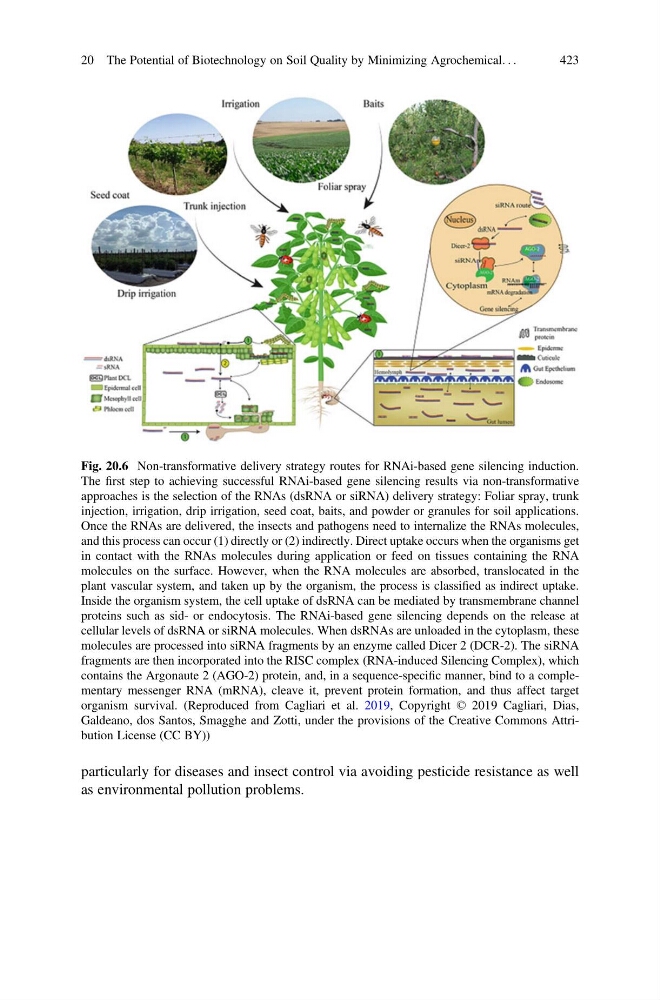
Fig. 20.6 Non-transformative delivery strategy routes for RNAi-based gene silencing induction.
The first step to achieving successful RNAi-based gene silencing results via non-transformative
approaches is the selection of the RNAs (dsRNA or siRNA) delivery strategy: Foliar spray, trunk
injection, irrigation, drip irrigation, seed coat, baits, and powder or granules for soil applications.
Once the RNAs are delivered, the insects and pathogens need to internalize the RNAs molecules,
and this process can occur (1) directly or (2) indirectly. Direct uptake occurs when the organisms get
in contact with the RNAs molecules during application or feed on tissues containing the RNA
molecules on the surface. However, when the RNA molecules are absorbed, translocated in the
plant vascular system, and taken up by the organism, the process is classified as indirect uptake.
Inside the organism system, the cell uptake of dsRNA can be mediated by transmembrane channel
proteins such as sid- or endocytosis. The RNAi-based gene silencing depends on the release at
cellular levels of dsRNA or siRNA molecules. When dsRNAs are unloaded in the cytoplasm, these
molecules are processed into siRNA fragments by an enzyme called Dicer 2 (DCR-2). The siRNA
fragments are then incorporated into the RISC complex (RNA-induced Silencing Complex), which
contains the Argonaute 2 (AGO-2) protein, and, in a sequence-specific manner, bind to a complementary messenger RNA (mRNA), cleave it, prevent protein formation, and thus affect target
organism survival. (Reproduced from Cagliari et al. 2019, Copyright © 2019 Cagliari, Dias,
Galdeano, dos Santos, Smagghe and Zotti, under the provisions of the Creative Commons Attribution License (CC BY))
20 The Potential of Biotechnology on Soil Quality by Minimizing Agrochemical. . .
423
as environmental pollution problems.
Fig. 20.6 Non-transformative delivery strategy routes for RNAi-based gene silencing induction.
The first step to achieving successful RNAi-based gene silencing results via non-transformative
approaches is the selection of the RNAs (dsRNA or siRNA) delivery strategy: Foliar spray, trunk
injection, irrigation, drip irrigation, seed coat, baits, and powder or granules for soil applications.
Once the RNAs are delivered, the insects and pathogens need to internalize the RNAs molecules,
and this process can occur (1) directly or (2) indirectly. Direct uptake occurs when the organisms get
in contact with the RNAs molecules during application or feed on tissues containing the RNA
molecules on the surface. However, when the RNA molecules are absorbed, translocated in the
plant vascular system, and taken up by the organism, the process is classified as indirect uptake.
Inside the organism system, the cell uptake of dsRNA can be mediated by transmembrane channel
proteins such as sid- or endocytosis. The RNAi-based gene silencing depends on the release at
cellular levels of dsRNA or siRNA molecules. When dsRNAs are unloaded in the cytoplasm, these
molecules are processed into siRNA fragments by an enzyme called Dicer 2 (DCR-2). The siRNA
fragments are then incorporated into the RISC complex (RNA-induced Silencing Complex), which
contains the Argonaute 2 (AGO-2) protein, and, in a sequence-specific manner, bind to a complementary messenger RNA (mRNA), cleave it, prevent protein formation, and thus affect target
organism survival. (Reproduced from Cagliari et al. 2019, Copyright © 2019 Cagliari, Dias,
Galdeano, dos Santos, Smagghe and Zotti, under the provisions of the Creative Commons Attribution License (CC BY))
20 The Potential of Biotechnology on Soil Quality by Minimizing Agrochemical. . .
423