

6 Conclusion
In the present review, the application of fungal biomass for the removal of heavy
metal ions has been reviewed extensively. The process of heavy metal removal has
many attractive features including the removal of metal ion over a relatively broad
range of temperature and pH. Biosorption performance of different fungal
biosorbents was studied by different researchers, and they provide decent arguments
for the implementation of biosorption technologies for heavy metal removal from
solutions and to understand the mechanism responsible for biosorption. The efficiency of heavy metal removal by fungus is influenced by several parameters
Table 17.2 (continued)
S/
No Fungus species Heavy metals
Wave
number
(cm
À1
)
Functional
group involved References
3420.62
C ¼ O
1254.41
CO 3
À2
Pleurotus
mutilus
Fe(III), Mn(II)
3425
O-H
N-H
Madani et al.
(2015)
2924
OÀH
CÀH
1645
C¼O
NÀH
C¼C
1087
CÀO
<800
P¼O
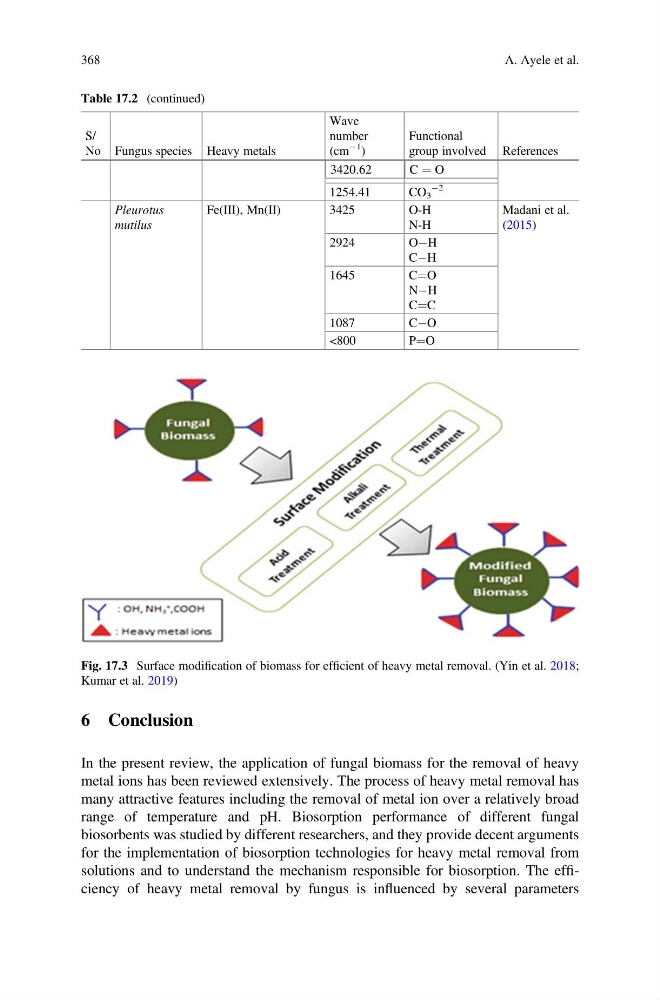
Fig. 17.3 Surface modification of biomass for efficient of heavy metal removal. (Yin et al. 2018;
Kumar et al. 2019)
368
A. Ayele et al.
In the present review, the application of fungal biomass for the removal of heavy
metal ions has been reviewed extensively. The process of heavy metal removal has
many attractive features including the removal of metal ion over a relatively broad
range of temperature and pH. Biosorption performance of different fungal
biosorbents was studied by different researchers, and they provide decent arguments
for the implementation of biosorption technologies for heavy metal removal from
solutions and to understand the mechanism responsible for biosorption. The efficiency of heavy metal removal by fungus is influenced by several parameters
Table 17.2 (continued)
S/
No Fungus species Heavy metals
Wave
number
(cm
À1
)
Functional
group involved References
3420.62
C ¼ O
1254.41
CO 3
À2
Pleurotus
mutilus
Fe(III), Mn(II)
3425
O-H
N-H
Madani et al.
(2015)
2924
OÀH
CÀH
1645
C¼O
NÀH
C¼C
1087
CÀO
<800
P¼O
Fig. 17.3 Surface modification of biomass for efficient of heavy metal removal. (Yin et al. 2018;
Kumar et al. 2019)
368
A. Ayele et al.