

2001). There are many types of aquatic plants used in phytoremediation which
include free-floating plants, water hyacinth, Salvinia (aquatic fern), water lettuce,
duckweed, submerged aquatic plants, and emerged aquatic plants. In this chapter,
the Salvinia species will be discussed elaborately.
4.2 Salvinia Species
Salvinia is a water fern, a free-floating macrophyte extensively scattered in aquatic
ecosystems. It has the capability of reproducing quickly and has the ability to settle
widespread colonies in lesser time. Salvinia can make its population double within
3 to 5 days under favorable conditions (Henry-Silva and Camargo 2006). It has a
high growth rate with wide distribution and is easy to handle. Various noxious
entities have supported the application of Salvinia to be used in phytoremediation
(Gardner and Al-Hamdani 1997).
Salvinia species, especially S. molesta and S. natans, are possibly used in
phytoremediation as it has extensive capacity for removal of heavy metals due to
the rapid growth rate and sufferance to toxic pollutants (Dhir 2009; Dhir et al. 2011).
It can effectively be used for the treatment of different kinds of wastewater treatment
(Abd-Elnaby and Egorov 2012).Salvinia roots have a higher rate of metal
accumulation.
Accumulation of toxic metal in S. natans and S. minima reduces with increasing
concentration of phosphate, perhaps heavy-metal uptake increase with the addition
of sulfur (Hoffmann et al. 2004). The presence of suitable environmental conditions
along with certain nutrients and chelators will determine the hyper-accumulation of
heavy metals Salvinia (Olguin et al. 2003). Different species of the Salvinia (water
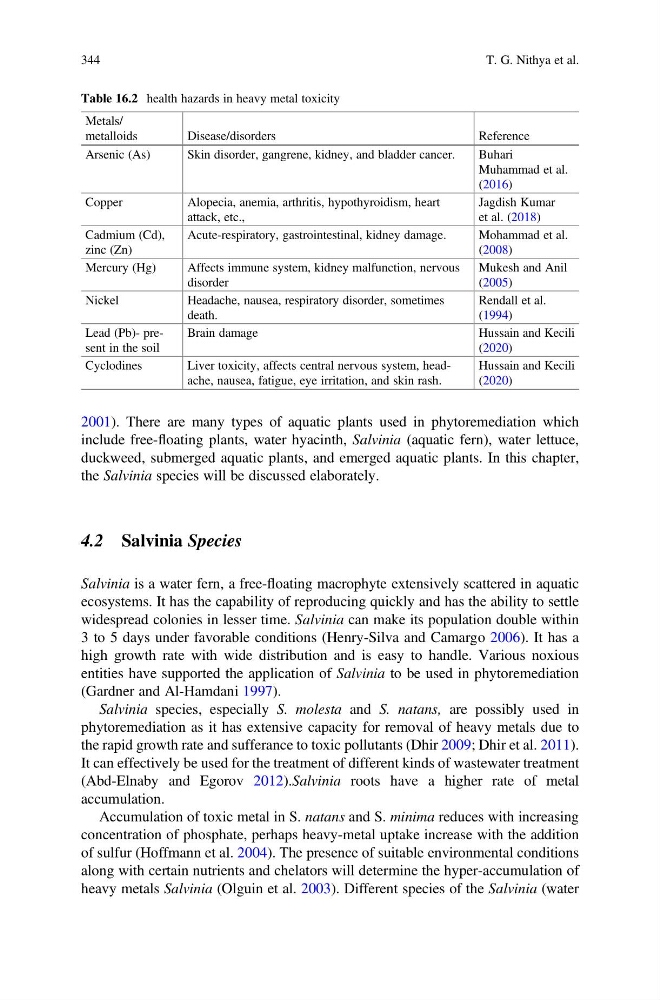
Table 16.2 health hazards in heavy metal toxicity
Metals/
metalloids
Disease/disorders
Reference
Arsenic (As)
Skin disorder, gangrene, kidney, and bladder cancer.
Buhari
Muhammad et al.
(2016)
Copper
Alopecia, anemia, arthritis, hypothyroidism, heart
attack, etc.,
Jagdish Kumar
et al. (2018)
Cadmium (Cd),
zinc (Zn)
Acute-respiratory, gastrointestinal, kidney damage.
Mohammad et al.
(2008)
Mercury (Hg)
Affects immune system, kidney malfunction, nervous
disorder
Mukesh and Anil
(2005)
Nickel
Headache, nausea, respiratory disorder, sometimes
death.
Rendall et al.
(1994)
Lead (Pb)- present in the soil
Brain damage
Hussain and Kecili
(2020)
Cyclodines
Liver toxicity, affects central nervous system, headache, nausea, fatigue, eye irritation, and skin rash.
Hussain and Kecili
(2020)
344
T. G. Nithya et al.
include free-floating plants, water hyacinth, Salvinia (aquatic fern), water lettuce,
duckweed, submerged aquatic plants, and emerged aquatic plants. In this chapter,
the Salvinia species will be discussed elaborately.
4.2 Salvinia Species
Salvinia is a water fern, a free-floating macrophyte extensively scattered in aquatic
ecosystems. It has the capability of reproducing quickly and has the ability to settle
widespread colonies in lesser time. Salvinia can make its population double within
3 to 5 days under favorable conditions (Henry-Silva and Camargo 2006). It has a
high growth rate with wide distribution and is easy to handle. Various noxious
entities have supported the application of Salvinia to be used in phytoremediation
(Gardner and Al-Hamdani 1997).
Salvinia species, especially S. molesta and S. natans, are possibly used in
phytoremediation as it has extensive capacity for removal of heavy metals due to
the rapid growth rate and sufferance to toxic pollutants (Dhir 2009; Dhir et al. 2011).
It can effectively be used for the treatment of different kinds of wastewater treatment
(Abd-Elnaby and Egorov 2012).Salvinia roots have a higher rate of metal
accumulation.
Accumulation of toxic metal in S. natans and S. minima reduces with increasing
concentration of phosphate, perhaps heavy-metal uptake increase with the addition
of sulfur (Hoffmann et al. 2004). The presence of suitable environmental conditions
along with certain nutrients and chelators will determine the hyper-accumulation of
heavy metals Salvinia (Olguin et al. 2003). Different species of the Salvinia (water
Table 16.2 health hazards in heavy metal toxicity
Metals/
metalloids
Disease/disorders
Reference
Arsenic (As)
Skin disorder, gangrene, kidney, and bladder cancer.
Buhari
Muhammad et al.
(2016)
Copper
Alopecia, anemia, arthritis, hypothyroidism, heart
attack, etc.,
Jagdish Kumar
et al. (2018)
Cadmium (Cd),
zinc (Zn)
Acute-respiratory, gastrointestinal, kidney damage.
Mohammad et al.
(2008)
Mercury (Hg)
Affects immune system, kidney malfunction, nervous
disorder
Mukesh and Anil
(2005)
Nickel
Headache, nausea, respiratory disorder, sometimes
death.
Rendall et al.
(1994)
Lead (Pb)- present in the soil
Brain damage
Hussain and Kecili
(2020)
Cyclodines
Liver toxicity, affects central nervous system, headache, nausea, fatigue, eye irritation, and skin rash.
Hussain and Kecili
(2020)
344
T. G. Nithya et al.