

4 Bioremediation of Heavy Metal Toxicity by Salvina
molesta
4.1 Aquatic Plants in Phytoremediation
The aquatic environment is a cost-efficient and wealthy cleaning technique for the
removal of contamination of the large area. The plants of the aquatic ecosystem are
found to be accumulators of contaminants and heavy metals naturally (Pratas et al.
2014). This method is found to be effective and provides a higher benefit
(Guittonny-Philippe et al. 2015). The selection of aquatic plant is very important
for the effective removal of contaminants (Fritioff and Greger 2003). In recent times
the phytoremediation using aquatic plants have become an enormous technique to
reduce the contaminants. An interesting factor is that the roots of aquatic plants are
extensive in absorbing contaminants like heavy metals and can accumulate them. So
the aquatic plants serve as the best choice of phytoremediation (Mays and Edwards
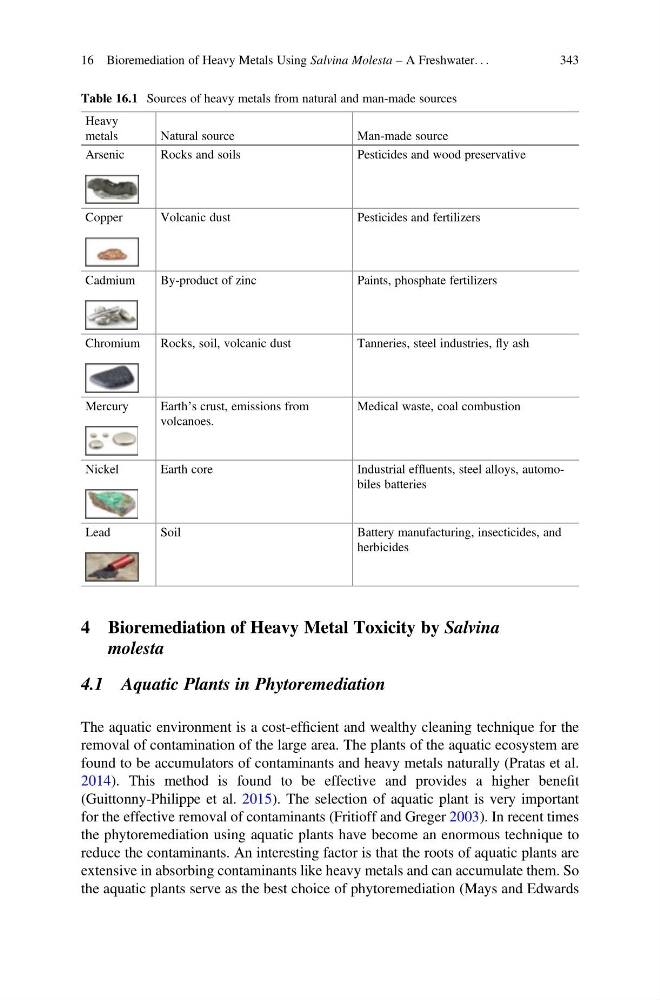
Table 16.1 Sources of heavy metals from natural and man-made sources
Heavy
metals
Natural source
Man-made source
Arsenic
Rocks and soils
Pesticides and wood preservative
Copper
Volcanic dust
Pesticides and fertilizers
Cadmium
By-product of zinc
Paints, phosphate fertilizers
Chromium
Rocks, soil, volcanic dust
Tanneries, steel industries, fly ash
Mercury
Earth’s crust, emissions from
volcanoes.
Medical waste, coal combustion
Nickel
Earth core
Industrial effluents, steel alloys, automobiles batteries
Lead
Soil
Battery manufacturing, insecticides, and
herbicides
16 Bioremediation of Heavy Metals Using Salvina Molesta – A Freshwater. . .
343
molesta
4.1 Aquatic Plants in Phytoremediation
The aquatic environment is a cost-efficient and wealthy cleaning technique for the
removal of contamination of the large area. The plants of the aquatic ecosystem are
found to be accumulators of contaminants and heavy metals naturally (Pratas et al.
2014). This method is found to be effective and provides a higher benefit
(Guittonny-Philippe et al. 2015). The selection of aquatic plant is very important
for the effective removal of contaminants (Fritioff and Greger 2003). In recent times
the phytoremediation using aquatic plants have become an enormous technique to
reduce the contaminants. An interesting factor is that the roots of aquatic plants are
extensive in absorbing contaminants like heavy metals and can accumulate them. So
the aquatic plants serve as the best choice of phytoremediation (Mays and Edwards
Table 16.1 Sources of heavy metals from natural and man-made sources
Heavy
metals
Natural source
Man-made source
Arsenic
Rocks and soils
Pesticides and wood preservative
Copper
Volcanic dust
Pesticides and fertilizers
Cadmium
By-product of zinc
Paints, phosphate fertilizers
Chromium
Rocks, soil, volcanic dust
Tanneries, steel industries, fly ash
Mercury
Earth’s crust, emissions from
volcanoes.
Medical waste, coal combustion
Nickel
Earth core
Industrial effluents, steel alloys, automobiles batteries
Lead
Soil
Battery manufacturing, insecticides, and
herbicides
16 Bioremediation of Heavy Metals Using Salvina Molesta – A Freshwater. . .
343