

2020). There are various causes for environmental pollution, such as emission of
fossil fuels, exhaust gases and chemical effluents from industries, pollution from
vehicles, and hazardous agricultural practices. The harmful pollutants can be divided
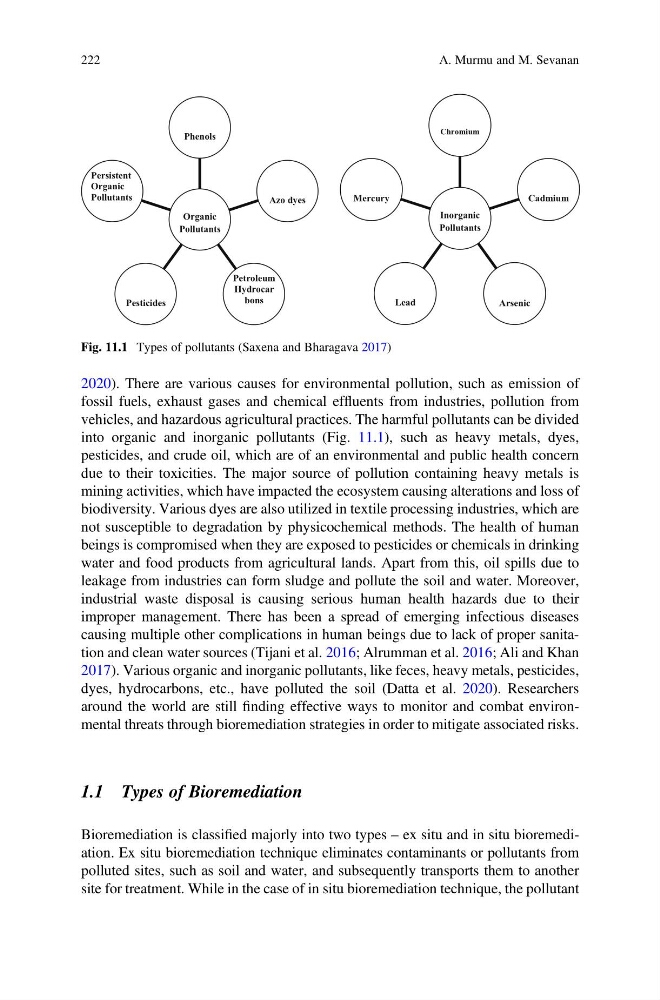
into organic and inorganic pollutants (Fig. 11.1), such as heavy metals, dyes,
pesticides, and crude oil, which are of an environmental and public health concern
due to their toxicities. The major source of pollution containing heavy metals is
mining activities, which have impacted the ecosystem causing alterations and loss of
biodiversity. Various dyes are also utilized in textile processing industries, which are
not susceptible to degradation by physicochemical methods. The health of human
beings is compromised when they are exposed to pesticides or chemicals in drinking
water and food products from agricultural lands. Apart from this, oil spills due to
leakage from industries can form sludge and pollute the soil and water. Moreover,
industrial waste disposal is causing serious human health hazards due to their
improper management. There has been a spread of emerging infectious diseases
causing multiple other complications in human beings due to lack of proper sanitation and clean water sources (Tijani et al. 2016; Alrumman et al. 2016; Ali and Khan
2017). Various organic and inorganic pollutants, like feces, heavy metals, pesticides,
dyes, hydrocarbons, etc., have polluted the soil (Datta et al. 2020). Researchers
around the world are still finding effective ways to monitor and combat environmental threats through bioremediation strategies in order to mitigate associated risks.
1.1 Types of Bioremediation
Bioremediation is classified majorly into two types – ex situ and in situ bioremediation. Ex situ bioremediation technique eliminates contaminants or pollutants from
polluted sites, such as soil and water, and subsequently transports them to another
site for treatment. While in the case of in situ bioremediation technique, the pollutant
Mercury
Lead
Arsenic
Cadmium
Chromium
Inorganic
Pollutants
Persistent
Organic
Pollutants
Pesticides
Petroleum
Hydrocar
bons
Azo dyes
Phenols
Organic
Pollutants
Fig. 11.1 Types of pollutants (Saxena and Bharagava 2017)
222
A. Murmu and M. Sevanan
fossil fuels, exhaust gases and chemical effluents from industries, pollution from
vehicles, and hazardous agricultural practices. The harmful pollutants can be divided
into organic and inorganic pollutants (Fig. 11.1), such as heavy metals, dyes,
pesticides, and crude oil, which are of an environmental and public health concern
due to their toxicities. The major source of pollution containing heavy metals is
mining activities, which have impacted the ecosystem causing alterations and loss of
biodiversity. Various dyes are also utilized in textile processing industries, which are
not susceptible to degradation by physicochemical methods. The health of human
beings is compromised when they are exposed to pesticides or chemicals in drinking
water and food products from agricultural lands. Apart from this, oil spills due to
leakage from industries can form sludge and pollute the soil and water. Moreover,
industrial waste disposal is causing serious human health hazards due to their
improper management. There has been a spread of emerging infectious diseases
causing multiple other complications in human beings due to lack of proper sanitation and clean water sources (Tijani et al. 2016; Alrumman et al. 2016; Ali and Khan
2017). Various organic and inorganic pollutants, like feces, heavy metals, pesticides,
dyes, hydrocarbons, etc., have polluted the soil (Datta et al. 2020). Researchers
around the world are still finding effective ways to monitor and combat environmental threats through bioremediation strategies in order to mitigate associated risks.
1.1 Types of Bioremediation
Bioremediation is classified majorly into two types – ex situ and in situ bioremediation. Ex situ bioremediation technique eliminates contaminants or pollutants from
polluted sites, such as soil and water, and subsequently transports them to another
site for treatment. While in the case of in situ bioremediation technique, the pollutant
Mercury
Lead
Arsenic
Cadmium
Chromium
Inorganic
Pollutants
Persistent
Organic
Pollutants
Pesticides
Petroleum
Hydrocar
bons
Azo dyes
Phenols
Organic
Pollutants
Fig. 11.1 Types of pollutants (Saxena and Bharagava 2017)
222
A. Murmu and M. Sevanan