

is treated at the site of pollution. Compared to ex situ bioremediation, in situ
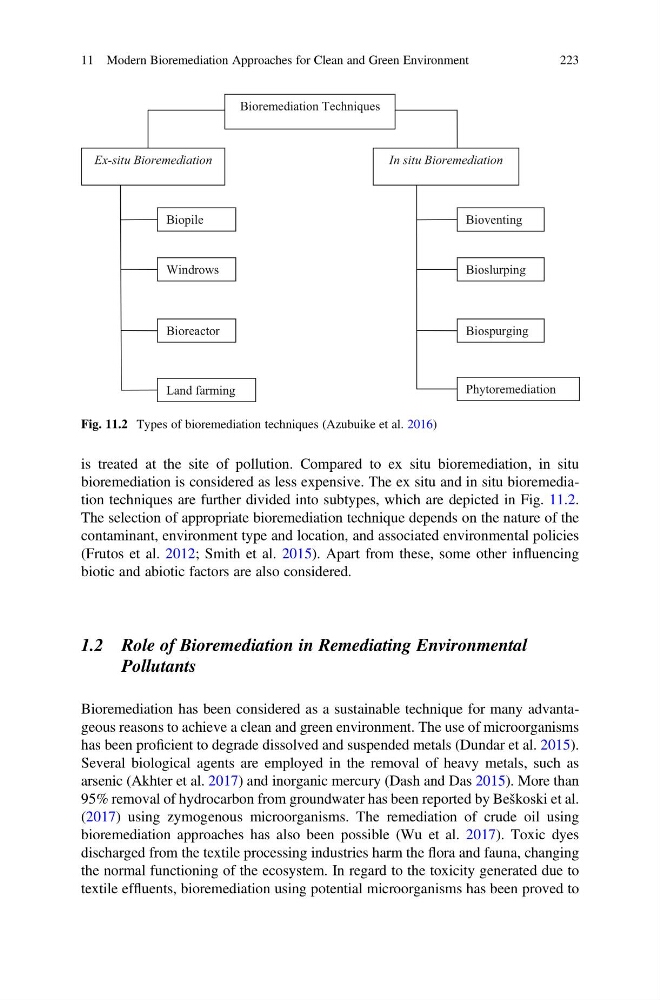
bioremediation is considered as less expensive. The ex situ and in situ bioremediation techniques are further divided into subtypes, which are depicted in Fig. 11.2.
The selection of appropriate bioremediation technique depends on the nature of the
contaminant, environment type and location, and associated environmental policies
(Frutos et al. 2012; Smith et al. 2015). Apart from these, some other influencing
biotic and abiotic factors are also considered.
1.2 Role of Bioremediation in Remediating Environmental
Pollutants
Bioremediation has been considered as a sustainable technique for many advantageous reasons to achieve a clean and green environment. The use of microorganisms
has been proficient to degrade dissolved and suspended metals (Dundar et al. 2015).
Several biological agents are employed in the removal of heavy metals, such as
arsenic (Akhter et al. 2017) and inorganic mercury (Dash and Das 2015). More than
95% removal of hydrocarbon from groundwater has been reported by Beškoski et al.
(2017) using zymogenous microorganisms. The remediation of crude oil using
bioremediation approaches has also been possible (Wu et al. 2017). Toxic dyes
discharged from the textile processing industries harm the flora and fauna, changing
the normal functioning of the ecosystem. In regard to the toxicity generated due to
textile effluents, bioremediation using potential microorganisms has been proved to
Land farming
Windrows
Bioreactor
Biopile
Bioventing
Phytoremediation
Biospurging
Bioslurping
Bioremediation Techniques
Ex-situ Bioremediation
In situ Bioremediation
Fig. 11.2 Types of bioremediation techniques (Azubuike et al. 2016)
11 Modern Bioremediation Approaches for Clean and Green Environment
223
bioremediation is considered as less expensive. The ex situ and in situ bioremediation techniques are further divided into subtypes, which are depicted in Fig. 11.2.
The selection of appropriate bioremediation technique depends on the nature of the
contaminant, environment type and location, and associated environmental policies
(Frutos et al. 2012; Smith et al. 2015). Apart from these, some other influencing
biotic and abiotic factors are also considered.
1.2 Role of Bioremediation in Remediating Environmental
Pollutants
Bioremediation has been considered as a sustainable technique for many advantageous reasons to achieve a clean and green environment. The use of microorganisms
has been proficient to degrade dissolved and suspended metals (Dundar et al. 2015).
Several biological agents are employed in the removal of heavy metals, such as
arsenic (Akhter et al. 2017) and inorganic mercury (Dash and Das 2015). More than
95% removal of hydrocarbon from groundwater has been reported by Beškoski et al.
(2017) using zymogenous microorganisms. The remediation of crude oil using
bioremediation approaches has also been possible (Wu et al. 2017). Toxic dyes
discharged from the textile processing industries harm the flora and fauna, changing
the normal functioning of the ecosystem. In regard to the toxicity generated due to
textile effluents, bioremediation using potential microorganisms has been proved to
Land farming
Windrows
Bioreactor
Biopile
Bioventing
Phytoremediation
Biospurging
Bioslurping
Bioremediation Techniques
Ex-situ Bioremediation
In situ Bioremediation
Fig. 11.2 Types of bioremediation techniques (Azubuike et al. 2016)
11 Modern Bioremediation Approaches for Clean and Green Environment
223