

membrane. At equilibrium, the concentration is balanced on both sides by the
osmotic pressure. If the applied pressure is greater than the osmotic pressure, the
solvent will flow to the side of the solution through the membrane (Fig. 6.6). This
phenomenon is called reverse osmosis (RO) (Kim et al. 2005). Nanofiltration is
effective for the removal of Mg
2+ and Ca
2+ ions and small size organic compounds.
This method could be used to remove disinfection by-products (trihalomethanes)
formed during the process of chlorination. RO is known for desalting brackish water
and seawater. This process can be used to remove low-molecular-weight organic
compounds from water.
The main issues in membrane-based technique are fouling and scaling issues.
Fouling issues are due to organic or inorganic colloids and biological contaminants,
while scaling is due to the presence of high levels of salt (calcium sulfate fluoride or
carbonate or magnesium hydroxide) (Cheryan 1998; Baker 2004).
3.3.2 Sand Filtration
Slow sand filtration (SSF) is a simple process that allows water to pass through the
bed of sand, and it can remove solids, microbes, and heavy metals in water. SSF is
filled with a combination of coarse and fine sand as a filter medium, as shown in
Fig. 6.7. To support this medium, pebbles and gravels are used. It consists of a layer
of sand with a height of 60–120 cm and a gravel layer of 30–50 cm. The combination
of coarse and fine sand helps in the removal of organic matter in water. Moreover,
the flow rate is low in the case of SSF and maturation period (up to 40 days). The
water is fed into the column from the top, and treated water is to be collected at the
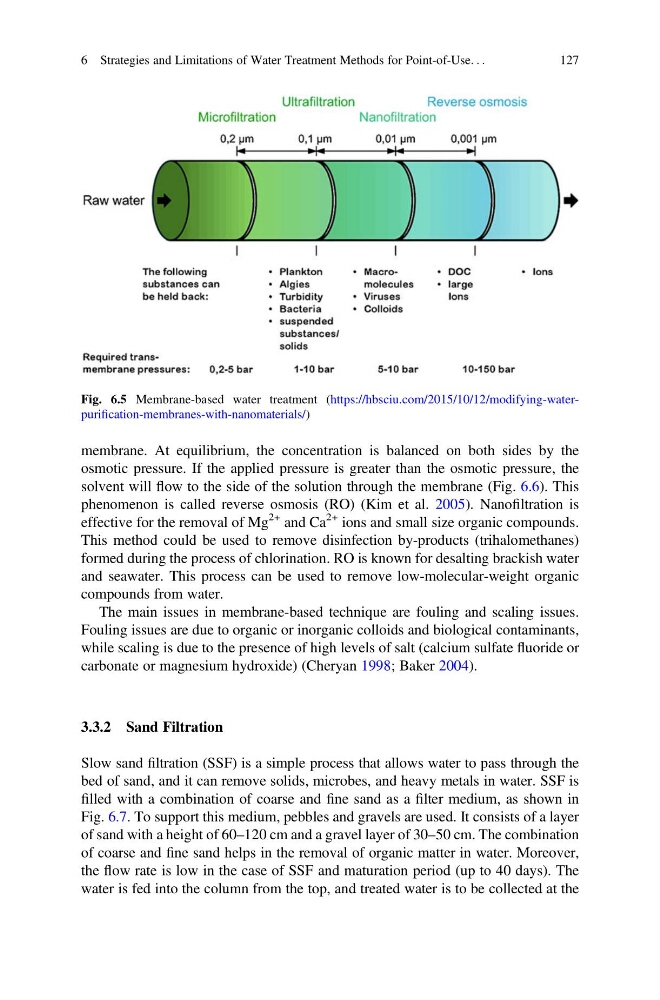
Fig. 6.5 Membrane-based water treatment (https://hbsciu.com/2015/10/12/modifying-waterpurification-membranes-with-nanomaterials/)
6 Strategies and Limitations of Water Treatment Methods for Point-of-Use. . .
127
osmotic pressure. If the applied pressure is greater than the osmotic pressure, the
solvent will flow to the side of the solution through the membrane (Fig. 6.6). This
phenomenon is called reverse osmosis (RO) (Kim et al. 2005). Nanofiltration is
effective for the removal of Mg
2+ and Ca
2+ ions and small size organic compounds.
This method could be used to remove disinfection by-products (trihalomethanes)
formed during the process of chlorination. RO is known for desalting brackish water
and seawater. This process can be used to remove low-molecular-weight organic
compounds from water.
The main issues in membrane-based technique are fouling and scaling issues.
Fouling issues are due to organic or inorganic colloids and biological contaminants,
while scaling is due to the presence of high levels of salt (calcium sulfate fluoride or
carbonate or magnesium hydroxide) (Cheryan 1998; Baker 2004).
3.3.2 Sand Filtration
Slow sand filtration (SSF) is a simple process that allows water to pass through the
bed of sand, and it can remove solids, microbes, and heavy metals in water. SSF is
filled with a combination of coarse and fine sand as a filter medium, as shown in
Fig. 6.7. To support this medium, pebbles and gravels are used. It consists of a layer
of sand with a height of 60–120 cm and a gravel layer of 30–50 cm. The combination
of coarse and fine sand helps in the removal of organic matter in water. Moreover,
the flow rate is low in the case of SSF and maturation period (up to 40 days). The
water is fed into the column from the top, and treated water is to be collected at the
Fig. 6.5 Membrane-based water treatment (https://hbsciu.com/2015/10/12/modifying-waterpurification-membranes-with-nanomaterials/)
6 Strategies and Limitations of Water Treatment Methods for Point-of-Use. . .
127