

14
Algae
considerable competitive advantage over other marine organisms. In some settings where they have
been accidentally introduced, notably the Mediterranean Sea, certain species of siphonous green
algae (e.g., Caulerpa racemosa; Figure 1.20) have proved all successful, displacing native marine
flora over large areas.
parenchymaToUs and pseUdo-parenchymaToUs Type
These algae are mostly macroscopic with tissue of undifferentiated cells and growth originating
from a meristem with cell division in three dimensions. In the case of parenchymatous algae, cells
of the primary filament divide in all directions and any essential filamentous structure is lost. This
tissue organization is present in Ulva (Chlorophyta) (Figure 1.1r), where the thallus is simply organized in a two-cell layered sheet and in many of the brown algae as Laminaria or Fucus. Pseudoparenchymatous algae are made up of a loose or close aggregation of numerous, intertwined,
branched filaments that collectively form the thallus, held together by mucilage, especially in red
algae. Thallus construction is entirely based on a filamentous construction with little or no internal
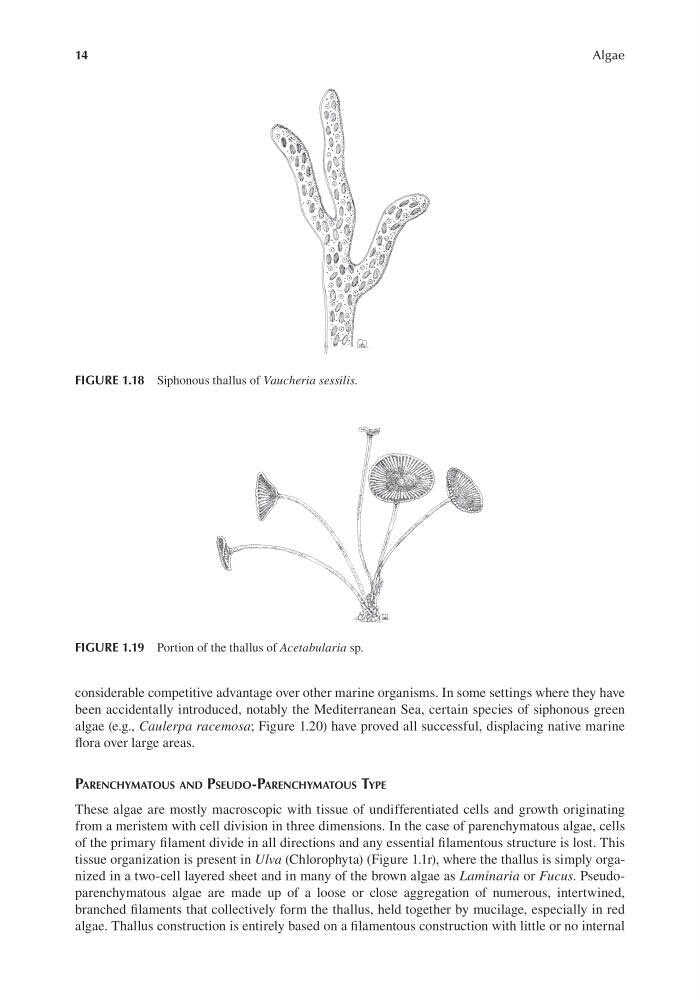
FIGURE 1.18 Siphonous thallus of Vaucheria sessilis.
FIGURE 1.19 Portion of the thallus of Acetabularia sp.
Algae
considerable competitive advantage over other marine organisms. In some settings where they have
been accidentally introduced, notably the Mediterranean Sea, certain species of siphonous green
algae (e.g., Caulerpa racemosa; Figure 1.20) have proved all successful, displacing native marine
flora over large areas.
parenchymaToUs and pseUdo-parenchymaToUs Type
These algae are mostly macroscopic with tissue of undifferentiated cells and growth originating
from a meristem with cell division in three dimensions. In the case of parenchymatous algae, cells
of the primary filament divide in all directions and any essential filamentous structure is lost. This
tissue organization is present in Ulva (Chlorophyta) (Figure 1.1r), where the thallus is simply organized in a two-cell layered sheet and in many of the brown algae as Laminaria or Fucus. Pseudoparenchymatous algae are made up of a loose or close aggregation of numerous, intertwined,
branched filaments that collectively form the thallus, held together by mucilage, especially in red
algae. Thallus construction is entirely based on a filamentous construction with little or no internal
FIGURE 1.18 Siphonous thallus of Vaucheria sessilis.
FIGURE 1.19 Portion of the thallus of Acetabularia sp.