

2013 levels by 2030. China’s NDC aims to reduce emissions per unit of GDP by
60–65% of 2005 levels.
At present, there are at least two problems with NDCs in various countries. First,
the NDC is not mandatory target unlike the Kyoto Protocol. As such, whether
countries are achieving their NDC is unknown. Second, even if all countries achieve
the NDC target, they cannot achieve the 1.5 or 2
C target of the Paris Agreement.
According to the numerical simulations by Tsinghua University research team,
under current NDC scenarios, the global average temperature rises by 2100 is
predicted to be approximately 3.11
C. There is only a 6.4% probability that the
global temperature rise will be controlled within 1.5
C and a 15.4% probability that
it will be controlled within 2
C. There is a 32.9% probability that the temperature
rise will exceed 4
C. The prerequisite for achieving the 2
C temperature target is
that the annual reduction rate of energy consumption per unit of GDP is maintained
at approximately 2.5%, and the annual reduction rate of carbon emission intensity
per unit of energy consumption will exceed 2% in 2020 and increase to approximately 4% and 5% in 2030 and 2040, respectively. The annual reduction rate of
global carbon emission intensity per unit of GDP needs to increase from approximately 5% in 2020 to 6.6% in 2040. The global transition to a green, low-carbon,
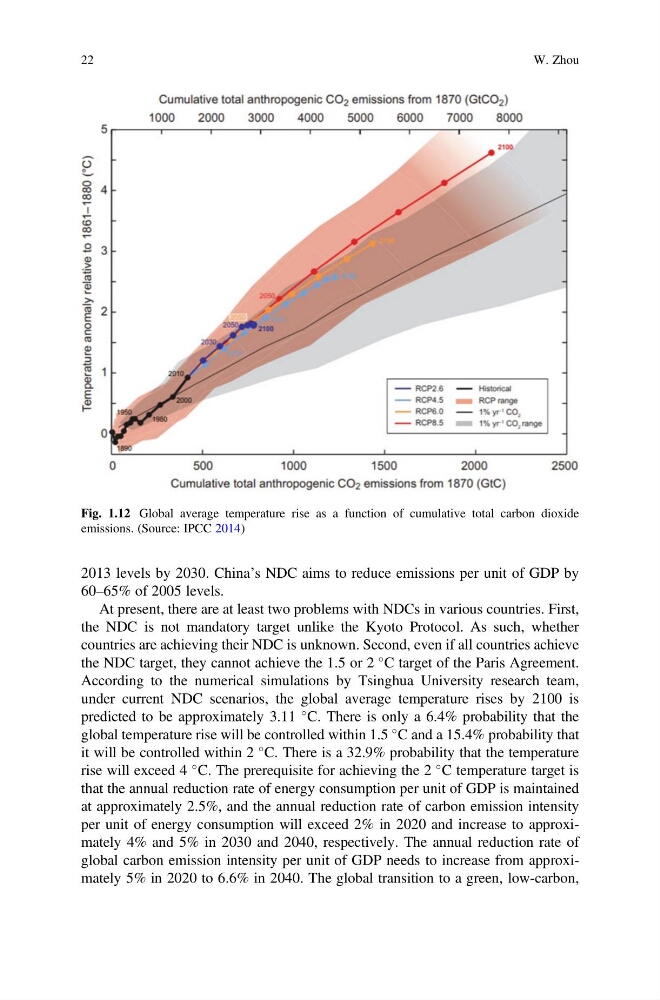
Fig. 1.12 Global average temperature rise as a function of cumulative total carbon dioxide
emissions. (Source: IPCC 2014)
22
W. Zhou
60–65% of 2005 levels.
At present, there are at least two problems with NDCs in various countries. First,
the NDC is not mandatory target unlike the Kyoto Protocol. As such, whether
countries are achieving their NDC is unknown. Second, even if all countries achieve
the NDC target, they cannot achieve the 1.5 or 2
C target of the Paris Agreement.
According to the numerical simulations by Tsinghua University research team,
under current NDC scenarios, the global average temperature rises by 2100 is
predicted to be approximately 3.11
C. There is only a 6.4% probability that the
global temperature rise will be controlled within 1.5
C and a 15.4% probability that
it will be controlled within 2
C. There is a 32.9% probability that the temperature
rise will exceed 4
C. The prerequisite for achieving the 2
C temperature target is
that the annual reduction rate of energy consumption per unit of GDP is maintained
at approximately 2.5%, and the annual reduction rate of carbon emission intensity
per unit of energy consumption will exceed 2% in 2020 and increase to approximately 4% and 5% in 2030 and 2040, respectively. The annual reduction rate of
global carbon emission intensity per unit of GDP needs to increase from approximately 5% in 2020 to 6.6% in 2040. The global transition to a green, low-carbon,
Fig. 1.12 Global average temperature rise as a function of cumulative total carbon dioxide
emissions. (Source: IPCC 2014)
22
W. Zhou