

Nevertheless, the anthropogenic component of climate change has been attributed
to developed countries, who should take the initiative to reduce CO 2 (Zhou and Qian
2012, p. 27). In the Framework Convention on Climate Change, the concept of
common but differentiated responsibilities was introduced based on the fact that
cumulative carbon emissions and per capita emissions vary between developed and
developing countries (Zhou et al. 2015, p. 27).
The impact of the IPCC Report and advancement of scientific understanding of
climate change has led to recognition that domestic CO 2 reduction policies are
mutually beneficial and the development of low-carbon societies should be pursued
in both developing and developed countries. In order to deal with differences in
obligations for developed and developing countries, the Paris Agreement states that:
Developed country Parties should continue taking the lead by undertaking economy-wide
absolute emission reduction targets. Developing country Parties should continue enhancing
their mitigation efforts.
The concept of concentric differentiation is introduced, which encourages a shift
over time to economy-wide emission reductions targets in the context of differing
national circumstances (MOFA 2015; Takamura 2016). Every country must implement domestic climate change policies and submit nationally determined contributions every 5 years. Realization of a low-carbon society is a priority in Asia, in
particular in East Asia.
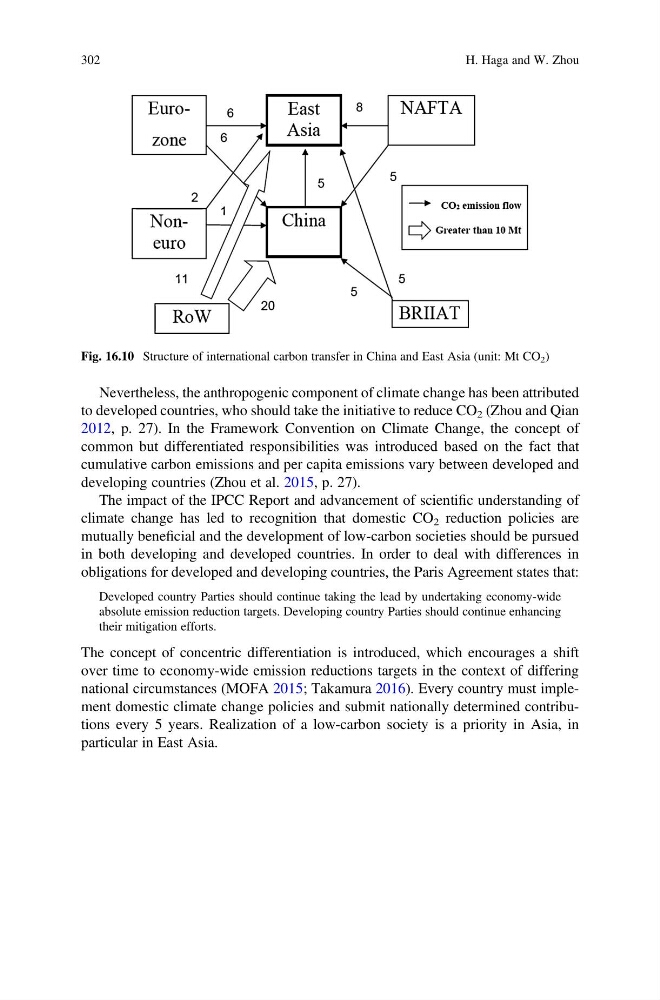
Fig. 16.10 Structure of international carbon transfer in China and East Asia (unit: Mt CO 2 )
302
H. Haga and W. Zhou
to developed countries, who should take the initiative to reduce CO 2 (Zhou and Qian
2012, p. 27). In the Framework Convention on Climate Change, the concept of
common but differentiated responsibilities was introduced based on the fact that
cumulative carbon emissions and per capita emissions vary between developed and
developing countries (Zhou et al. 2015, p. 27).
The impact of the IPCC Report and advancement of scientific understanding of
climate change has led to recognition that domestic CO 2 reduction policies are
mutually beneficial and the development of low-carbon societies should be pursued
in both developing and developed countries. In order to deal with differences in
obligations for developed and developing countries, the Paris Agreement states that:
Developed country Parties should continue taking the lead by undertaking economy-wide
absolute emission reduction targets. Developing country Parties should continue enhancing
their mitigation efforts.
The concept of concentric differentiation is introduced, which encourages a shift
over time to economy-wide emission reductions targets in the context of differing
national circumstances (MOFA 2015; Takamura 2016). Every country must implement domestic climate change policies and submit nationally determined contributions every 5 years. Realization of a low-carbon society is a priority in Asia, in
particular in East Asia.
Fig. 16.10 Structure of international carbon transfer in China and East Asia (unit: Mt CO 2 )
302
H. Haga and W. Zhou