

DiDi is a technology company with global influence and a one-stop travel
platform. Over the past year, DiDi has continuously increased investment in science
and technology, expanded its strategic layout in terms of cutting-edge technology
and innovative business, and become a world-class technology company leading
transformation of the automotive and transportation industry. In 2018, DiDi founded
DiDi AI Labs, which primarily investigates technical issues in AI and focuses on
cutting-edge research in areas such as machine learning, natural language
processing, computer vision, operations research, and statistics. The application
actively deploys next-generation technology to build a new ecology of intelligent
mobility. Based on innovation, DiDi has released the Transportation Brain, a smart
transportation strategy product that combines cloud computing, AI technology, big
data from transportation, and transportation engineering.
Continued investment in innovation has improved the company’s products and
service offerings, greatly improved the efficiency of shared travel, and resulted in
significant energy savings and emissions reductions. DiDi reduced carbon dioxide
emissions by 1.57 million tons in 2017, which equates to the average annual
emissions from 800,000 vehicles covering 10,000 km.
DiDi has designed a business ecology that enables industry partners to transform
and upgrade. Travel is a basic human need. As a global industry leader, DiDi is
actively deploying its business ecosystem to accelerate change across the industry.
Efforts are being made to open up technical capabilities and accelerate the creation of
a one-stop travel platform. In 2018, DiDi integrated information on buses, subways,
taxis, and bicycles, providing users with a combination of multiple travel options in a
single interface. Meanwhile, a one-stop auto service platform has been established to
provide complete auto services to all car owners, including DiDi drivers. The
platform seeks to broaden its reach to business related to car ownership such as
refueling, car services, charging, and finance. In addition, DiDi is addressing future
travel needs and aggressively pushing reforms in automobile manufacture. DiDi and
31 automotive industry chain companies have collaborated to establish the Trent
Alliance to promote the development of new energy, intelligence, and shared
industries, jointly building a service platform for future travel users and car owners.
In 2018, DiDi accelerated implementation of its international business layout. It
has acquired the company Brazil 99; launched online car rental services in Mexico,
Australia, and elsewhere; and expanded into the taxi service market in countries and
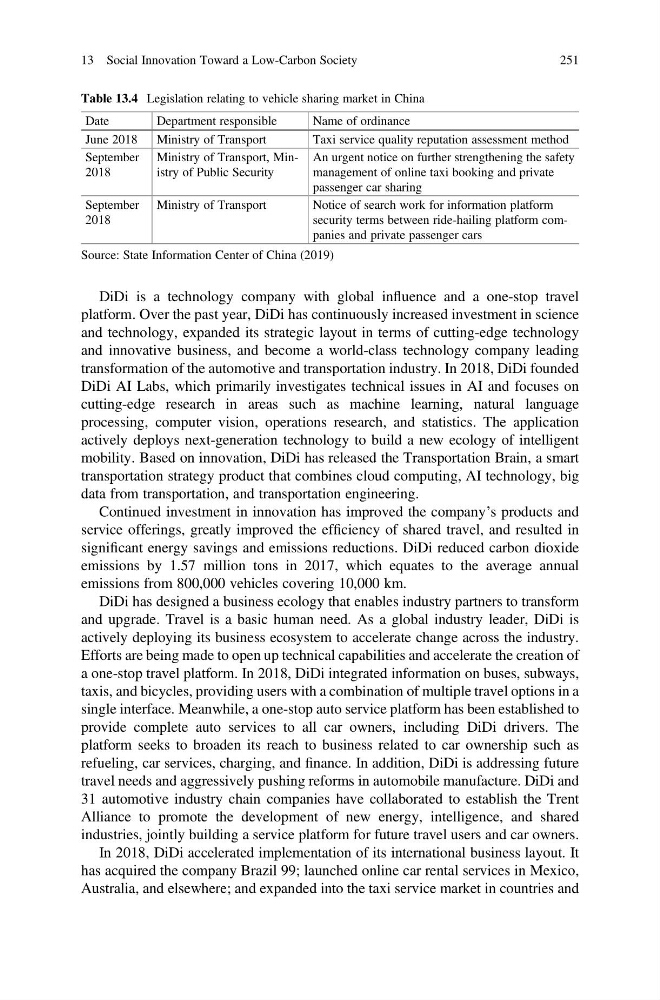
Table 13.4 Legislation relating to vehicle sharing market in China
Date
Department responsible
Name of ordinance
June 2018
Ministry of Transport
Taxi service quality reputation assessment method
September
2018
Ministry of Transport, Ministry of Public Security
An urgent notice on further strengthening the safety
management of online taxi booking and private
passenger car sharing
September
2018
Ministry of Transport
Notice of search work for information platform
security terms between ride-hailing platform companies and private passenger cars
Source: State Information Center of China (2019)
13 Social Innovation Toward a Low-Carbon Society
251
platform. Over the past year, DiDi has continuously increased investment in science
and technology, expanded its strategic layout in terms of cutting-edge technology
and innovative business, and become a world-class technology company leading
transformation of the automotive and transportation industry. In 2018, DiDi founded
DiDi AI Labs, which primarily investigates technical issues in AI and focuses on
cutting-edge research in areas such as machine learning, natural language
processing, computer vision, operations research, and statistics. The application
actively deploys next-generation technology to build a new ecology of intelligent
mobility. Based on innovation, DiDi has released the Transportation Brain, a smart
transportation strategy product that combines cloud computing, AI technology, big
data from transportation, and transportation engineering.
Continued investment in innovation has improved the company’s products and
service offerings, greatly improved the efficiency of shared travel, and resulted in
significant energy savings and emissions reductions. DiDi reduced carbon dioxide
emissions by 1.57 million tons in 2017, which equates to the average annual
emissions from 800,000 vehicles covering 10,000 km.
DiDi has designed a business ecology that enables industry partners to transform
and upgrade. Travel is a basic human need. As a global industry leader, DiDi is
actively deploying its business ecosystem to accelerate change across the industry.
Efforts are being made to open up technical capabilities and accelerate the creation of
a one-stop travel platform. In 2018, DiDi integrated information on buses, subways,
taxis, and bicycles, providing users with a combination of multiple travel options in a
single interface. Meanwhile, a one-stop auto service platform has been established to
provide complete auto services to all car owners, including DiDi drivers. The
platform seeks to broaden its reach to business related to car ownership such as
refueling, car services, charging, and finance. In addition, DiDi is addressing future
travel needs and aggressively pushing reforms in automobile manufacture. DiDi and
31 automotive industry chain companies have collaborated to establish the Trent
Alliance to promote the development of new energy, intelligence, and shared
industries, jointly building a service platform for future travel users and car owners.
In 2018, DiDi accelerated implementation of its international business layout. It
has acquired the company Brazil 99; launched online car rental services in Mexico,
Australia, and elsewhere; and expanded into the taxi service market in countries and
Table 13.4 Legislation relating to vehicle sharing market in China
Date
Department responsible
Name of ordinance
June 2018
Ministry of Transport
Taxi service quality reputation assessment method
September
2018
Ministry of Transport, Ministry of Public Security
An urgent notice on further strengthening the safety
management of online taxi booking and private
passenger car sharing
September
2018
Ministry of Transport
Notice of search work for information platform
security terms between ride-hailing platform companies and private passenger cars
Source: State Information Center of China (2019)
13 Social Innovation Toward a Low-Carbon Society
251