

12.4.1.2 Development of Micro-Hydraulic Power System Based on Tidal
Energy
If a small bay is enclosed by a wall during high tide, a kind of dam appears after a
few hours due to the tidal phenomenon of sea water. Since the potential energy of
high-level water is greater than that of low-level water, high-level water tends to flow
to areas of lower-level water. If electric power can be generated by such a flow of
water, clean energy can be obtained, independent of the weather (Yanabu and
Nishikawa 2004, Yamada et al. 2020). In the case of a windmill generator, electric
power cannot be generated when the wind does not blow. Solar panels cannot
generate electric power at night and on rainy days. In contrast, tidal energy can be
generated constantly, regardless of weather and time of day.
A power generation system has been developed in order to extract tidal energy
from sea water, as shown in Fig. 12.13 (Lian et al. 2010). Tank 1 and Tank 2 (both
approximately 1 m
3 ) are placed such that Tank 1 is higher than Tank 2 and are
connected by a pipe. A spiral screw (Yanabu and Nishikawa 2004) is mounted inside
the pipe to drive the generator. Using four pumps, the water in Tank 2 is transported
into Tank 1 to achieve a difference in water level between tanks. One of the four
pumps has a special function to adjust flow quantity, and the difference in water level
in both tanks can be adjusted by changing the water flow of this pump. Tidal
phenomena can be simulated in the laboratory by means of this system.
Using this power generation system, electric power output was measured by
setting four different water level differences of 60, 75, 90, and 105 cm. Experimental
results are depicted in Fig. 12.14. Power output tends to increase with greater
differences in water level. Output at 60 cm water level difference is saturated at
(a) Spring Tide
(b) Neap Tide
1 day
1 day
SUN
EARTH
SPRING TIDE
MOON
SUN
EARTH
NEAP TIDE
MOON
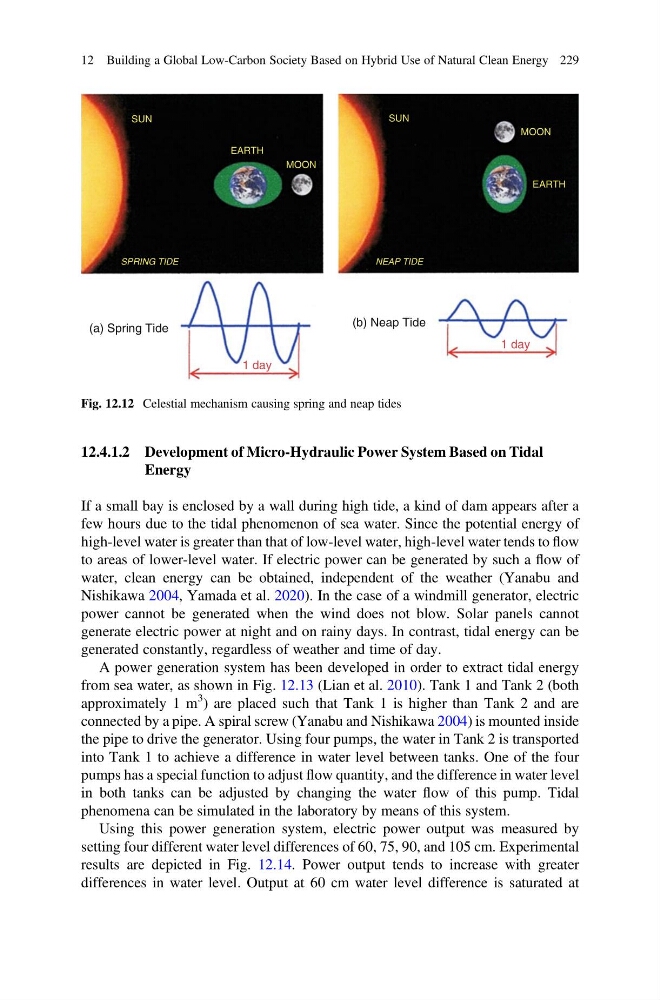
Fig. 12.12 Celestial mechanism causing spring and neap tides
12 Building a Global Low-Carbon Society Based on Hybrid Use of Natural Clean Energy 229
Energy
If a small bay is enclosed by a wall during high tide, a kind of dam appears after a
few hours due to the tidal phenomenon of sea water. Since the potential energy of
high-level water is greater than that of low-level water, high-level water tends to flow
to areas of lower-level water. If electric power can be generated by such a flow of
water, clean energy can be obtained, independent of the weather (Yanabu and
Nishikawa 2004, Yamada et al. 2020). In the case of a windmill generator, electric
power cannot be generated when the wind does not blow. Solar panels cannot
generate electric power at night and on rainy days. In contrast, tidal energy can be
generated constantly, regardless of weather and time of day.
A power generation system has been developed in order to extract tidal energy
from sea water, as shown in Fig. 12.13 (Lian et al. 2010). Tank 1 and Tank 2 (both
approximately 1 m
3 ) are placed such that Tank 1 is higher than Tank 2 and are
connected by a pipe. A spiral screw (Yanabu and Nishikawa 2004) is mounted inside
the pipe to drive the generator. Using four pumps, the water in Tank 2 is transported
into Tank 1 to achieve a difference in water level between tanks. One of the four
pumps has a special function to adjust flow quantity, and the difference in water level
in both tanks can be adjusted by changing the water flow of this pump. Tidal
phenomena can be simulated in the laboratory by means of this system.
Using this power generation system, electric power output was measured by
setting four different water level differences of 60, 75, 90, and 105 cm. Experimental
results are depicted in Fig. 12.14. Power output tends to increase with greater
differences in water level. Output at 60 cm water level difference is saturated at
(a) Spring Tide
(b) Neap Tide
1 day
1 day
SUN
EARTH
SPRING TIDE
MOON
SUN
EARTH
NEAP TIDE
MOON
Fig. 12.12 Celestial mechanism causing spring and neap tides
12 Building a Global Low-Carbon Society Based on Hybrid Use of Natural Clean Energy 229