

products, especially in the district of Zaanse Schans. These types of windmill were
designed to use drag force rather than lifting force. According to the fundamental
concept of fluid dynamics, the drag force acting on a blade is smaller than the lifting
force. The most popular type of modern windmill is designed to use lifting force
instead of drag force, a design requiring three blades (Matsumiya et al. 2005).
However, superior performance of this windmill is achieved only if the direction
of wind remains constant throughout the year, which occurs only in limited areas. In
Japan, the wind direction changes with high frequency, depending on variations in
meteorological conditions. Therefore, the direction faced by a windmill must be
frequently adjusted to match the prevailing wind direction, in order to obtain high
efficiency of power generation (Tanaka et al. 2007; Tanaka et al. 2008).
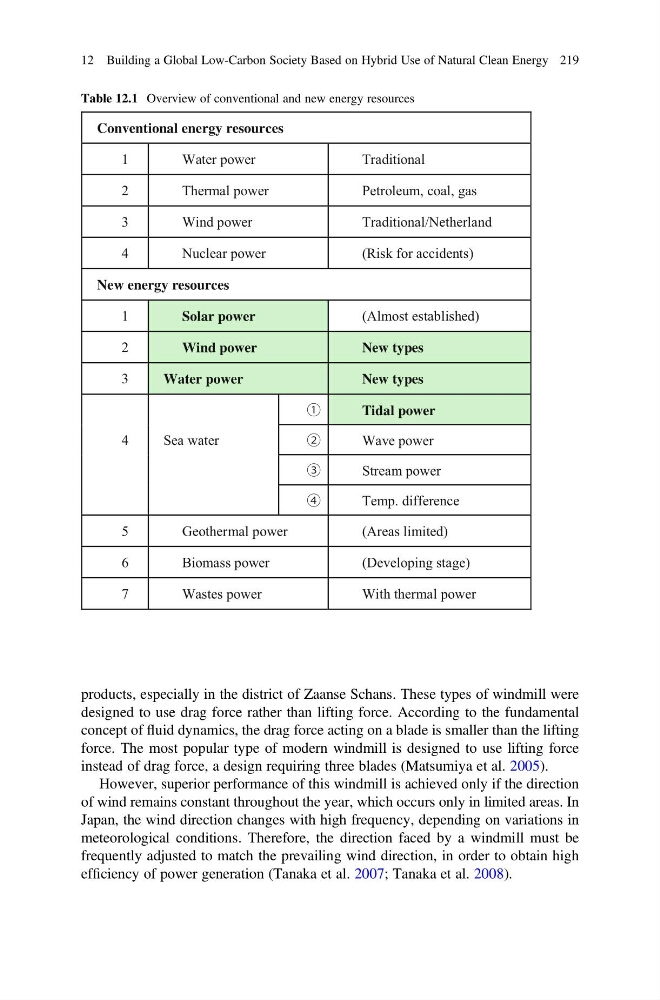
Table 12.1 Overview of conventional and new energy resources
Conventional energy resources
1
Water power
Traditional
2
Thermal power
Petroleum, coal, gas
3
Wind power
Traditional/Netherland
4
Nuclear power
(Risk for accidents)
New energy resources
1
Solar power
(Almost established)
2
Wind power
New types
3
Water power
New types
4
Sea water
Tidal power
Wave power
Stream power
Temp. difference
5
Geothermal power
(Areas limited)
6
Biomass power
(Developing stage)
7
Wastes power
With thermal power
12 Building a Global Low-Carbon Society Based on Hybrid Use of Natural Clean Energy 219
designed to use drag force rather than lifting force. According to the fundamental
concept of fluid dynamics, the drag force acting on a blade is smaller than the lifting
force. The most popular type of modern windmill is designed to use lifting force
instead of drag force, a design requiring three blades (Matsumiya et al. 2005).
However, superior performance of this windmill is achieved only if the direction
of wind remains constant throughout the year, which occurs only in limited areas. In
Japan, the wind direction changes with high frequency, depending on variations in
meteorological conditions. Therefore, the direction faced by a windmill must be
frequently adjusted to match the prevailing wind direction, in order to obtain high
efficiency of power generation (Tanaka et al. 2007; Tanaka et al. 2008).
Table 12.1 Overview of conventional and new energy resources
Conventional energy resources
1
Water power
Traditional
2
Thermal power
Petroleum, coal, gas
3
Wind power
Traditional/Netherland
4
Nuclear power
(Risk for accidents)
New energy resources
1
Solar power
(Almost established)
2
Wind power
New types
3
Water power
New types
4
Sea water
Tidal power
Wave power
Stream power
Temp. difference
5
Geothermal power
(Areas limited)
6
Biomass power
(Developing stage)
7
Wastes power
With thermal power
12 Building a Global Low-Carbon Society Based on Hybrid Use of Natural Clean Energy 219