

10 Impact of Biomedical Waste Management System …
243
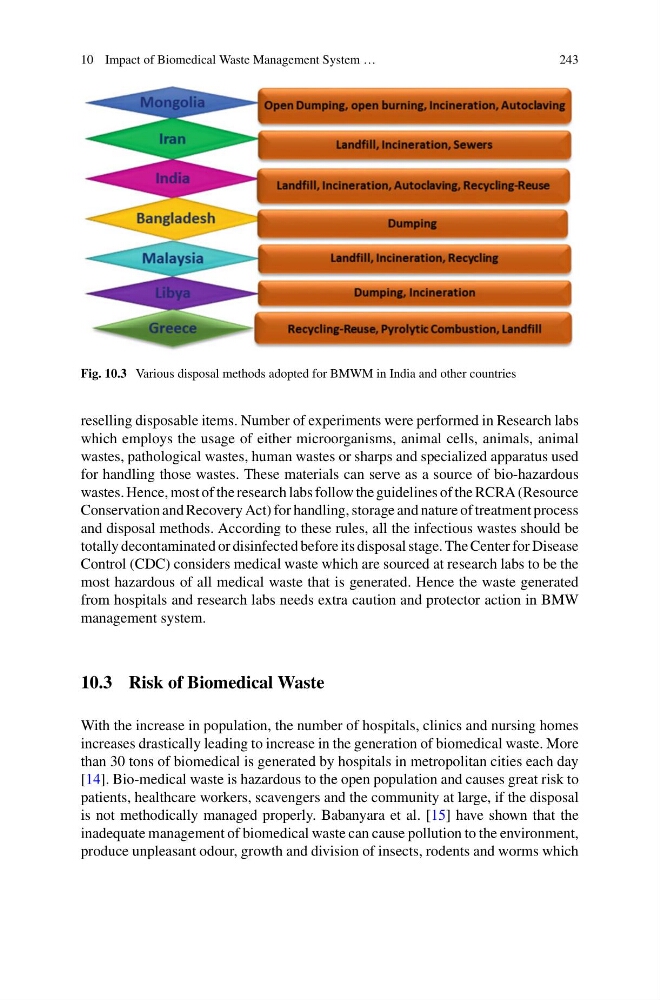
Fig. 10.3 Various disposal methods adopted for BMWM in India and other countries
reselling disposable items. Number of experiments were performed in Research labs
which employs the usage of either microorganisms, animal cells, animals, animal
wastes, pathological wastes, human wastes or sharps and specialized apparatus used
for handling those wastes. These materials can serve as a source of bio-hazardous
wastes. Hence, most of the research labs follow the guidelines of the RCRA (Resource
Conservation and Recovery Act) for handling, storage and nature of treatment process
and disposal methods. According to these rules, all the infectious wastes should be
totally decontaminated or disinfected before its disposal stage. The Center for Disease
Control (CDC) considers medical waste which are sourced at research labs to be the
most hazardous of all medical waste that is generated. Hence the waste generated
from hospitals and research labs needs extra caution and protector action in BMW
management system.
10.3 Risk of Biomedical Waste
With the increase in population, the number of hospitals, clinics and nursing homes
increases drastically leading to increase in the generation of biomedical waste. More
than 30 tons of biomedical is generated by hospitals in metropolitan cities each day
[14]. Bio-medical waste is hazardous to the open population and causes great risk to
patients, healthcare workers, scavengers and the community at large, if the disposal
is not methodically managed properly. Babanyara et al. [15] have shown that the
inadequate management of biomedical waste can cause pollution to the environment,
produce unpleasant odour, growth and division of insects, rodents and worms which
243
Fig. 10.3 Various disposal methods adopted for BMWM in India and other countries
reselling disposable items. Number of experiments were performed in Research labs
which employs the usage of either microorganisms, animal cells, animals, animal
wastes, pathological wastes, human wastes or sharps and specialized apparatus used
for handling those wastes. These materials can serve as a source of bio-hazardous
wastes. Hence, most of the research labs follow the guidelines of the RCRA (Resource
Conservation and Recovery Act) for handling, storage and nature of treatment process
and disposal methods. According to these rules, all the infectious wastes should be
totally decontaminated or disinfected before its disposal stage. The Center for Disease
Control (CDC) considers medical waste which are sourced at research labs to be the
most hazardous of all medical waste that is generated. Hence the waste generated
from hospitals and research labs needs extra caution and protector action in BMW
management system.
10.3 Risk of Biomedical Waste
With the increase in population, the number of hospitals, clinics and nursing homes
increases drastically leading to increase in the generation of biomedical waste. More
than 30 tons of biomedical is generated by hospitals in metropolitan cities each day
[14]. Bio-medical waste is hazardous to the open population and causes great risk to
patients, healthcare workers, scavengers and the community at large, if the disposal
is not methodically managed properly. Babanyara et al. [15] have shown that the
inadequate management of biomedical waste can cause pollution to the environment,
produce unpleasant odour, growth and division of insects, rodents and worms which