

24
2 Environmental Risk Management Applications …
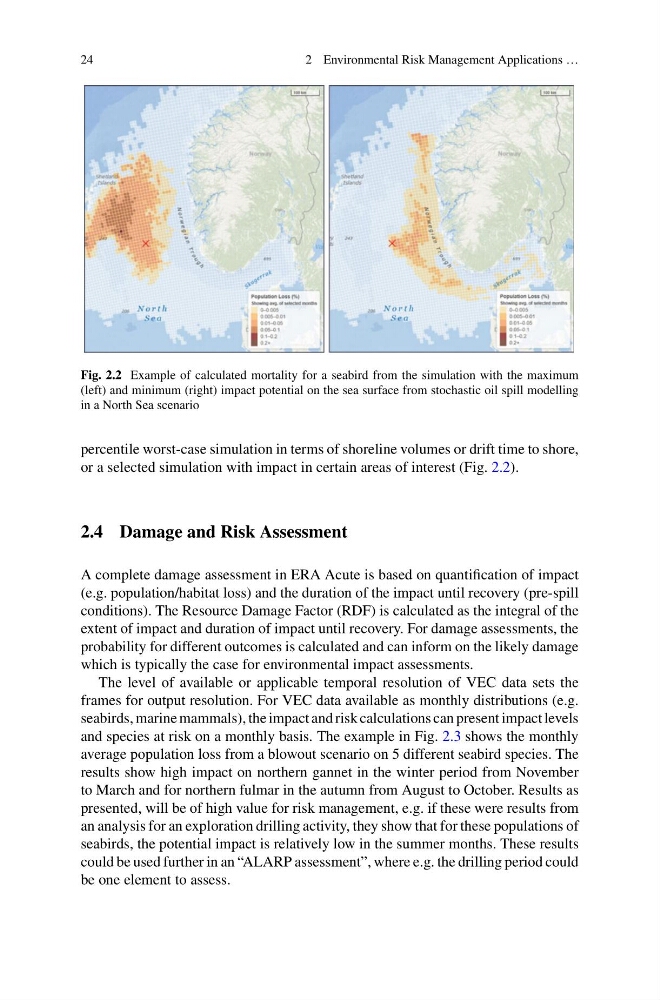
Fig. 2.2 Example of calculated mortality for a seabird from the simulation with the maximum
(left) and minimum (right) impact potential on the sea surface from stochastic oil spill modelling
in a North Sea scenario
percentile worst-case simulation in terms of shoreline volumes or drift time to shore,
or a selected simulation with impact in certain areas of interest (Fig. 2.2).
2.4 Damage and Risk Assessment
A complete damage assessment in ERA Acute is based on quantification of impact
(e.g. population/habitat loss) and the duration of the impact until recovery (pre-spill
conditions). The Resource Damage Factor (RDF) is calculated as the integral of the
extent of impact and duration of impact until recovery. For damage assessments, the
probability for different outcomes is calculated and can inform on the likely damage
which is typically the case for environmental impact assessments.
The level of available or applicable temporal resolution of VEC data sets the
frames for output resolution. For VEC data available as monthly distributions (e.g.
seabirds, marine mammals), the impact and risk calculations can present impact levels
and species at risk on a monthly basis. The example in Fig. 2.3 shows the monthly
average population loss from a blowout scenario on 5 different seabird species. The
results show high impact on northern gannet in the winter period from November
to March and for northern fulmar in the autumn from August to October. Results as
presented, will be of high value for risk management, e.g. if these were results from
an analysis for an exploration drilling activity, they show that for these populations of
seabirds, the potential impact is relatively low in the summer months. These results
could be used further in an “ALARP assessment”, where e.g. the drilling period could
be one element to assess.
2 Environmental Risk Management Applications …
Fig. 2.2 Example of calculated mortality for a seabird from the simulation with the maximum
(left) and minimum (right) impact potential on the sea surface from stochastic oil spill modelling
in a North Sea scenario
percentile worst-case simulation in terms of shoreline volumes or drift time to shore,
or a selected simulation with impact in certain areas of interest (Fig. 2.2).
2.4 Damage and Risk Assessment
A complete damage assessment in ERA Acute is based on quantification of impact
(e.g. population/habitat loss) and the duration of the impact until recovery (pre-spill
conditions). The Resource Damage Factor (RDF) is calculated as the integral of the
extent of impact and duration of impact until recovery. For damage assessments, the
probability for different outcomes is calculated and can inform on the likely damage
which is typically the case for environmental impact assessments.
The level of available or applicable temporal resolution of VEC data sets the
frames for output resolution. For VEC data available as monthly distributions (e.g.
seabirds, marine mammals), the impact and risk calculations can present impact levels
and species at risk on a monthly basis. The example in Fig. 2.3 shows the monthly
average population loss from a blowout scenario on 5 different seabird species. The
results show high impact on northern gannet in the winter period from November
to March and for northern fulmar in the autumn from August to October. Results as
presented, will be of high value for risk management, e.g. if these were results from
an analysis for an exploration drilling activity, they show that for these populations of
seabirds, the potential impact is relatively low in the summer months. These results
could be used further in an “ALARP assessment”, where e.g. the drilling period could
be one element to assess.