

82
2 Actual Potentials of Theoretical Chemistry: What Can Be Obtained
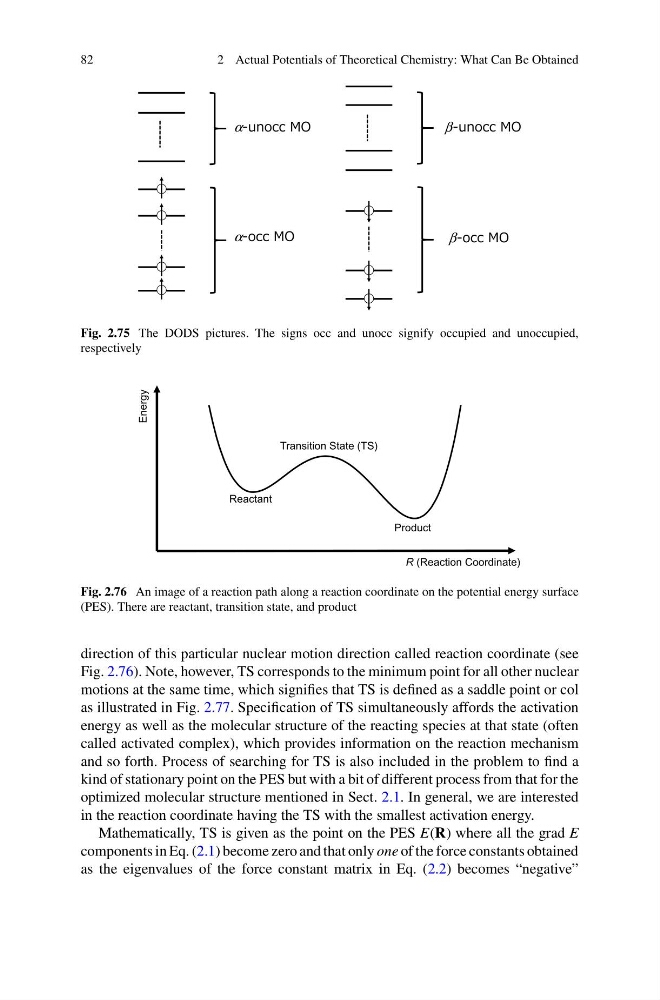
Fig. 2.75 The DODS pictures. The signs occ and unocc signify occupied and unoccupied,
respectively
Reactant
Product
Energy
Transition State (TS)
R (Reaction Coordinate)
Fig. 2.76 An image of a reaction path along a reaction coordinate on the potential energy surface
(PES). There are reactant, transition state, and product
direction of this particular nuclear motion direction called reaction coordinate (see
Fig. 2.76). Note, however, TS corresponds to the minimum point for all other nuclear
motions at the same time, which signifies that TS is defined as a saddle point or col
as illustrated in Fig. 2.77. Specification of TS simultaneously affords the activation
energy as well as the molecular structure of the reacting species at that state (often
called activated complex), which provides information on the reaction mechanism
and so forth. Process of searching for TS is also included in the problem to find a
kind of stationary point on the PES but with a bit of different process from that for the
optimized molecular structure mentioned in Sect. 2.1. In general, we are interested
in the reaction coordinate having the TS with the smallest activation energy.
Mathematically, TS is given as the point on the PES E(R) where all the grad E
components in Eq. (2.1) become zero and that only one of the force constants obtained
as the eigenvalues of the force constant matrix in Eq. (2.2) becomes “negative”
2 Actual Potentials of Theoretical Chemistry: What Can Be Obtained
Fig. 2.75 The DODS pictures. The signs occ and unocc signify occupied and unoccupied,
respectively
Reactant
Product
Energy
Transition State (TS)
R (Reaction Coordinate)
Fig. 2.76 An image of a reaction path along a reaction coordinate on the potential energy surface
(PES). There are reactant, transition state, and product
direction of this particular nuclear motion direction called reaction coordinate (see
Fig. 2.76). Note, however, TS corresponds to the minimum point for all other nuclear
motions at the same time, which signifies that TS is defined as a saddle point or col
as illustrated in Fig. 2.77. Specification of TS simultaneously affords the activation
energy as well as the molecular structure of the reacting species at that state (often
called activated complex), which provides information on the reaction mechanism
and so forth. Process of searching for TS is also included in the problem to find a
kind of stationary point on the PES but with a bit of different process from that for the
optimized molecular structure mentioned in Sect. 2.1. In general, we are interested
in the reaction coordinate having the TS with the smallest activation energy.
Mathematically, TS is given as the point on the PES E(R) where all the grad E
components in Eq. (2.1) become zero and that only one of the force constants obtained
as the eigenvalues of the force constant matrix in Eq. (2.2) becomes “negative”