

4.2 Electrochemistry
175
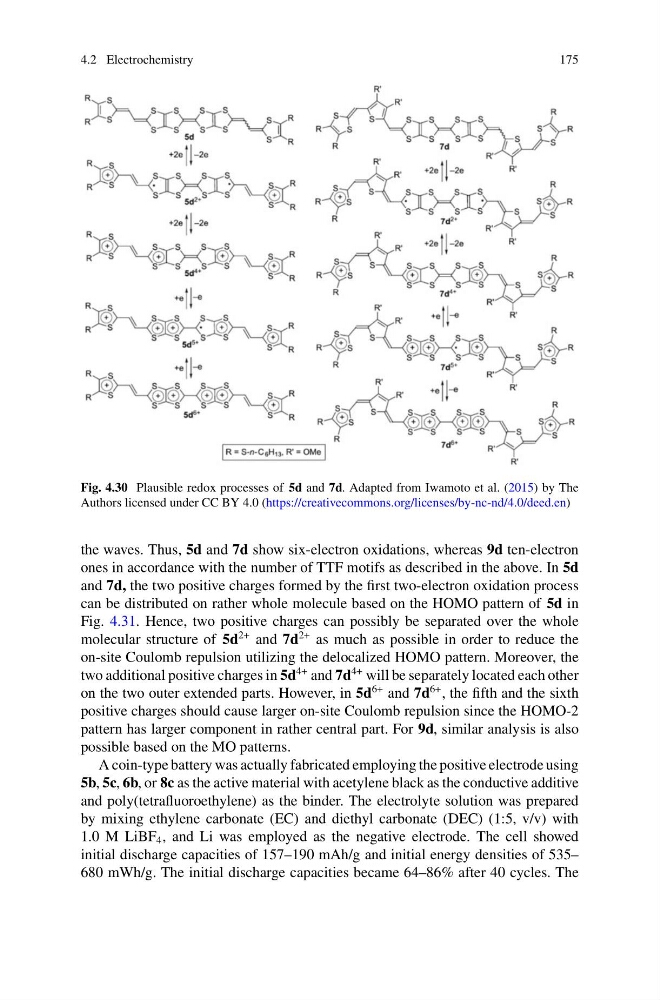
Fig. 4.30 Plausible redox processes of 5d and 7d. Adapted from Iwamoto et al. (2015) by The
Authors licensed under CC BY 4.0 (https://creativecommons.org/licenses/by-nc-nd/4.0/deed.en)
the waves. Thus, 5d and 7d show six-electron oxidations, whereas 9d ten-electron
ones in accordance with the number of TTF motifs as described in the above. In 5d
and 7d, the two positive charges formed by the first two-electron oxidation process
can be distributed on rather whole molecule based on the HOMO pattern of 5d in
Fig. 4.31. Hence, two positive charges can possibly be separated over the whole
molecular structure of 5d
2+ and 7d
2+ as much as possible in order to reduce the
on-site Coulomb repulsion utilizing the delocalized HOMO pattern. Moreover, the
two additional positive charges in 5d
4+ and 7d
4+ will be separately located each other
on the two outer extended parts. However, in 5d
6+ and 7d
6+ , the fifth and the sixth
positive charges should cause larger on-site Coulomb repulsion since the HOMO-2
pattern has larger component in rather central part. For 9d, similar analysis is also
possible based on the MO patterns.
A coin-type battery was actually fabricated employing the positive electrode using
5b, 5c, 6b, or 8c as the active material with acetylene black as the conductive additive
and poly(tetrafluoroethylene) as the binder. The electrolyte solution was prepared
by mixing ethylene carbonate (EC) and diethyl carbonate (DEC) (1:5, v/v) with
1.0 M LiBF 4 , and Li was employed as the negative electrode. The cell showed
initial discharge capacities of 157–190 mAh/g and initial energy densities of 535–
680 mWh/g. The initial discharge capacities became 64–86% after 40 cycles. The
175
Fig. 4.30 Plausible redox processes of 5d and 7d. Adapted from Iwamoto et al. (2015) by The
Authors licensed under CC BY 4.0 (https://creativecommons.org/licenses/by-nc-nd/4.0/deed.en)
the waves. Thus, 5d and 7d show six-electron oxidations, whereas 9d ten-electron
ones in accordance with the number of TTF motifs as described in the above. In 5d
and 7d, the two positive charges formed by the first two-electron oxidation process
can be distributed on rather whole molecule based on the HOMO pattern of 5d in
Fig. 4.31. Hence, two positive charges can possibly be separated over the whole
molecular structure of 5d
2+ and 7d
2+ as much as possible in order to reduce the
on-site Coulomb repulsion utilizing the delocalized HOMO pattern. Moreover, the
two additional positive charges in 5d
4+ and 7d
4+ will be separately located each other
on the two outer extended parts. However, in 5d
6+ and 7d
6+ , the fifth and the sixth
positive charges should cause larger on-site Coulomb repulsion since the HOMO-2
pattern has larger component in rather central part. For 9d, similar analysis is also
possible based on the MO patterns.
A coin-type battery was actually fabricated employing the positive electrode using
5b, 5c, 6b, or 8c as the active material with acetylene black as the conductive additive
and poly(tetrafluoroethylene) as the binder. The electrolyte solution was prepared
by mixing ethylene carbonate (EC) and diethyl carbonate (DEC) (1:5, v/v) with
1.0 M LiBF 4 , and Li was employed as the negative electrode. The cell showed
initial discharge capacities of 157–190 mAh/g and initial energy densities of 535–
680 mWh/g. The initial discharge capacities became 64–86% after 40 cycles. The