

natural soil and 200 mm thick nutritive soil layer are paved for greening and
vegetation growing. At the same time, the gas guiding tube is installed in the final
cover to discharge directly into the atmosphere.
④ Classification of hazardous wastes disposed of
According to the investigation, the disposal site currently processes 12 types of
hazardous wastes chiefly, as shown in Table 5.118.
⑤ Analysis of pollution source strength
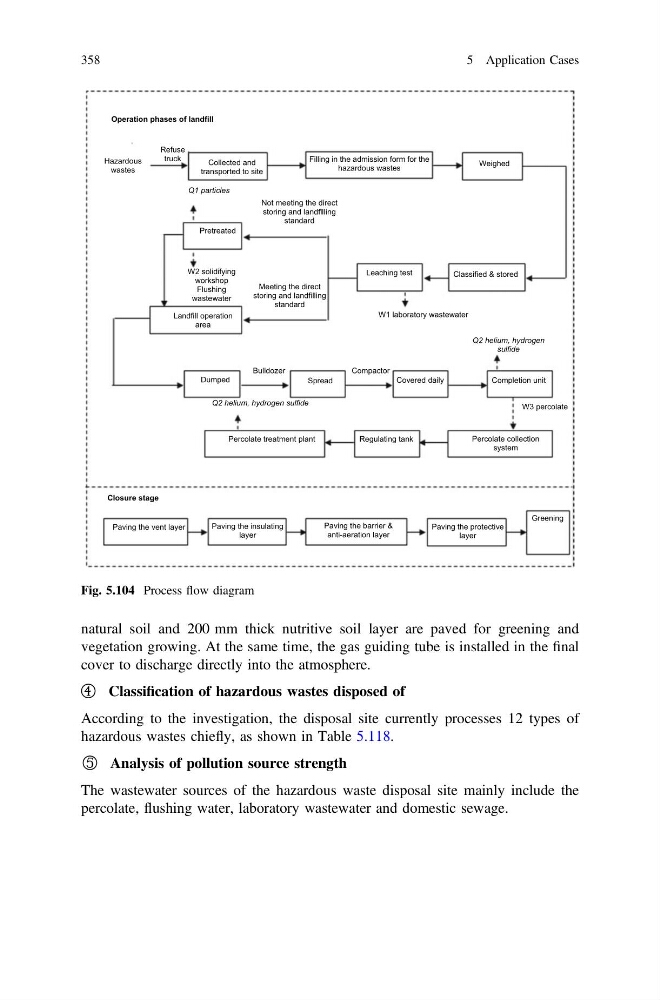
The wastewater sources of the hazardous waste disposal site mainly include the
percolate, flushing water, laboratory wastewater and domestic sewage.
Operation phases of landfill
Hazardous
wastes
Refuse
truck
Collected and
transported to site
Filling in the admission form for the
hazardous wastes
Weighed
Q1 particles
Pretreated
Not meeting the direct
storing and landfilling
standard
W2 solidifying
workshop
Flushing
wastewater
Landfill operation
area
Meeting the direct
storing and landfilling
standard
Leaching test
Classified & stored
W1 laboratory wastewater
Dumped
Bulldozer
Spread
Compactor
Covered daily
Q2 helium, hydrogen
sulfide
Completion unit
W3 percolate
Percolate collection
system
Regulating tank
Percolate treatment plant
Q2 helium, hydrogen sulfide
Closure stage
Paving the vent layer
Paving the insulating
layer
Paving the barrier &
anti-aeration layer
Greening
Paving the protective
layer
Fig. 5.104 Process flow diagram
358
5 Application Cases
vegetation growing. At the same time, the gas guiding tube is installed in the final
cover to discharge directly into the atmosphere.
④ Classification of hazardous wastes disposed of
According to the investigation, the disposal site currently processes 12 types of
hazardous wastes chiefly, as shown in Table 5.118.
⑤ Analysis of pollution source strength
The wastewater sources of the hazardous waste disposal site mainly include the
percolate, flushing water, laboratory wastewater and domestic sewage.
Operation phases of landfill
Hazardous
wastes
Refuse
truck
Collected and
transported to site
Filling in the admission form for the
hazardous wastes
Weighed
Q1 particles
Pretreated
Not meeting the direct
storing and landfilling
standard
W2 solidifying
workshop
Flushing
wastewater
Landfill operation
area
Meeting the direct
storing and landfilling
standard
Leaching test
Classified & stored
W1 laboratory wastewater
Dumped
Bulldozer
Spread
Compactor
Covered daily
Q2 helium, hydrogen
sulfide
Completion unit
W3 percolate
Percolate collection
system
Regulating tank
Percolate treatment plant
Q2 helium, hydrogen sulfide
Closure stage
Paving the vent layer
Paving the insulating
layer
Paving the barrier &
anti-aeration layer
Greening
Paving the protective
layer
Fig. 5.104 Process flow diagram
358
5 Application Cases