

I. Percolate
a. Sources
Water contained in the wastes: The water contained in the buried wastes is transported to the landfill with the wastes, and the gravity water becomes percolate after
compaction. The hazardous wastes that meet the landfill entrance requirements are
low in water content and will lose little water after compaction, with the water
contained basically consumed and absorbed after storage and stabilization/
solidification of the hazardous wastes. Therefore, this part contains little percolate.
The rain infiltrates into the landfill. The rainfall is not uniform during a year, and
is concentrated in the rainy season. Heavy rain causes a sharp increase in the
amount of percolate. The rain water and polluted water is strictly separated in the
hazardous wastes disposal site. The top of the landfill operating unit is covered with
temporary geomembrane to prevent seepage of the precipitation into the landfill,
and is covered properly after landfill closure to prevent the infiltration of rainfall.
b. Amount of percolate
During landfilling: Each landfill area is subdivided into operating units, e.g. the
landfill area 1# is divided into four operating units, each separated by a temporary
barrier. The main blind drain for percolate discharge guiding is fitted with valves,
which segment the percolate collecting system of each unit, preventing the entry of
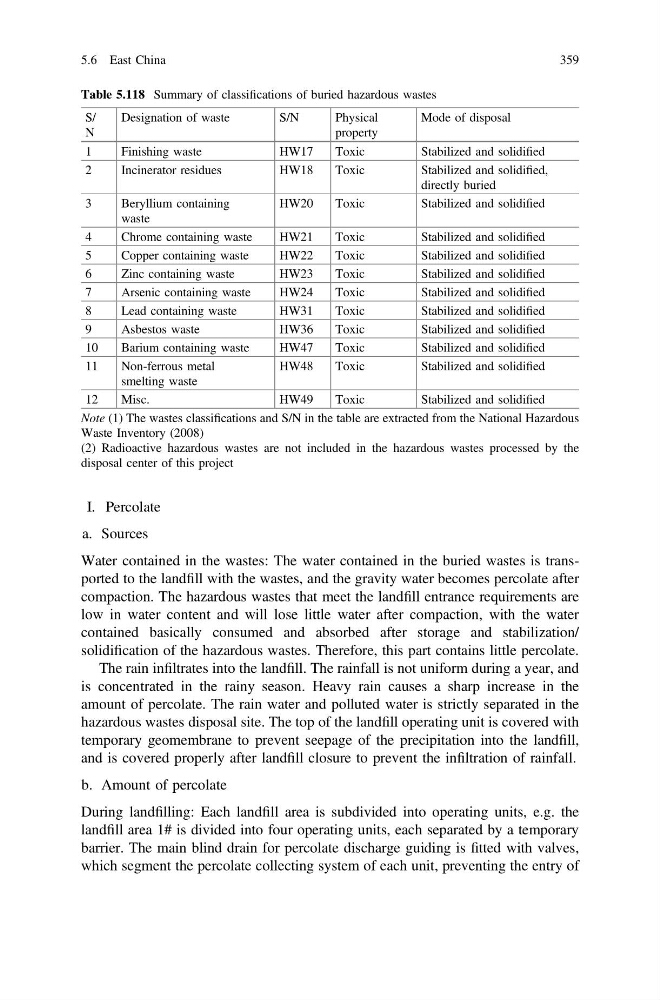
Table 5.118 Summary of classifications of buried hazardous wastes
S/
N
Designation of waste
S/N
Physical
property
Mode of disposal
1
Finishing waste
HW17
Toxic
Stabilized and solidified
2
Incinerator residues
HW18
Toxic
Stabilized and solidified,
directly buried
3
Beryllium containing
waste
HW20
Toxic
Stabilized and solidified
4
Chrome containing waste
HW21
Toxic
Stabilized and solidified
5
Copper containing waste
HW22
Toxic
Stabilized and solidified
6
Zinc containing waste
HW23
Toxic
Stabilized and solidified
7
Arsenic containing waste
HW24
Toxic
Stabilized and solidified
8
Lead containing waste
HW31
Toxic
Stabilized and solidified
9
Asbestos waste
HW36
Toxic
Stabilized and solidified
10
Barium containing waste
HW47
Toxic
Stabilized and solidified
11
Non-ferrous metal
smelting waste
HW48
Toxic
Stabilized and solidified
12
Misc.
HW49
Toxic
Stabilized and solidified
Note (1) The wastes classifications and S/N in the table are extracted from the National Hazardous
Waste Inventory (2008)
(2) Radioactive hazardous wastes are not included in the hazardous wastes processed by the
disposal center of this project
5.6 East China
359
a. Sources
Water contained in the wastes: The water contained in the buried wastes is transported to the landfill with the wastes, and the gravity water becomes percolate after
compaction. The hazardous wastes that meet the landfill entrance requirements are
low in water content and will lose little water after compaction, with the water
contained basically consumed and absorbed after storage and stabilization/
solidification of the hazardous wastes. Therefore, this part contains little percolate.
The rain infiltrates into the landfill. The rainfall is not uniform during a year, and
is concentrated in the rainy season. Heavy rain causes a sharp increase in the
amount of percolate. The rain water and polluted water is strictly separated in the
hazardous wastes disposal site. The top of the landfill operating unit is covered with
temporary geomembrane to prevent seepage of the precipitation into the landfill,
and is covered properly after landfill closure to prevent the infiltration of rainfall.
b. Amount of percolate
During landfilling: Each landfill area is subdivided into operating units, e.g. the
landfill area 1# is divided into four operating units, each separated by a temporary
barrier. The main blind drain for percolate discharge guiding is fitted with valves,
which segment the percolate collecting system of each unit, preventing the entry of
Table 5.118 Summary of classifications of buried hazardous wastes
S/
N
Designation of waste
S/N
Physical
property
Mode of disposal
1
Finishing waste
HW17
Toxic
Stabilized and solidified
2
Incinerator residues
HW18
Toxic
Stabilized and solidified,
directly buried
3
Beryllium containing
waste
HW20
Toxic
Stabilized and solidified
4
Chrome containing waste
HW21
Toxic
Stabilized and solidified
5
Copper containing waste
HW22
Toxic
Stabilized and solidified
6
Zinc containing waste
HW23
Toxic
Stabilized and solidified
7
Arsenic containing waste
HW24
Toxic
Stabilized and solidified
8
Lead containing waste
HW31
Toxic
Stabilized and solidified
9
Asbestos waste
HW36
Toxic
Stabilized and solidified
10
Barium containing waste
HW47
Toxic
Stabilized and solidified
11
Non-ferrous metal
smelting waste
HW48
Toxic
Stabilized and solidified
12
Misc.
HW49
Toxic
Stabilized and solidified
Note (1) The wastes classifications and S/N in the table are extracted from the National Hazardous
Waste Inventory (2008)
(2) Radioactive hazardous wastes are not included in the hazardous wastes processed by the
disposal center of this project
5.6 East China
359