

(2) effluent containing heavy metal pollutants of the physico-chemical treatment
workshop; (3) oily wastewater of the comprehensive utilization workshop;
(4) sewage treatment station. The sources of toxic and harmful effluent of the
typical disposal site include: (1) electrolyte of the dismantling workshop of waste
lead-acid batteries; (2) waste organic solvents of the oil storage and transportation
depot.
Special attention shall be paid to the fact that although the rigid landfill pit is
covered with a movable gantry steel pipe rack awning to prevent rainwater from
entering the landfill to produce leachate. However, considering the contact relationship between the landfill pit and the target aquifer, the landfill pit shall be
treated as a disposal unit that may produce toxic and harmful waste water/effluent,
and corresponding groundwater monitoring wells shall be set up for it.
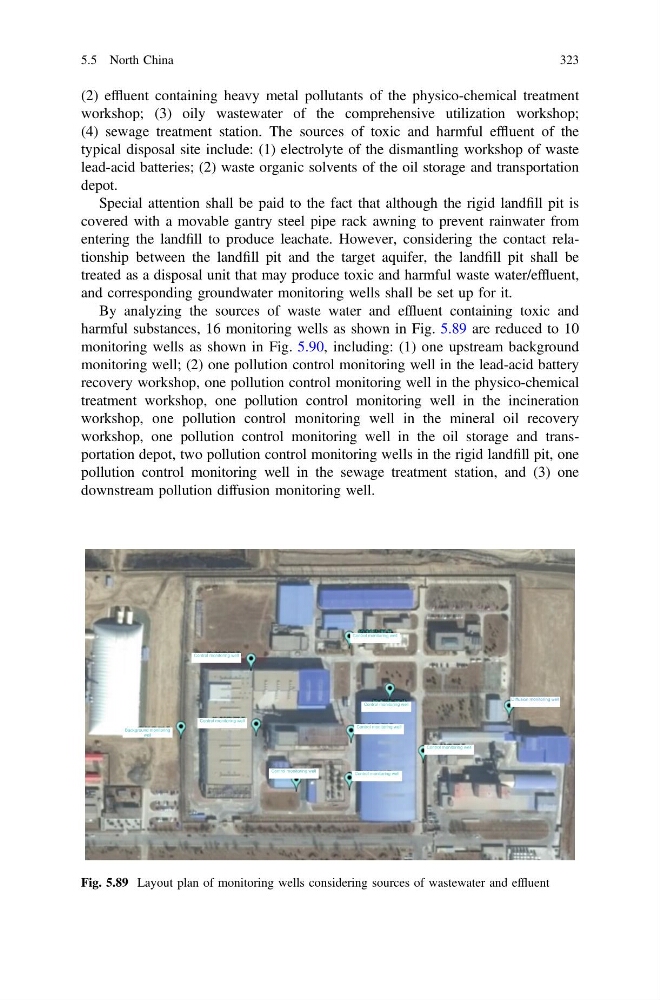
By analyzing the sources of waste water and effluent containing toxic and
harmful substances, 16 monitoring wells as shown in Fig. 5.89 are reduced to 10
monitoring wells as shown in Fig. 5.90, including: (1) one upstream background
monitoring well; (2) one pollution control monitoring well in the lead-acid battery
recovery workshop, one pollution control monitoring well in the physico-chemical
treatment workshop, one pollution control monitoring well in the incineration
workshop, one pollution control monitoring well in the mineral oil recovery
workshop, one pollution control monitoring well in the oil storage and transportation depot, two pollution control monitoring wells in the rigid landfill pit, one
pollution control monitoring well in the sewage treatment station, and (3) one
downstream pollution diffusion monitoring well.
Control monitoring well
Control monitoring well
Control monitoring well
Control monitoring well
Control monitoring well
Control monitoring well
Control monitoring well
Background monitoring
well
Control monitoring well
Diffusion monitoring well
Fig. 5.89 Layout plan of monitoring wells considering sources of wastewater and effluent
5.5 North China
323
workshop; (3) oily wastewater of the comprehensive utilization workshop;
(4) sewage treatment station. The sources of toxic and harmful effluent of the
typical disposal site include: (1) electrolyte of the dismantling workshop of waste
lead-acid batteries; (2) waste organic solvents of the oil storage and transportation
depot.
Special attention shall be paid to the fact that although the rigid landfill pit is
covered with a movable gantry steel pipe rack awning to prevent rainwater from
entering the landfill to produce leachate. However, considering the contact relationship between the landfill pit and the target aquifer, the landfill pit shall be
treated as a disposal unit that may produce toxic and harmful waste water/effluent,
and corresponding groundwater monitoring wells shall be set up for it.
By analyzing the sources of waste water and effluent containing toxic and
harmful substances, 16 monitoring wells as shown in Fig. 5.89 are reduced to 10
monitoring wells as shown in Fig. 5.90, including: (1) one upstream background
monitoring well; (2) one pollution control monitoring well in the lead-acid battery
recovery workshop, one pollution control monitoring well in the physico-chemical
treatment workshop, one pollution control monitoring well in the incineration
workshop, one pollution control monitoring well in the mineral oil recovery
workshop, one pollution control monitoring well in the oil storage and transportation depot, two pollution control monitoring wells in the rigid landfill pit, one
pollution control monitoring well in the sewage treatment station, and (3) one
downstream pollution diffusion monitoring well.
Control monitoring well
Control monitoring well
Control monitoring well
Control monitoring well
Control monitoring well
Control monitoring well
Control monitoring well
Background monitoring
well
Control monitoring well
Diffusion monitoring well
Fig. 5.89 Layout plan of monitoring wells considering sources of wastewater and effluent
5.5 North China
323