

26 Recyclability of Tungsten, Tantalum and Neodymium …
371
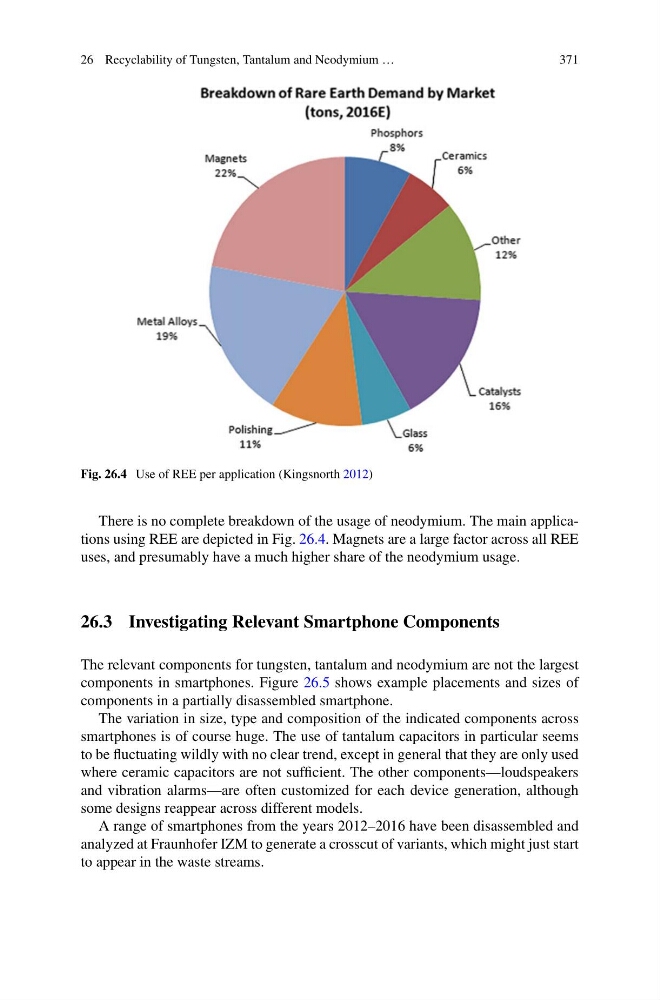
Fig. 26.4 Use of REE per application (Kingsnorth 2012)
There is no complete breakdown of the usage of neodymium. The main applications using REE are depicted in Fig. 26.4. Magnets are a large factor across all REE
uses, and presumably have a much higher share of the neodymium usage.
26.3 Investigating Relevant Smartphone Components
The relevant components for tungsten, tantalum and neodymium are not the largest
components in smartphones. Figure 26.5 shows example placements and sizes of
components in a partially disassembled smartphone.
The variation in size, type and composition of the indicated components across
smartphones is of course huge. The use of tantalum capacitors in particular seems
to be fluctuating wildly with no clear trend, except in general that they are only used
where ceramic capacitors are not sufficient. The other components—loudspeakers
and vibration alarms—are often customized for each device generation, although
some designs reappear across different models.
A range of smartphones from the years 2012–2016 have been disassembled and
analyzed at Fraunhofer IZM to generate a crosscut of variants, which might just start
to appear in the waste streams.
371
Fig. 26.4 Use of REE per application (Kingsnorth 2012)
There is no complete breakdown of the usage of neodymium. The main applications using REE are depicted in Fig. 26.4. Magnets are a large factor across all REE
uses, and presumably have a much higher share of the neodymium usage.
26.3 Investigating Relevant Smartphone Components
The relevant components for tungsten, tantalum and neodymium are not the largest
components in smartphones. Figure 26.5 shows example placements and sizes of
components in a partially disassembled smartphone.
The variation in size, type and composition of the indicated components across
smartphones is of course huge. The use of tantalum capacitors in particular seems
to be fluctuating wildly with no clear trend, except in general that they are only used
where ceramic capacitors are not sufficient. The other components—loudspeakers
and vibration alarms—are often customized for each device generation, although
some designs reappear across different models.
A range of smartphones from the years 2012–2016 have been disassembled and
analyzed at Fraunhofer IZM to generate a crosscut of variants, which might just start
to appear in the waste streams.