

372
N. F. Nissen et al.
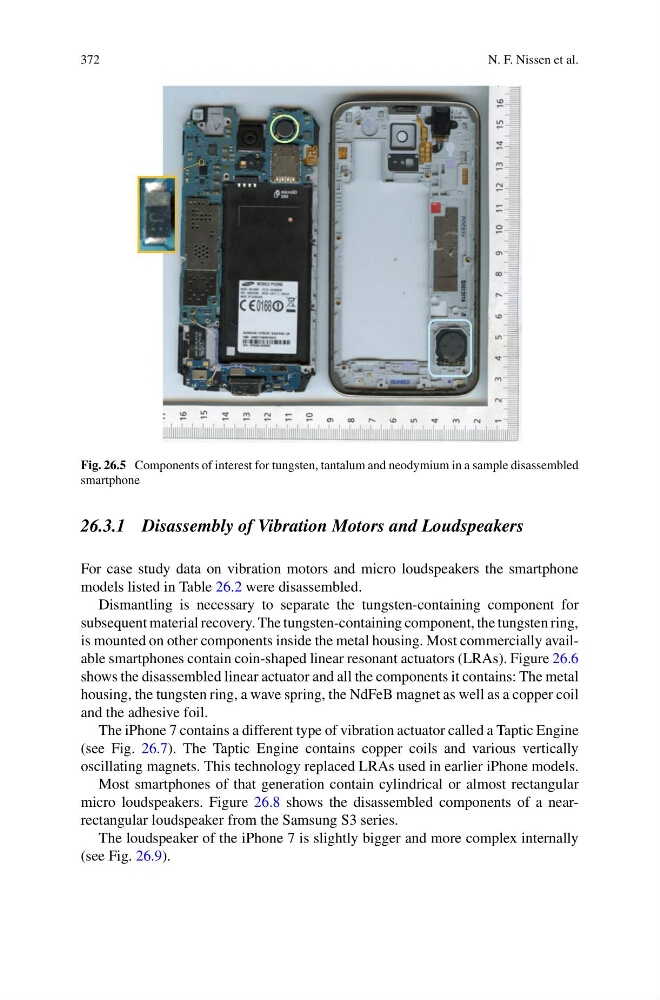
Fig. 26.5 Components of interest for tungsten, tantalum and neodymium in a sample disassembled
smartphone
26.3.1 Disassembly of Vibration Motors and Loudspeakers
For case study data on vibration motors and micro loudspeakers the smartphone
models listed in Table 26.2 were disassembled.
Dismantling is necessary to separate the tungsten-containing component for
subsequent material recovery. The tungsten-containing component, the tungsten ring,
is mounted on other components inside the metal housing. Most commercially available smartphones contain coin-shaped linear resonant actuators (LRAs). Figure 26.6
shows the disassembled linear actuator and all the components it contains: The metal
housing, the tungsten ring, a wave spring, the NdFeB magnet as well as a copper coil
and the adhesive foil.
The iPhone 7 contains a different type of vibration actuator called a Taptic Engine
(see Fig. 26.7). The Taptic Engine contains copper coils and various vertically
oscillating magnets. This technology replaced LRAs used in earlier iPhone models.
Most smartphones of that generation contain cylindrical or almost rectangular
micro loudspeakers. Figure 26.8 shows the disassembled components of a nearrectangular loudspeaker from the Samsung S3 series.
The loudspeaker of the iPhone 7 is slightly bigger and more complex internally
(see Fig. 26.9).
N. F. Nissen et al.
Fig. 26.5 Components of interest for tungsten, tantalum and neodymium in a sample disassembled
smartphone
26.3.1 Disassembly of Vibration Motors and Loudspeakers
For case study data on vibration motors and micro loudspeakers the smartphone
models listed in Table 26.2 were disassembled.
Dismantling is necessary to separate the tungsten-containing component for
subsequent material recovery. The tungsten-containing component, the tungsten ring,
is mounted on other components inside the metal housing. Most commercially available smartphones contain coin-shaped linear resonant actuators (LRAs). Figure 26.6
shows the disassembled linear actuator and all the components it contains: The metal
housing, the tungsten ring, a wave spring, the NdFeB magnet as well as a copper coil
and the adhesive foil.
The iPhone 7 contains a different type of vibration actuator called a Taptic Engine
(see Fig. 26.7). The Taptic Engine contains copper coils and various vertically
oscillating magnets. This technology replaced LRAs used in earlier iPhone models.
Most smartphones of that generation contain cylindrical or almost rectangular
micro loudspeakers. Figure 26.8 shows the disassembled components of a nearrectangular loudspeaker from the Samsung S3 series.
The loudspeaker of the iPhone 7 is slightly bigger and more complex internally
(see Fig. 26.9).