

22 Analysis of Electric Vehicle Batteries Recoverability …
319
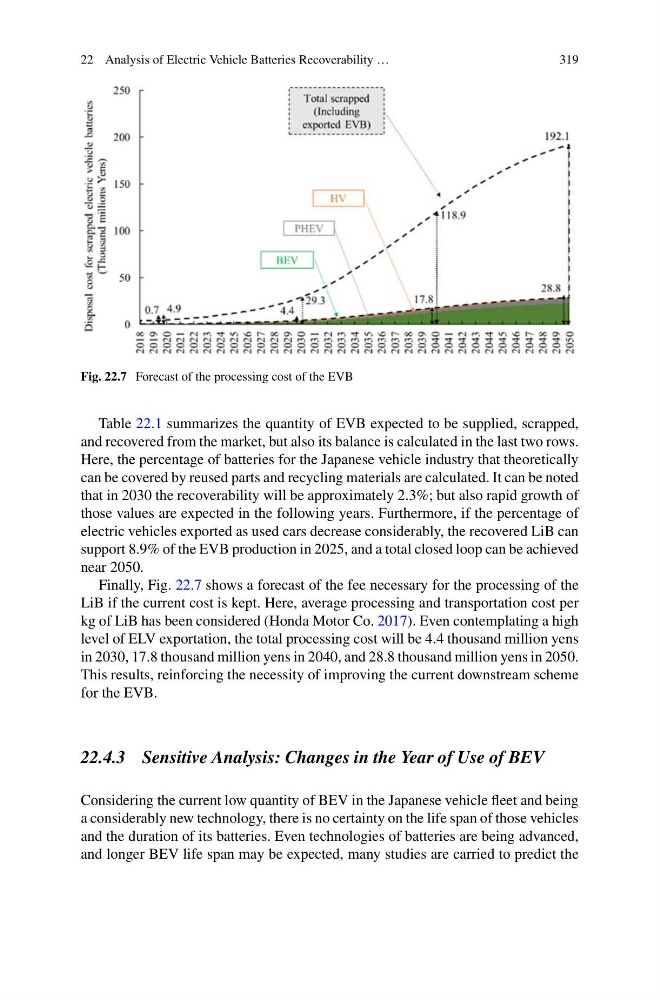
Fig. 22.7 Forecast of the processing cost of the EVB
Table 22.1 summarizes the quantity of EVB expected to be supplied, scrapped,
and recovered from the market, but also its balance is calculated in the last two rows.
Here, the percentage of batteries for the Japanese vehicle industry that theoretically
can be covered by reused parts and recycling materials are calculated. It can be noted
that in 2030 the recoverability will be approximately 2.3%; but also rapid growth of
those values are expected in the following years. Furthermore, if the percentage of
electric vehicles exported as used cars decrease considerably, the recovered LiB can
support 8.9% of the EVB production in 2025, and a total closed loop can be achieved
near 2050.
Finally, Fig. 22.7 shows a forecast of the fee necessary for the processing of the
LiB if the current cost is kept. Here, average processing and transportation cost per
kg of LiB has been considered (Honda Motor Co. 2017). Even contemplating a high
level of ELV exportation, the total processing cost will be 4.4 thousand million yens
in 2030, 17.8 thousand million yens in 2040, and 28.8 thousand million yens in 2050.
This results, reinforcing the necessity of improving the current downstream scheme
for the EVB.
22.4.3 Sensitive Analysis: Changes in the Year of Use of BEV
Considering the current low quantity of BEV in the Japanese vehicle fleet and being
a considerably new technology, there is no certainty on the life span of those vehicles
and the duration of its batteries. Even technologies of batteries are being advanced,
and longer BEV life span may be expected, many studies are carried to predict the
319
Fig. 22.7 Forecast of the processing cost of the EVB
Table 22.1 summarizes the quantity of EVB expected to be supplied, scrapped,
and recovered from the market, but also its balance is calculated in the last two rows.
Here, the percentage of batteries for the Japanese vehicle industry that theoretically
can be covered by reused parts and recycling materials are calculated. It can be noted
that in 2030 the recoverability will be approximately 2.3%; but also rapid growth of
those values are expected in the following years. Furthermore, if the percentage of
electric vehicles exported as used cars decrease considerably, the recovered LiB can
support 8.9% of the EVB production in 2025, and a total closed loop can be achieved
near 2050.
Finally, Fig. 22.7 shows a forecast of the fee necessary for the processing of the
LiB if the current cost is kept. Here, average processing and transportation cost per
kg of LiB has been considered (Honda Motor Co. 2017). Even contemplating a high
level of ELV exportation, the total processing cost will be 4.4 thousand million yens
in 2030, 17.8 thousand million yens in 2040, and 28.8 thousand million yens in 2050.
This results, reinforcing the necessity of improving the current downstream scheme
for the EVB.
22.4.3 Sensitive Analysis: Changes in the Year of Use of BEV
Considering the current low quantity of BEV in the Japanese vehicle fleet and being
a considerably new technology, there is no certainty on the life span of those vehicles
and the duration of its batteries. Even technologies of batteries are being advanced,
and longer BEV life span may be expected, many studies are carried to predict the