

228
according to conditions (multi-dimensional); e.g. the value of bees is different when
presumed for making honey or being used to pollinate flowers. Therefore, to fill the
gap, many researchers have come up with mathematical methods to estimate the
values of nature; and one of those used in this study is known as trade-off analysis
(Lola et al. 2019).
Green Development
Valor (2008) believed that perceptions of green consumption practices are more
time-consuming, costly and stressful. This is true in some sense as we observed that
majority of the green products compared to non-green products are priced significantly higher, making them niche products targeted mainly to people with higher
disposable income (Markkula and Moisander 2012). This principle also applied
onto tourism development, especially in green tourism (eco-tourism) that are one of
the many sub-system in the green economy. Menning (1995) indicated that tourism
development is not as easy as matching product and supply with tourists, but it must
also consider the locals’ acceptability. Local acceptability of tourism development
is the outcome of what Telfer and Sharpley (2008) called the “development
dilemma,” i.e., for tourism development to be successful, communities in the destination must perceive that the benefits from tourism will outweigh its costs. Since
resident support for tourism development is essential, it is also important to
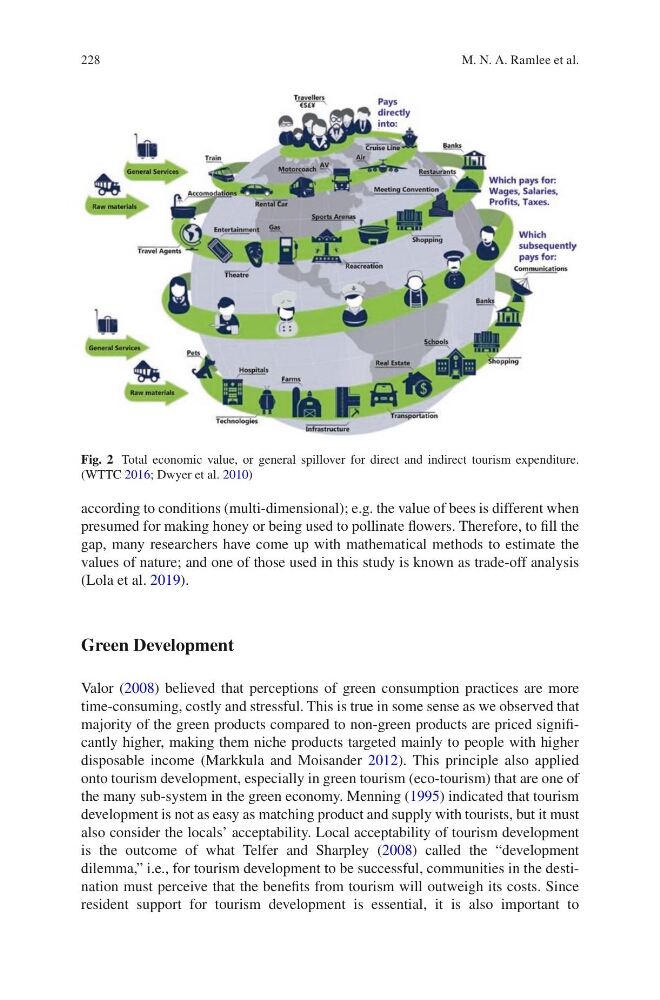
Fig. 2 Total economic value, or general spillover for direct and indirect tourism expenditure.
(WTTC 2016; Dwyer et al. 2010)
M. N. A. Ramlee et al.
according to conditions (multi-dimensional); e.g. the value of bees is different when
presumed for making honey or being used to pollinate flowers. Therefore, to fill the
gap, many researchers have come up with mathematical methods to estimate the
values of nature; and one of those used in this study is known as trade-off analysis
(Lola et al. 2019).
Green Development
Valor (2008) believed that perceptions of green consumption practices are more
time-consuming, costly and stressful. This is true in some sense as we observed that
majority of the green products compared to non-green products are priced significantly higher, making them niche products targeted mainly to people with higher
disposable income (Markkula and Moisander 2012). This principle also applied
onto tourism development, especially in green tourism (eco-tourism) that are one of
the many sub-system in the green economy. Menning (1995) indicated that tourism
development is not as easy as matching product and supply with tourists, but it must
also consider the locals’ acceptability. Local acceptability of tourism development
is the outcome of what Telfer and Sharpley (2008) called the “development
dilemma,” i.e., for tourism development to be successful, communities in the destination must perceive that the benefits from tourism will outweigh its costs. Since
resident support for tourism development is essential, it is also important to
Fig. 2 Total economic value, or general spillover for direct and indirect tourism expenditure.
(WTTC 2016; Dwyer et al. 2010)
M. N. A. Ramlee et al.