

562
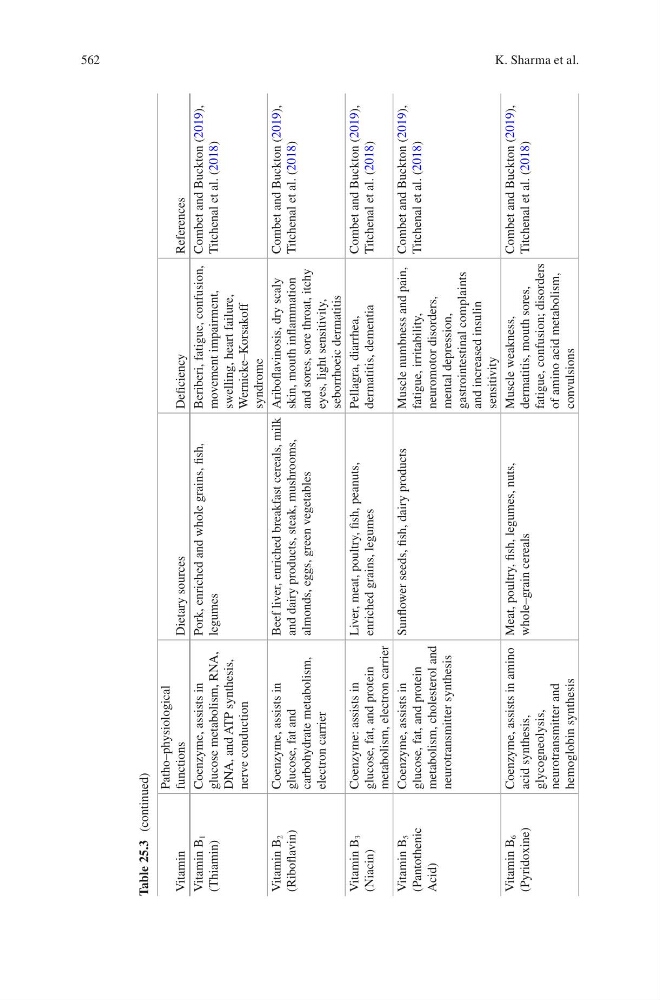
Table 25.3 (continued)
Vitamin B
1
(Thiamin)
Coenzyme, assists in
glucose metabolism, RNA,
DNA, and ATP synthesis,
nerve conduction
Pork, enriched and whole grains, fish,
legumes
Beriberi, fatigue, confusion,
movement impairment,
swelling, heart failure,
Wernicke–Korsakoff
syndrome
Combet and Buckton (2019),
Titchenal et al. (2018)
Vitamin B
2
(Riboflavin)
Coenzyme, assists in
glucose, fat and
carbohydrate metabolism,
electron carrier
Beef liver, enriched breakfast cereals, milk
and dairy products, steak, mushrooms,
almonds, eggs, green vegetables
Ariboflavinosis, dry scaly
skin, mouth inflammation
and sores, sore throat, itchy
eyes, light sensitivity,
seborrhoeic dermatitis
Combet and Buckton (2019),
Titchenal et al. (2018)
Vitamin B
3
(Niacin)
Coenzyme: assists in
glucose, fat, and protein
metabolism, electron carrier
Liver, meat, poultry, fish, peanuts,
enriched grains, legumes
Pellagra, diarrhea,
dermatitis, dementia
Combet and Buckton (2019),
Titchenal et al. (2018)
Vitamin B
5
(Pantothenic
Acid)
Coenzyme, assists in
glucose, fat, and protein
metabolism, cholesterol and
neurotransmitter synthesis
Sunflower seeds, fish, dairy products
Muscle numbness and pain,
fatigue, irritability,
neuromotor disorders,
mental depression,
gastrointestinal complaints
and increased insulin
sensitivity
Combet and Buckton (2019),
Titchenal et al. (2018)
Vitamin B
6
(Pyridoxine)
Coenzyme, assists in amino
acid synthesis,
glycogneolysis,
neurotransmitter and
hemoglobin synthesis
Meat, poultry, fish, legumes, nuts,
whole–grain cereals
Muscle weakness,
dermatitis, mouth sores,
fatigue, confusion; disorders
of amino acid metabolism,
convulsions
Combet and Buckton (2019),
Titchenal et al. (2018)
Vitamin
Patho–physiological
functions
Dietary sources
Deficiency
References
K. Sharma et al.
Table 25.3 (continued)
Vitamin B
1
(Thiamin)
Coenzyme, assists in
glucose metabolism, RNA,
DNA, and ATP synthesis,
nerve conduction
Pork, enriched and whole grains, fish,
legumes
Beriberi, fatigue, confusion,
movement impairment,
swelling, heart failure,
Wernicke–Korsakoff
syndrome
Combet and Buckton (2019),
Titchenal et al. (2018)
Vitamin B
2
(Riboflavin)
Coenzyme, assists in
glucose, fat and
carbohydrate metabolism,
electron carrier
Beef liver, enriched breakfast cereals, milk
and dairy products, steak, mushrooms,
almonds, eggs, green vegetables
Ariboflavinosis, dry scaly
skin, mouth inflammation
and sores, sore throat, itchy
eyes, light sensitivity,
seborrhoeic dermatitis
Combet and Buckton (2019),
Titchenal et al. (2018)
Vitamin B
3
(Niacin)
Coenzyme: assists in
glucose, fat, and protein
metabolism, electron carrier
Liver, meat, poultry, fish, peanuts,
enriched grains, legumes
Pellagra, diarrhea,
dermatitis, dementia
Combet and Buckton (2019),
Titchenal et al. (2018)
Vitamin B
5
(Pantothenic
Acid)
Coenzyme, assists in
glucose, fat, and protein
metabolism, cholesterol and
neurotransmitter synthesis
Sunflower seeds, fish, dairy products
Muscle numbness and pain,
fatigue, irritability,
neuromotor disorders,
mental depression,
gastrointestinal complaints
and increased insulin
sensitivity
Combet and Buckton (2019),
Titchenal et al. (2018)
Vitamin B
6
(Pyridoxine)
Coenzyme, assists in amino
acid synthesis,
glycogneolysis,
neurotransmitter and
hemoglobin synthesis
Meat, poultry, fish, legumes, nuts,
whole–grain cereals
Muscle weakness,
dermatitis, mouth sores,
fatigue, confusion; disorders
of amino acid metabolism,
convulsions
Combet and Buckton (2019),
Titchenal et al. (2018)
Vitamin
Patho–physiological
functions
Dietary sources
Deficiency
References
K. Sharma et al.