

561
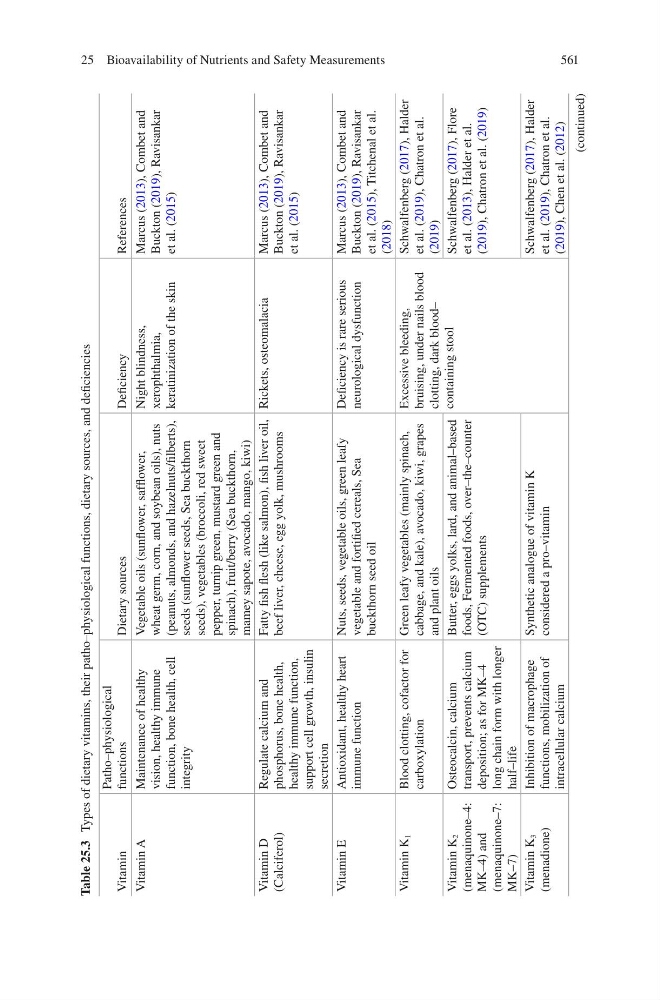
Table 25.3 Types of dietary vitamins, their patho–physiological functions, dietary sources, and deficiencies
Vitamin
Patho–physiological
functions
Dietary sources
Deficiency
References
Vitamin A
Maintenance of healthy
vision, healthy immune
function, bone health, cell
integrity
Vegetable oils (sunflower, safflower,
wheat germ, corn, and soybean oils), nuts
(peanuts, almonds, and hazelnuts/filberts),
seeds (sunflower seeds, Sea buckthorn
seeds), vegetables (broccoli, red sweet
pepper, turnip green, mustard green and
spinach), fruit/berry (Sea buckthorn,
mamey sapote, avocado, mango, kiwi)
Night blindness,
xerophthalmia,
keratinization of the skin
Marcus (2013), Combet and
Buckton (2019), Ravisankar
et al. (2015)
Vitamin D
(Calciferol)
Regulate calcium and
phosphorus, bone health,
healthy immune function,
support cell growth, insulin
secretion
Fatty fish flesh (like salmon), fish liver oil,
beef liver, cheese, egg yolk, mushrooms
Rickets, osteomalacia
Marcus (2013), Combet and
Buckton (2019), Ravisankar
et al. (2015)
Vitamin E
Antioxidant, healthy heart
immune function
Nuts, seeds, vegetable oils, green leafy
vegetable and fortified cereals, Sea
buckthorn seed oil
Deficiency is rare serious
neurological dysfunction
Marcus (2013), Combet and
Buckton (2019), Ravisankar
et al. (2015), Titchenal et al.
(2018)
Vitamin K
1
Blood clotting, cofactor for
carboxylation
Green leafy vegetables (mainly spinach,
cabbage, and kale), avocado, kiwi, grapes
and plant oils
Excessive bleeding,
bruising, under nails blood
clotting, dark blood–
containing stool
Schwalfenberg (2017), Halder
et al. (2019), Chatron et al.
(2019)
Vitamin K
2
(menaquinone–4:
MK–4) and
(menaquinone–7:
MK–7)
Osteocalcin, calcium
transport, prevents calcium
deposition; as for MK–4
long chain form with longer
half–life
Butter, eggs yolks, lard, and animal–based
foods, Fermented foods, over–the–counter
(OTC) supplements
Schwalfenberg (2017), Flore
et al. (2013), Halder et al.
(2019), Chatron et al. (2019)
Vitamin K
3
(menadione)
Inhibition of macrophage
functions, mobilization of
intracellular calcium
Synthetic analogue of vitamin K
considered a pro–vitamin
Schwalfenberg (2017), Halder
et al. (2019), Chatron et al.
(2019), Chen et al. (2012)
(continued)
25 Bioavailability of Nutrients and Safety Measurements
Table 25.3 Types of dietary vitamins, their patho–physiological functions, dietary sources, and deficiencies
Vitamin
Patho–physiological
functions
Dietary sources
Deficiency
References
Vitamin A
Maintenance of healthy
vision, healthy immune
function, bone health, cell
integrity
Vegetable oils (sunflower, safflower,
wheat germ, corn, and soybean oils), nuts
(peanuts, almonds, and hazelnuts/filberts),
seeds (sunflower seeds, Sea buckthorn
seeds), vegetables (broccoli, red sweet
pepper, turnip green, mustard green and
spinach), fruit/berry (Sea buckthorn,
mamey sapote, avocado, mango, kiwi)
Night blindness,
xerophthalmia,
keratinization of the skin
Marcus (2013), Combet and
Buckton (2019), Ravisankar
et al. (2015)
Vitamin D
(Calciferol)
Regulate calcium and
phosphorus, bone health,
healthy immune function,
support cell growth, insulin
secretion
Fatty fish flesh (like salmon), fish liver oil,
beef liver, cheese, egg yolk, mushrooms
Rickets, osteomalacia
Marcus (2013), Combet and
Buckton (2019), Ravisankar
et al. (2015)
Vitamin E
Antioxidant, healthy heart
immune function
Nuts, seeds, vegetable oils, green leafy
vegetable and fortified cereals, Sea
buckthorn seed oil
Deficiency is rare serious
neurological dysfunction
Marcus (2013), Combet and
Buckton (2019), Ravisankar
et al. (2015), Titchenal et al.
(2018)
Vitamin K
1
Blood clotting, cofactor for
carboxylation
Green leafy vegetables (mainly spinach,
cabbage, and kale), avocado, kiwi, grapes
and plant oils
Excessive bleeding,
bruising, under nails blood
clotting, dark blood–
containing stool
Schwalfenberg (2017), Halder
et al. (2019), Chatron et al.
(2019)
Vitamin K
2
(menaquinone–4:
MK–4) and
(menaquinone–7:
MK–7)
Osteocalcin, calcium
transport, prevents calcium
deposition; as for MK–4
long chain form with longer
half–life
Butter, eggs yolks, lard, and animal–based
foods, Fermented foods, over–the–counter
(OTC) supplements
Schwalfenberg (2017), Flore
et al. (2013), Halder et al.
(2019), Chatron et al. (2019)
Vitamin K
3
(menadione)
Inhibition of macrophage
functions, mobilization of
intracellular calcium
Synthetic analogue of vitamin K
considered a pro–vitamin
Schwalfenberg (2017), Halder
et al. (2019), Chatron et al.
(2019), Chen et al. (2012)
(continued)
25 Bioavailability of Nutrients and Safety Measurements