

221
increased in recent years (FAO 2010). Since there is a clear diet-CVD correspondence (Enriquez et al. 2018; Manea et al. 2018), as evidenced both by experimental
and epidemiological reports, dietary interventions containing marine food might be
of aid in disorders such as atherosclerosis. Moreover, seafood has a great influence
on health promotion and maintenance (Mozaffarian and Rimm 2006; Pereira et al.
2004). Seafood is healthy due to its high content of omega-3 PUFAs, mainly docosahexaenoic acid (DHA) and eicosapentaenoic acid (EPA) (Dyerberg et al. 1978).
Due to the abundance in PUFAs, i.e. EPA and DHA, fish oil is sold as a functional food to encourage healthier dietary habits. Many other bioactive components
are also marketed and are being sold as functional foods due to their value in health,
with special reference to the reduced risk of ischemic heart disease and inflammatory disorders (e.g. arthritis) and to the possible effect in cancer prevention, as
hypothesized in many research papers (Harris 2004; Rudkowska et al. 2009). Fish
and other seafood are also a main source of amino acids, such as taurine and choline, but also calcium, phosphorus, iodine, selenium, vitamin D 3 and vitamin B 12
(Lund 2013).
The nutritional and health aspects of functional foods reduce the risk of lifestyleassociated diseases (Gheorghe et al. 2019; Tica et al. 2018). The bioactive moieties
of seafood are essential in improving unbalanced diets and in preventing lifestyleassociated diseases. Thus, the aim of this chapter is to summarize the available
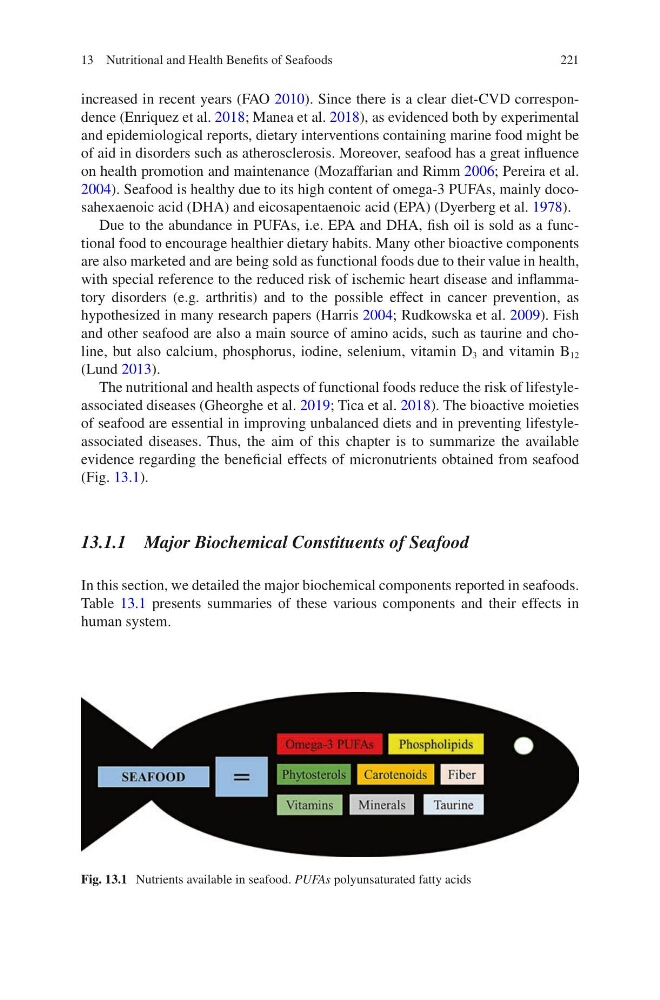
evidence regarding the beneficial effects of micronutrients obtained from seafood
(Fig. 13.1).
13.1.1 Major Biochemical Constituents of Seafood
In this section, we detailed the major biochemical components reported in seafoods.
Table 13.1 presents summaries of these various components and their effects in
human system.
Fig. 13.1 Nutrients available in seafood. PUFAs polyunsaturated fatty acids
13 Nutritional and Health Benefits of Seafoods
increased in recent years (FAO 2010). Since there is a clear diet-CVD correspondence (Enriquez et al. 2018; Manea et al. 2018), as evidenced both by experimental
and epidemiological reports, dietary interventions containing marine food might be
of aid in disorders such as atherosclerosis. Moreover, seafood has a great influence
on health promotion and maintenance (Mozaffarian and Rimm 2006; Pereira et al.
2004). Seafood is healthy due to its high content of omega-3 PUFAs, mainly docosahexaenoic acid (DHA) and eicosapentaenoic acid (EPA) (Dyerberg et al. 1978).
Due to the abundance in PUFAs, i.e. EPA and DHA, fish oil is sold as a functional food to encourage healthier dietary habits. Many other bioactive components
are also marketed and are being sold as functional foods due to their value in health,
with special reference to the reduced risk of ischemic heart disease and inflammatory disorders (e.g. arthritis) and to the possible effect in cancer prevention, as
hypothesized in many research papers (Harris 2004; Rudkowska et al. 2009). Fish
and other seafood are also a main source of amino acids, such as taurine and choline, but also calcium, phosphorus, iodine, selenium, vitamin D 3 and vitamin B 12
(Lund 2013).
The nutritional and health aspects of functional foods reduce the risk of lifestyleassociated diseases (Gheorghe et al. 2019; Tica et al. 2018). The bioactive moieties
of seafood are essential in improving unbalanced diets and in preventing lifestyleassociated diseases. Thus, the aim of this chapter is to summarize the available
evidence regarding the beneficial effects of micronutrients obtained from seafood
(Fig. 13.1).
13.1.1 Major Biochemical Constituents of Seafood
In this section, we detailed the major biochemical components reported in seafoods.
Table 13.1 presents summaries of these various components and their effects in
human system.
Fig. 13.1 Nutrients available in seafood. PUFAs polyunsaturated fatty acids
13 Nutritional and Health Benefits of Seafoods