

6
1 Introduction
Table 1.1 Structural
classifications of explosive
compounds, according to
Plets [20]
Group
Explosive compounds
– O–O or –O–O–O
Inorganic and organic peroxides and
ozonides
– OClO 2 and –OClO 3 Inorganic and organic chlorates and
perchlorates
– N–X 2
Where X is a halogen
– NO 2 and –ONO 2
Inorganic and organic compounds
– N=N– or –N=N=N– Inorganic and organic azides
– N=C
Fulminates
– C≡C–
Acetylene and metal acetylides
M–C
Molecules containing metal-carbon
interactions
EnergeƟc Material
High Explosive
Primary Explosive
e.g. Lead azide,
lead styphnate
Secondary
Explosive
e.g. HMX, RDX,
TNT,
Low Explosive
Propellant
Pyrotechnics
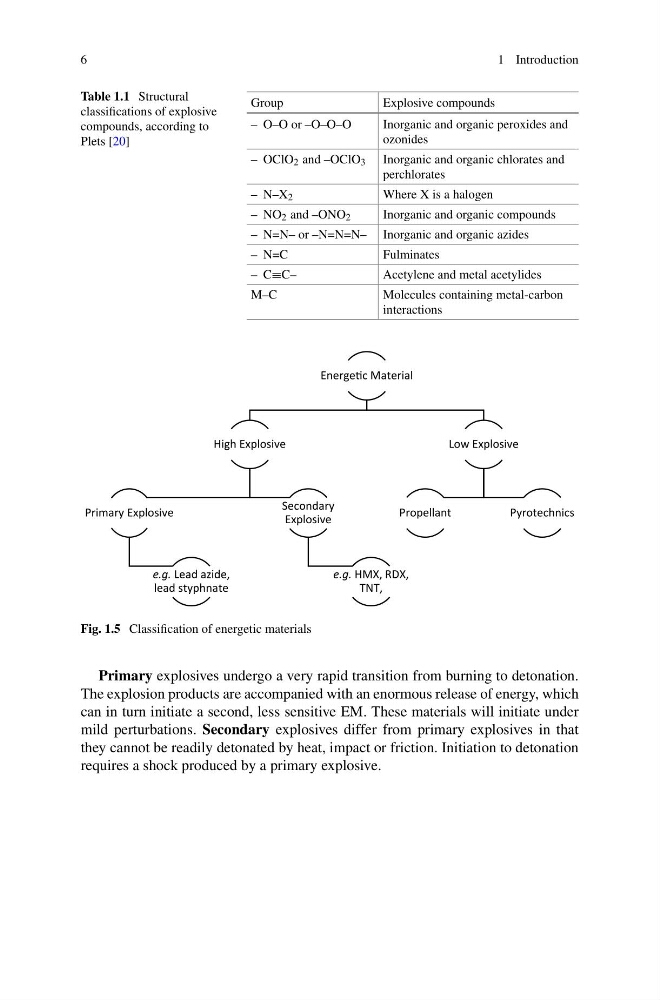
Fig. 1.5 Classification of energetic materials
Primary explosives undergo a very rapid transition from burning to detonation.
The explosion products are accompanied with an enormous release of energy, which
can in turn initiate a second, less sensitive EM. These materials will initiate under
mild perturbations. Secondary explosives differ from primary explosives in that
they cannot be readily detonated by heat, impact or friction. Initiation to detonation
requires a shock produced by a primary explosive.
1 Introduction
Table 1.1 Structural
classifications of explosive
compounds, according to
Plets [20]
Group
Explosive compounds
– O–O or –O–O–O
Inorganic and organic peroxides and
ozonides
– OClO 2 and –OClO 3 Inorganic and organic chlorates and
perchlorates
– N–X 2
Where X is a halogen
– NO 2 and –ONO 2
Inorganic and organic compounds
– N=N– or –N=N=N– Inorganic and organic azides
– N=C
Fulminates
– C≡C–
Acetylene and metal acetylides
M–C
Molecules containing metal-carbon
interactions
EnergeƟc Material
High Explosive
Primary Explosive
e.g. Lead azide,
lead styphnate
Secondary
Explosive
e.g. HMX, RDX,
TNT,
Low Explosive
Propellant
Pyrotechnics
Fig. 1.5 Classification of energetic materials
Primary explosives undergo a very rapid transition from burning to detonation.
The explosion products are accompanied with an enormous release of energy, which
can in turn initiate a second, less sensitive EM. These materials will initiate under
mild perturbations. Secondary explosives differ from primary explosives in that
they cannot be readily detonated by heat, impact or friction. Initiation to detonation
requires a shock produced by a primary explosive.