

sample, and vice versa. Thus, ectomycorrhizal fungal abundance in sclerotia and
mesofauna samples tended to be inversely proportional. At Akita, when the abundance of Laccaria sp. was high in Acari, it was low in the sclerotia sample.
Schneider et al. (2005) reported that Laccaria laccata is one of the ectomycorrhizal
fungi preferred by Acari. Our findings suggest that Laccaria sp. was grazed by Acari
before it could form sclerotia. Regarding Arthrinium sp. and Inonotus sp., to our
knowledge there are no reports that these species are preferred for grazing by Acari
or Collembola. However, for Tuber sp. at Nagano, Queralt et al. (2014), who studied
the relationships between T. melanosporum and Oribatid mites, reported that in
some cases, mites have been seen with spores attached to their bodies. We surfacesterilized mesofauna with 70% ethanol before performing DNA isolation and
T-RFLP analysis. Thus, we may not have detected Tuber sp. in mesofauna from
Nagano owing to the surface-sterilization stage in our methodology.
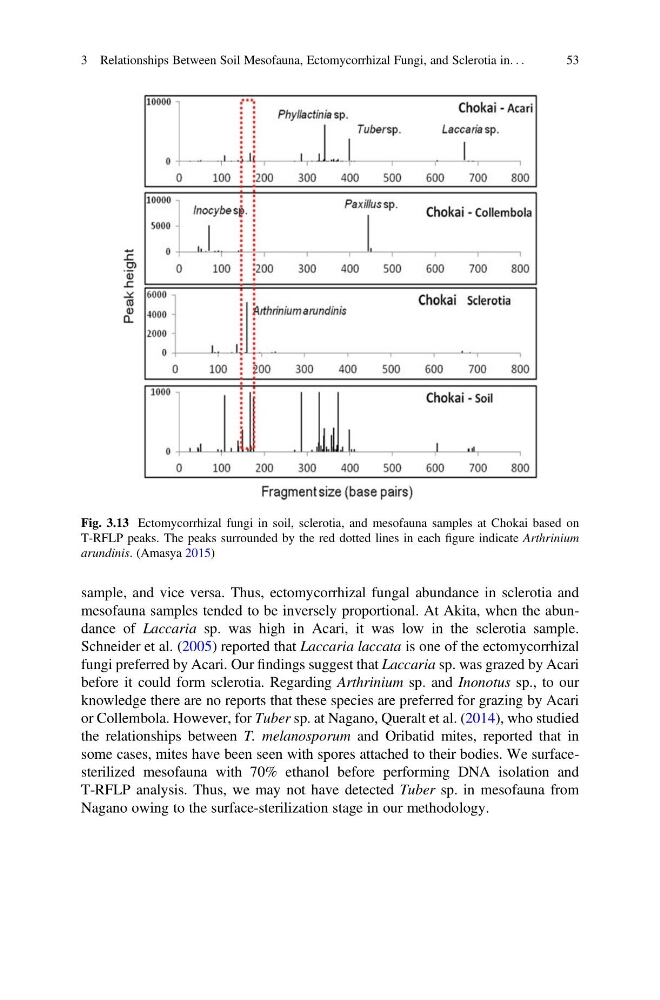
Fig. 3.13 Ectomycorrhizal fungi in soil, sclerotia, and mesofauna samples at Chokai based on
T-RFLP peaks. The peaks surrounded by the red dotted lines in each figure indicate Arthrinium
arundinis. (Amasya 2015)
3 Relationships Between Soil Mesofauna, Ectomycorrhizal Fungi, and Sclerotia in. . .
53
mesofauna samples tended to be inversely proportional. At Akita, when the abundance of Laccaria sp. was high in Acari, it was low in the sclerotia sample.
Schneider et al. (2005) reported that Laccaria laccata is one of the ectomycorrhizal
fungi preferred by Acari. Our findings suggest that Laccaria sp. was grazed by Acari
before it could form sclerotia. Regarding Arthrinium sp. and Inonotus sp., to our
knowledge there are no reports that these species are preferred for grazing by Acari
or Collembola. However, for Tuber sp. at Nagano, Queralt et al. (2014), who studied
the relationships between T. melanosporum and Oribatid mites, reported that in
some cases, mites have been seen with spores attached to their bodies. We surfacesterilized mesofauna with 70% ethanol before performing DNA isolation and
T-RFLP analysis. Thus, we may not have detected Tuber sp. in mesofauna from
Nagano owing to the surface-sterilization stage in our methodology.
Fig. 3.13 Ectomycorrhizal fungi in soil, sclerotia, and mesofauna samples at Chokai based on
T-RFLP peaks. The peaks surrounded by the red dotted lines in each figure indicate Arthrinium
arundinis. (Amasya 2015)
3 Relationships Between Soil Mesofauna, Ectomycorrhizal Fungi, and Sclerotia in. . .
53