

5.3 Membrane Module
The main component of a BWRO plant is the staggered
array of desalting membrane modules containing selective
semipermeable membranes which preferentially allow permeation of water molecules through them while retaining
salt back. Insignificant amount of salt may, however, also
pass through the membrane at high operating pressure owing
to imperfections and flaws inherently present in membrane
structure. Minor quantities of dissolved gases, if present in
feed water, may also permeate along with water; these gases
need to be eliminated from product water at post-treatment
stage. Currently, spiral wound and hollow fiber modules
containing thin-film polyamide and cellulosic membranes
are the dominating configurations of commercial BWRO
desalination plants. Pressure vessels are frequently arranged
in tapered module configuration to ensure almost uniform
and high average velocity of permeating water through each
module. Typical operating pressure of brackish water
desalination plants have steadily lowered down to the range
of 8–12 bar.
Two separate streams having different salt concentrations
leave the membrane module: (i) a desalted permeate water
stream flowing to post-treatment unit for further processing
and (ii) a high-salinity concentrated brine stream for further
treatment before being discharged into the environment.
5.4 Post-Treatment
Desalted water leaving the membrane module is still insecure for drinking; it needs further treatment to improve its
taste and to fulfill the requirements of portable drinking
water. Main post-treatment processes include pH neutralization, H 2 S removal via aeration, recarbonation, CO 2
degasification, sterilization by Cl 2 gas, and remineralization
through filtration or chemical addition (Sauvet-Goichon
2007; Withers 2005; Muramoto and Nishino 1994; Delion
et al. 2004; Birnhack et al. 2008). Desalted water is healthy
and safe for drinking after passing through post-treatment
processes.
Reject stream leaving the membrane module contains
high-salinity brine and other harmful chemicals (ions of
calcium, sulfate, silica, etc.) which need treatment before
their ejection into surroundings since they can affect the
ecosystem (Malaeb and Ayoub 2011; Voutchkov and Semiat
2008; Lattemann and Höpner 2008). One of the proposed
solutions to simply, effectively and economically treat
rejected concentrated brine makes use of solar stills at any
sunny location (Hasnain and Alajlan 1998).
Water recovery achieved in a single-stage BWRO membrane system usually varies from 85–90%. Discarding the
residual 10–15% retentate concentrated brine not only poses
an environmental problem but also results into the wastage
of a huge quantity of water in water-scarce desert regions.
These factors have stimulated researchers to propose a
two-stage membrane process for enhancing water recovery
of BWRO plants in the range of 95–98% as schematically
represented in Fig. 12 (Rahardianto et al. 2007; Kurihara
et al. 1999; Ahmed et al. 2003). Usual water recovery of 85–
90% is achieved in a normal way from the first stage
membrane module. Anticipated scale-forming compounds
present in the concentrated brine exiting the first stage are
precipitated by adding a suitable precipitant into the retentate
brine stream. Concentrated brine is further treated before
introducing it to the second stage of BWRO membrane
module to obtain a total water recovery of about 98% from
the whole process. Small concentrated brine stream leaving
the second stage of BWRO plant is finally disposed-off to
evaporation pond to obtain edible salt.
Brackish
feed
water
Lowpressure
pump
Gravity
settler
Sand
filter
Mixer
Highpressure
pump
Cartridge
filter
Flocculation
Disinfectant
Antiscalant
pH
stbilizer
Pretreatment unit
Concentrated
brine
Product water
Suspended
particulate
solids
Membrane modules
(tapered configuration)
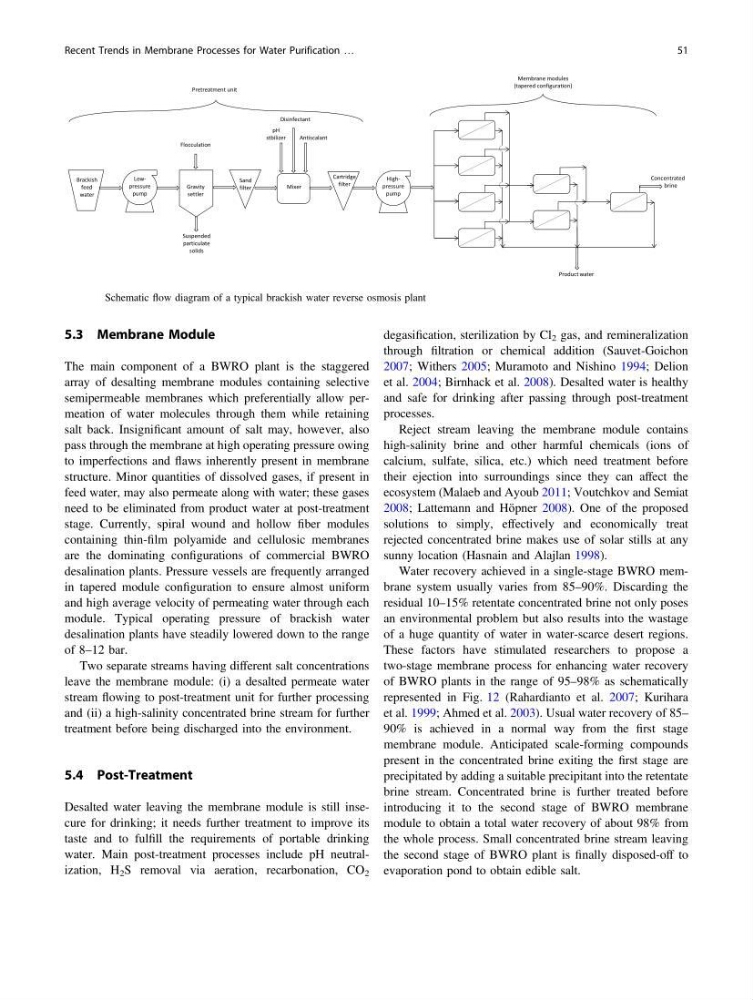
Fig. 11 Schematic flow diagram of a typical brackish water reverse osmosis plant
Recent Trends in Membrane Processes for Water Purification …
51
The main component of a BWRO plant is the staggered
array of desalting membrane modules containing selective
semipermeable membranes which preferentially allow permeation of water molecules through them while retaining
salt back. Insignificant amount of salt may, however, also
pass through the membrane at high operating pressure owing
to imperfections and flaws inherently present in membrane
structure. Minor quantities of dissolved gases, if present in
feed water, may also permeate along with water; these gases
need to be eliminated from product water at post-treatment
stage. Currently, spiral wound and hollow fiber modules
containing thin-film polyamide and cellulosic membranes
are the dominating configurations of commercial BWRO
desalination plants. Pressure vessels are frequently arranged
in tapered module configuration to ensure almost uniform
and high average velocity of permeating water through each
module. Typical operating pressure of brackish water
desalination plants have steadily lowered down to the range
of 8–12 bar.
Two separate streams having different salt concentrations
leave the membrane module: (i) a desalted permeate water
stream flowing to post-treatment unit for further processing
and (ii) a high-salinity concentrated brine stream for further
treatment before being discharged into the environment.
5.4 Post-Treatment
Desalted water leaving the membrane module is still insecure for drinking; it needs further treatment to improve its
taste and to fulfill the requirements of portable drinking
water. Main post-treatment processes include pH neutralization, H 2 S removal via aeration, recarbonation, CO 2
degasification, sterilization by Cl 2 gas, and remineralization
through filtration or chemical addition (Sauvet-Goichon
2007; Withers 2005; Muramoto and Nishino 1994; Delion
et al. 2004; Birnhack et al. 2008). Desalted water is healthy
and safe for drinking after passing through post-treatment
processes.
Reject stream leaving the membrane module contains
high-salinity brine and other harmful chemicals (ions of
calcium, sulfate, silica, etc.) which need treatment before
their ejection into surroundings since they can affect the
ecosystem (Malaeb and Ayoub 2011; Voutchkov and Semiat
2008; Lattemann and Höpner 2008). One of the proposed
solutions to simply, effectively and economically treat
rejected concentrated brine makes use of solar stills at any
sunny location (Hasnain and Alajlan 1998).
Water recovery achieved in a single-stage BWRO membrane system usually varies from 85–90%. Discarding the
residual 10–15% retentate concentrated brine not only poses
an environmental problem but also results into the wastage
of a huge quantity of water in water-scarce desert regions.
These factors have stimulated researchers to propose a
two-stage membrane process for enhancing water recovery
of BWRO plants in the range of 95–98% as schematically
represented in Fig. 12 (Rahardianto et al. 2007; Kurihara
et al. 1999; Ahmed et al. 2003). Usual water recovery of 85–
90% is achieved in a normal way from the first stage
membrane module. Anticipated scale-forming compounds
present in the concentrated brine exiting the first stage are
precipitated by adding a suitable precipitant into the retentate
brine stream. Concentrated brine is further treated before
introducing it to the second stage of BWRO membrane
module to obtain a total water recovery of about 98% from
the whole process. Small concentrated brine stream leaving
the second stage of BWRO plant is finally disposed-off to
evaporation pond to obtain edible salt.
Brackish
feed
water
Lowpressure
pump
Gravity
settler
Sand
filter
Mixer
Highpressure
pump
Cartridge
filter
Flocculation
Disinfectant
Antiscalant
pH
stbilizer
Pretreatment unit
Concentrated
brine
Product water
Suspended
particulate
solids
Membrane modules
(tapered configuration)
Fig. 11 Schematic flow diagram of a typical brackish water reverse osmosis plant
Recent Trends in Membrane Processes for Water Purification …
51