

and macrofouling (Choi et al. 2011; Pontié et al. 2012) as
shown in Fig. 3. Normally, biofilm formation and development on the membrane surface can be observed in such
processes, where cell number, nutrient status and microbial
biochemical properties are correlated (Luo et al. 2012; Choi
et al. 2011; Tijing et al. 2015).
Usually, the microorganisms in biofilms live in a
self-produced matrix of hydrated extracellular polymeric
substances (EPSs), consisting of mainly polysaccharides,
proteins, nucleic acids and lipids (Kochkodan et al. 2014).
These EPSs form the immediate environment of microbial,
providing the mechanical stability of biofilms, mediating
their adhesion to surfaces and forming a cohesive,
three-dimensional polymer network that interconnects and
transiently immobilizes biofilm cells (Komlenic 2010).
Hydrophobicity and negatively charged nature of EPS are
often highlighted (Tijing et al. 2015; Nguyen et al. 2012;
Kochkodan and Hilal 2015).
Table 3 Fouling of ion-exchange membrane
Foulant
type
Foulant
Observation
References
Organic
Oil, carbohydrates, proteins, humic acid and
aromatics
These organic substances easily stick to the
surface of the membrane and/or lodge
themselves inside the membrane-free volume,
and the induced fouling dynamics is generally
relevant to the foulant physical–chemical
properties such as the molecular structure,
hydrophobicity, charging nature, solubility,
mobility and bulk solution concentration
Husson et al. (2013),
Banasiak and Schäfer (2009),
Guo et al. (2014), Shi et al.
(2011)
Biofouling
Bio-organisms, extracellular polymeric
substances
Biofilm formation and development on the
membrane surface, and mainly in the
microorganism-coped desalination process
(e.g., the microbial desalination cells) or
energy production processes (e.g., microbial
fuel cell)
Luo et al. (2012), Choi et al.
(2011), Pontié et al. (2012)
Inorganic
scaling
Magnesium, calcium and carbonate
The membrane scalant or salt/ion precipitation
occurs when the equilibrium of salt solution
shifts toward a decreasing solubility until
below the respective salt concentration
Hayes and Severin (2017),
Araya-Farias and Bazinet
(2006), Cifuentes-Araya
et al. (2012)
Colloidal
Clay minerals, colloidal silica, iron oxide,
aluminum oxide, manganese oxide, organic
colloid and other non-dissolved suspended
solids
The colloids treated by ED are mostly
negatively charged, which often leads to the
interaction with positively charged
ion-exchange groups of AEM
Lee et al. (2003), Cohen and
Probstein (1986), Mondor
et al. (2009)
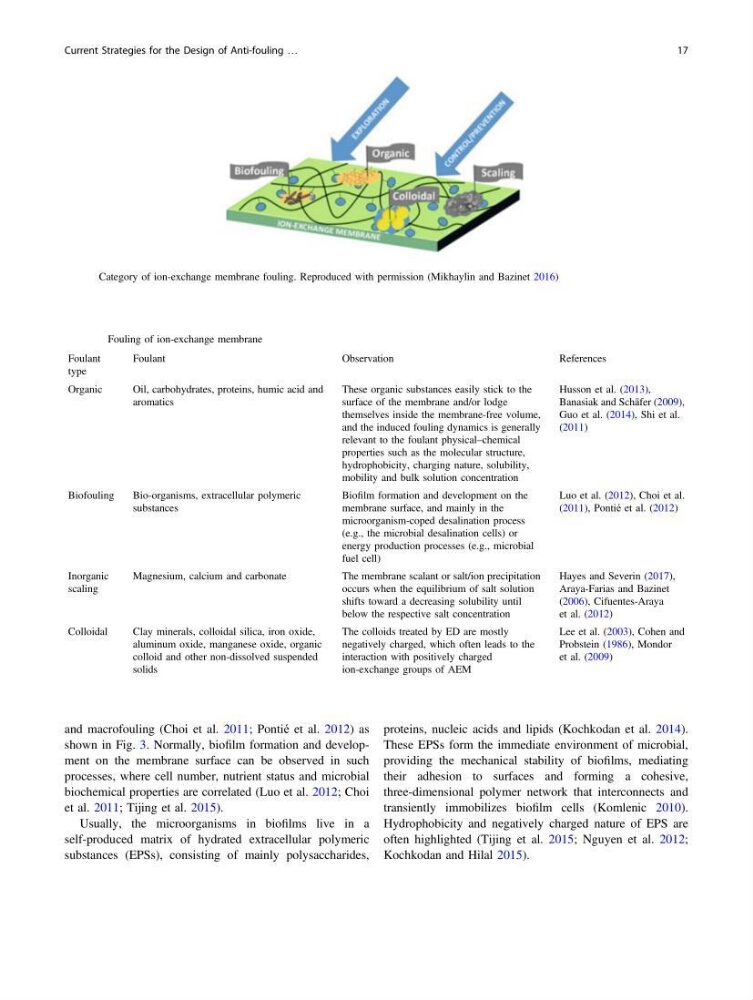
Fig. 2 Category of ion-exchange membrane fouling. Reproduced with permission (Mikhaylin and Bazinet 2016)
Current Strategies for the Design of Anti-fouling …
17
shown in Fig. 3. Normally, biofilm formation and development on the membrane surface can be observed in such
processes, where cell number, nutrient status and microbial
biochemical properties are correlated (Luo et al. 2012; Choi
et al. 2011; Tijing et al. 2015).
Usually, the microorganisms in biofilms live in a
self-produced matrix of hydrated extracellular polymeric
substances (EPSs), consisting of mainly polysaccharides,
proteins, nucleic acids and lipids (Kochkodan et al. 2014).
These EPSs form the immediate environment of microbial,
providing the mechanical stability of biofilms, mediating
their adhesion to surfaces and forming a cohesive,
three-dimensional polymer network that interconnects and
transiently immobilizes biofilm cells (Komlenic 2010).
Hydrophobicity and negatively charged nature of EPS are
often highlighted (Tijing et al. 2015; Nguyen et al. 2012;
Kochkodan and Hilal 2015).
Table 3 Fouling of ion-exchange membrane
Foulant
type
Foulant
Observation
References
Organic
Oil, carbohydrates, proteins, humic acid and
aromatics
These organic substances easily stick to the
surface of the membrane and/or lodge
themselves inside the membrane-free volume,
and the induced fouling dynamics is generally
relevant to the foulant physical–chemical
properties such as the molecular structure,
hydrophobicity, charging nature, solubility,
mobility and bulk solution concentration
Husson et al. (2013),
Banasiak and Schäfer (2009),
Guo et al. (2014), Shi et al.
(2011)
Biofouling
Bio-organisms, extracellular polymeric
substances
Biofilm formation and development on the
membrane surface, and mainly in the
microorganism-coped desalination process
(e.g., the microbial desalination cells) or
energy production processes (e.g., microbial
fuel cell)
Luo et al. (2012), Choi et al.
(2011), Pontié et al. (2012)
Inorganic
scaling
Magnesium, calcium and carbonate
The membrane scalant or salt/ion precipitation
occurs when the equilibrium of salt solution
shifts toward a decreasing solubility until
below the respective salt concentration
Hayes and Severin (2017),
Araya-Farias and Bazinet
(2006), Cifuentes-Araya
et al. (2012)
Colloidal
Clay minerals, colloidal silica, iron oxide,
aluminum oxide, manganese oxide, organic
colloid and other non-dissolved suspended
solids
The colloids treated by ED are mostly
negatively charged, which often leads to the
interaction with positively charged
ion-exchange groups of AEM
Lee et al. (2003), Cohen and
Probstein (1986), Mondor
et al. (2009)
Fig. 2 Category of ion-exchange membrane fouling. Reproduced with permission (Mikhaylin and Bazinet 2016)
Current Strategies for the Design of Anti-fouling …
17