

3.3 Inorganic Scaling
The major scaling ions present in solutions potentially to the
IEM-based processes include magnesium, calcium, carbonate and so on (Hayes and Severin 2017; Araya-Farias and
Bazinet 2006). The membrane scalant or salt/ion precipitation occurs when the equilibrium of salt solution shifts
toward a decreasing solubility until below the respective salt
concentration (Cifuentes-Araya et al. 2011; Momose et al.
1991). Given a type of the potential scaling ion, the precipitation equilibrium is largely affected by not only the ion
concentration but also the solution pH and temperature.
Indeed, the influence of the solution pH on the inorganic
scaling is often reported. A basic condition, e.g., excessive
presence of OH
− , easily results in divalent precipitation such
as Ca(OH) 2 and Mg(OH) 2 (following Eqs. 1 and 2). Even in
a weak alkaline solution, these two divalent cations possibly
precipitate with carbonate ions (following Eqs. 3 and 4)
(Mikhaylin and Bazinet 2016).
Mg
2 þ
ðaqueousÞ þ 2OH
À
ðaqueousÞ Mg OH
ð Þ 2ðsolidÞ
ð1Þ
Ca
2 þ
ðaqueousÞ þ 2OH
À
ðaqueousÞ Ca OH
ð Þ 2ðsolidÞ
ð2Þ
Mg
2 þ
ðaqueousÞ þ CO
À3
2ðaqueousÞ MgCO 3ðsolidÞ
ð3Þ
Ca
2 þ
ðaqueousÞ þ CO
À3
2ðaqueousÞ CaCO 3ðsolidÞ
ð4Þ
Inorganic scaling observed on IEM surface may be of
various ionic species, contributing to the formation of a
multilayer-typed scaling, where not only the ion type but the
ionic ratio matters regarding the nucleation and crystal
growth (Cifuentes-Araya et al. 2011, 2012).
3.4 Colloidal Fouling
Colloidal particles are mainly clay minerals, colloidal silica,
iron oxide, aluminum oxide, manganese oxide, organic
colloid and other non-dissolved suspended solids, which
present in natural and processed waters. The diameter of
colloid particles is between 10 Å and 2 lm (Lee et al. 2003;
Cohen and Probstein 1986). Colloidal particles have a net
charge that plays an important role in colloidal stability
(according to the theory of Derjaguin, Landau, Verwey, and
Overbeek (DLVO)), which may also cause colloids to
adhere to the membrane surface. The colloids treated by ED
are mostly negatively charged, which often leads to the
interaction with positively charged ion-exchange groups of
AEM (Mikhaylin and Bazinet 2016; Lee et al. 2003; Mondor
et al. 2009). The fouling potential of the negatively charged
silica sol in ED by adsorption on the surface of an AEM was
investigated (Lee et al. 2003). The factors affecting colloidal
fouling are concentration of fouling particles as well as
dissolved salt concentration, pH, temperature, membrane
properties, mode of operation and hydrodynamic conditions
(Mikhaylin and Bazinet 2016).
4 Mitigation of Fouling by Surface
Modification
Previous sections mentioned the common foulant types and
the fouling mechanism where the physicochemical properties
such as the hydrophilicity and charging nature are highlighted.
Considering the IEMs are featured as highly charged materials, often of both hydrophobicity due to the polymer chain and
hydrophilicity due to the charged dissociable group, as well as
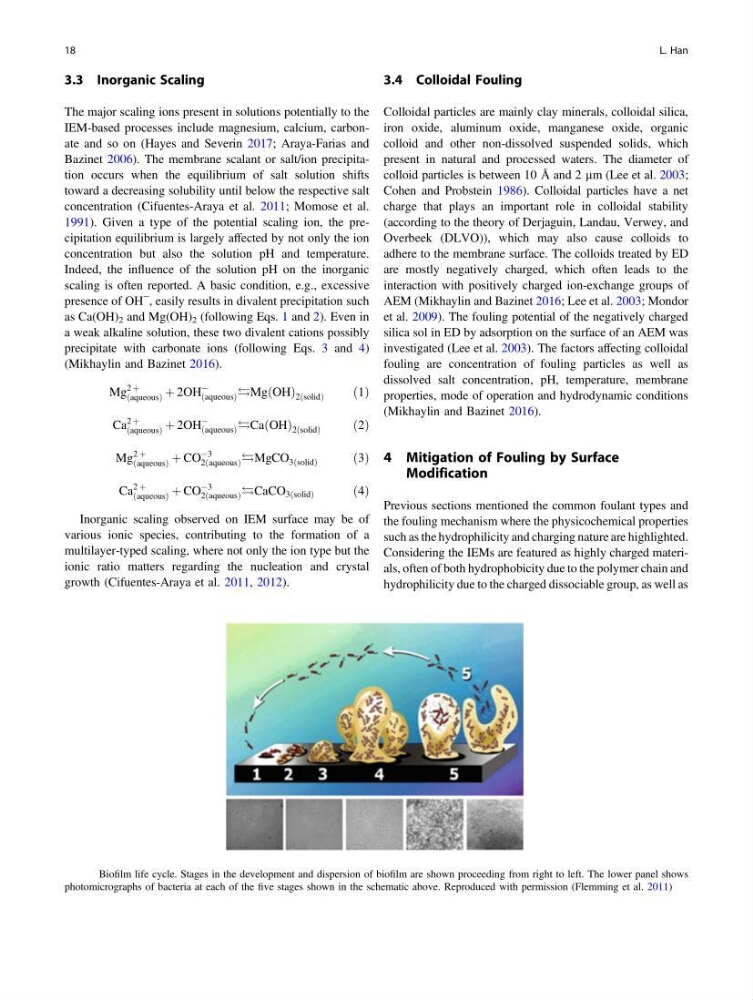
Fig. 3 Biofilm life cycle. Stages in the development and dispersion of biofilm are shown proceeding from right to left. The lower panel shows
photomicrographs of bacteria at each of the five stages shown in the schematic above. Reproduced with permission (Flemming et al. 2011)
18
L. Han
The major scaling ions present in solutions potentially to the
IEM-based processes include magnesium, calcium, carbonate and so on (Hayes and Severin 2017; Araya-Farias and
Bazinet 2006). The membrane scalant or salt/ion precipitation occurs when the equilibrium of salt solution shifts
toward a decreasing solubility until below the respective salt
concentration (Cifuentes-Araya et al. 2011; Momose et al.
1991). Given a type of the potential scaling ion, the precipitation equilibrium is largely affected by not only the ion
concentration but also the solution pH and temperature.
Indeed, the influence of the solution pH on the inorganic
scaling is often reported. A basic condition, e.g., excessive
presence of OH
− , easily results in divalent precipitation such
as Ca(OH) 2 and Mg(OH) 2 (following Eqs. 1 and 2). Even in
a weak alkaline solution, these two divalent cations possibly
precipitate with carbonate ions (following Eqs. 3 and 4)
(Mikhaylin and Bazinet 2016).
Mg
2 þ
ðaqueousÞ þ 2OH
À
ðaqueousÞ Mg OH
ð Þ 2ðsolidÞ
ð1Þ
Ca
2 þ
ðaqueousÞ þ 2OH
À
ðaqueousÞ Ca OH
ð Þ 2ðsolidÞ
ð2Þ
Mg
2 þ
ðaqueousÞ þ CO
À3
2ðaqueousÞ MgCO 3ðsolidÞ
ð3Þ
Ca
2 þ
ðaqueousÞ þ CO
À3
2ðaqueousÞ CaCO 3ðsolidÞ
ð4Þ
Inorganic scaling observed on IEM surface may be of
various ionic species, contributing to the formation of a
multilayer-typed scaling, where not only the ion type but the
ionic ratio matters regarding the nucleation and crystal
growth (Cifuentes-Araya et al. 2011, 2012).
3.4 Colloidal Fouling
Colloidal particles are mainly clay minerals, colloidal silica,
iron oxide, aluminum oxide, manganese oxide, organic
colloid and other non-dissolved suspended solids, which
present in natural and processed waters. The diameter of
colloid particles is between 10 Å and 2 lm (Lee et al. 2003;
Cohen and Probstein 1986). Colloidal particles have a net
charge that plays an important role in colloidal stability
(according to the theory of Derjaguin, Landau, Verwey, and
Overbeek (DLVO)), which may also cause colloids to
adhere to the membrane surface. The colloids treated by ED
are mostly negatively charged, which often leads to the
interaction with positively charged ion-exchange groups of
AEM (Mikhaylin and Bazinet 2016; Lee et al. 2003; Mondor
et al. 2009). The fouling potential of the negatively charged
silica sol in ED by adsorption on the surface of an AEM was
investigated (Lee et al. 2003). The factors affecting colloidal
fouling are concentration of fouling particles as well as
dissolved salt concentration, pH, temperature, membrane
properties, mode of operation and hydrodynamic conditions
(Mikhaylin and Bazinet 2016).
4 Mitigation of Fouling by Surface
Modification
Previous sections mentioned the common foulant types and
the fouling mechanism where the physicochemical properties
such as the hydrophilicity and charging nature are highlighted.
Considering the IEMs are featured as highly charged materials, often of both hydrophobicity due to the polymer chain and
hydrophilicity due to the charged dissociable group, as well as
Fig. 3 Biofilm life cycle. Stages in the development and dispersion of biofilm are shown proceeding from right to left. The lower panel shows
photomicrographs of bacteria at each of the five stages shown in the schematic above. Reproduced with permission (Flemming et al. 2011)
18
L. Han