

hydrophobic polymer chain of IEMs under hydrophobic–
hydrophobic interaction (Sri Mulyati et al. 2012). Structural
size of sodium dodecyl sulfate (SDS) also troubles the AEM
where this organic foulant may be trapped inside the membrane polymer phase to form a densely structured membrane
polymer (Zhao et al. 2018c).
3.2 Biofouling
Biofouling often refers to the accumulation of unwanted
bio-organisms on the membrane surface or inside the
membrane polymer phase. This is more reported in the
pressure-driven membrane processes like microfiltration,
ultrafiltration, nanofiltration and reverse osmosis, where the
membrane permeability/productivity decreases with
increasing transmembrane pressure (Tijing et al. 2015).
Biofouling in the IEM-based technologies is rarely
reported, mainly in the microorganism-coped desalination
process (e.g., the microbial desalination cells) or energy
production processes (e.g., microbial fuel cell) (Luo et al.
2012; Choi et al. 2011). Aquatic biofouling dynamics can be
described as the following four stages: the adsorption of a
conditioning layer, adhesion of bacteria, growth of a biofilm
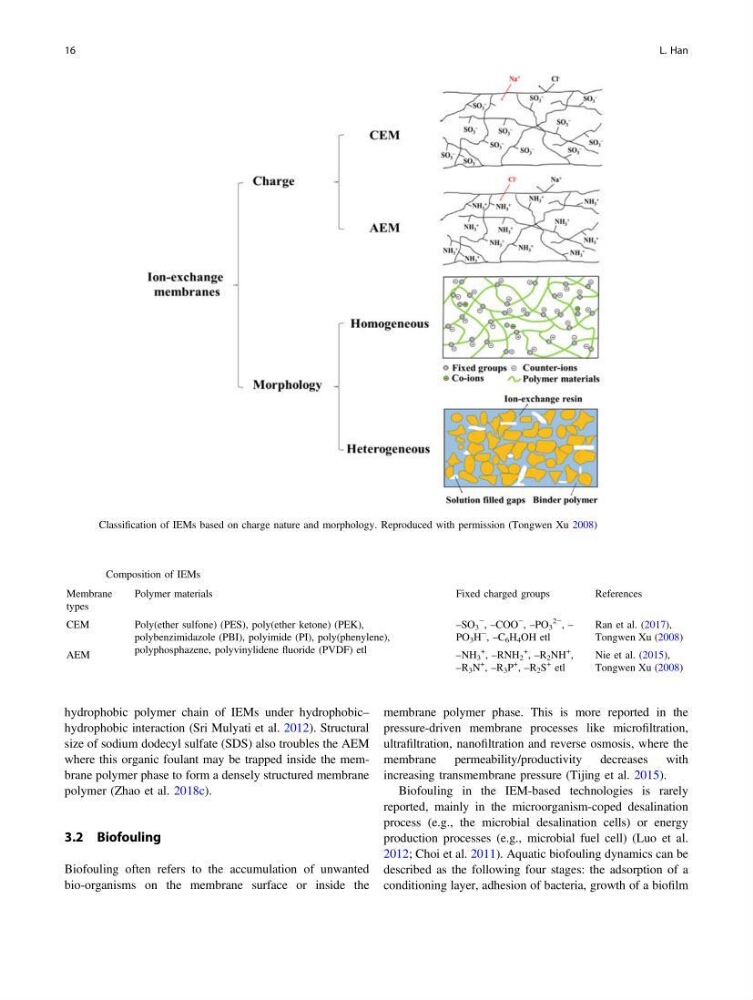
Fig. 1 Classification of IEMs based on charge nature and morphology. Reproduced with permission (Tongwen Xu 2008)
Table 2 Composition of IEMs
Membrane
types
Polymer materials
Fixed charged groups
References
CEM
Poly(ether sulfone) (PES), poly(ether ketone) (PEK),
polybenzimidazole (PBI), polyimide (PI), poly(phenylene),
polyphosphazene, polyvinylidene fluoride (PVDF) etl
–SO 3
−
, –COO
−
, –PO 3
2−
, –
PO 3 H
− , –C 6 H 4 OH etl
Ran et al. (2017),
Tongwen Xu (2008)
AEM
–NH 3
+ , –RNH 2
+ , –R 2 NH
+ ,
–R 3 N
+ , –R 3 P
+ , –R 2 S
+ etl
Nie et al. (2015),
Tongwen Xu (2008)
16
L. Han
hydrophobic interaction (Sri Mulyati et al. 2012). Structural
size of sodium dodecyl sulfate (SDS) also troubles the AEM
where this organic foulant may be trapped inside the membrane polymer phase to form a densely structured membrane
polymer (Zhao et al. 2018c).
3.2 Biofouling
Biofouling often refers to the accumulation of unwanted
bio-organisms on the membrane surface or inside the
membrane polymer phase. This is more reported in the
pressure-driven membrane processes like microfiltration,
ultrafiltration, nanofiltration and reverse osmosis, where the
membrane permeability/productivity decreases with
increasing transmembrane pressure (Tijing et al. 2015).
Biofouling in the IEM-based technologies is rarely
reported, mainly in the microorganism-coped desalination
process (e.g., the microbial desalination cells) or energy
production processes (e.g., microbial fuel cell) (Luo et al.
2012; Choi et al. 2011). Aquatic biofouling dynamics can be
described as the following four stages: the adsorption of a
conditioning layer, adhesion of bacteria, growth of a biofilm
Fig. 1 Classification of IEMs based on charge nature and morphology. Reproduced with permission (Tongwen Xu 2008)
Table 2 Composition of IEMs
Membrane
types
Polymer materials
Fixed charged groups
References
CEM
Poly(ether sulfone) (PES), poly(ether ketone) (PEK),
polybenzimidazole (PBI), polyimide (PI), poly(phenylene),
polyphosphazene, polyvinylidene fluoride (PVDF) etl
–SO 3
−
, –COO
−
, –PO 3
2−
, –
PO 3 H
− , –C 6 H 4 OH etl
Ran et al. (2017),
Tongwen Xu (2008)
AEM
–NH 3
+ , –RNH 2
+ , –R 2 NH
+ ,
–R 3 N
+ , –R 3 P
+ , –R 2 S
+ etl
Nie et al. (2015),
Tongwen Xu (2008)
16
L. Han