

management. Hence, polymers have created 6.3 billion
tonnes of plastic waste since the plastic revolution. About
79% of plastics end in landfills which results in up to
2.41 million tonnes of plastic waste entering the oceans via
rivers every year (The future of plastic 2018). And, when the
degraded plastic becomes invisible to the eye, the
micro-plastics and nano-plastics become a new issue for the
marine life (Gigault et al. 2016). Thus, in our current society
evolving in a new circular economy, the environmental
impact is a new criterion that must be taken into account for
the choice of materials.
That is why there is a recent gaining interest for the
development of more sustainable materials intended for
membrane technologies (Galiano et al. 2018). In the life
cycle assessment studies about membrane separation systems, the environmental cost and end of life management of
the membrane material were taken into account (Hancock
et al. 2012; Martins et al. 2017; Ioannou-Ttofa et al. 2016).
They agree to state that the main cause of the environmental
impact is the energy consumption during the operation
phase. However, Ioannou-Tofta et al. concluded that the
materials used for the overall process, including the polymeric membrane, are also relevant to the overall environmental impact (Ioannou-Ttofa et al. 2016).
A part of the solution would be the replacement of these
conventional polymers by alternative materials with similar
physicochemical properties but without being petro-based
and time persistent. To do so, biopolymers are of interest.
1.3 Biopolymers in Daily Life
Biopolymers are in opposition to most of the conventional
polymers regarding their production and end of life management. According to European Bioplastics, a biopolymer
is either biobased, biodegradable, or features both properties
(Bioplastics 2019). Biobased means that the material is fully
or partly derived from biomass. Biodegradable means that
the material must be converted into water and carbon dioxide
by the action of microorganisms within a given period.
Biopolymers present the advantages of using renewable
resources so that they provide a reduced carbon footprint and
are not time persistent which avoids the environmental
pollutions. The biopolymers have been of growing interest
for the past decades and are now implemented in a multitude
of sectors, from packaging to automotive.
Biobased polymers may be classified as a function of
their production way. Figure 2 shows how these biopolymers can be produced. Three production paths exist: the
extraction from plants or animals, the polymerization of
biobased monomers or the fermentation of microorganisms.
Not mentioned in Fig. 2, there are also biobased but
non-biodegradable polymers such as bio-polyethylene or
bio-polyethylene terephthalate which are partially or completely synthesized from renewable resources. Finally, the
last family is composed of biodegradable polymers obtained
from non-renewable compounds such as polybutylene adipate terephthalate (PBAT, known as ecoflex
® ) or
polycaprolactone.
1.4 Biopolymers for Membranes
Biopolymers are a field of interest in membrane technologies
for different reasons: firstly, because they are an alternative
to the conventional petro-based and non-biodegradable
polymeric materials, and secondly because they could
bring new application opportunities due to their wealth of
functionalities and properties. A few biopolymers have
already been investigated for membrane fabrication. Table 3
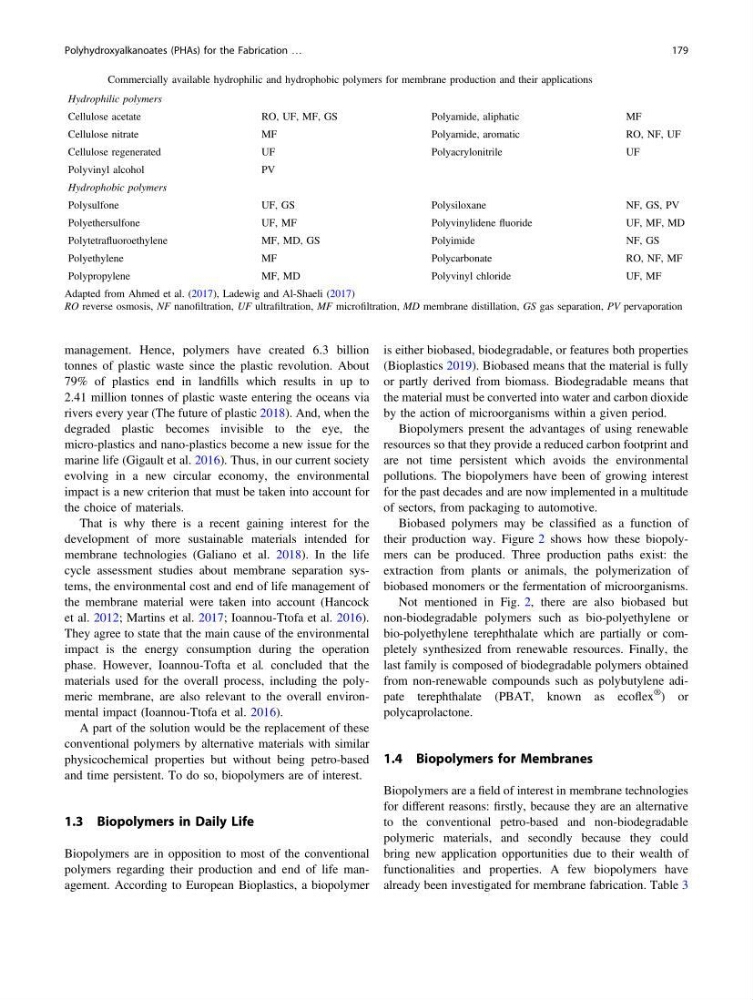
Table 2 Commercially available hydrophilic and hydrophobic polymers for membrane production and their applications
Hydrophilic polymers
Cellulose acetate
RO, UF, MF, GS
Polyamide, aliphatic
MF
Cellulose nitrate
MF
Polyamide, aromatic
RO, NF, UF
Cellulose regenerated
UF
Polyacrylonitrile
UF
Polyvinyl alcohol
PV
Hydrophobic polymers
Polysulfone
UF, GS
Polysiloxane
NF, GS, PV
Polyethersulfone
UF, MF
Polyvinylidene fluoride
UF, MF, MD
Polytetrafluoroethylene
MF, MD, GS
Polyimide
NF, GS
Polyethylene
MF
Polycarbonate
RO, NF, MF
Polypropylene
MF, MD
Polyvinyl chloride
UF, MF
Adapted from Ahmed et al. (2017), Ladewig and Al-Shaeli (2017)
RO reverse osmosis, NF nanofiltration, UF ultrafiltration, MF microfiltration, MD membrane distillation, GS gas separation, PV pervaporation
Polyhydroxyalkanoates (PHAs) for the Fabrication …
179
tonnes of plastic waste since the plastic revolution. About
79% of plastics end in landfills which results in up to
2.41 million tonnes of plastic waste entering the oceans via
rivers every year (The future of plastic 2018). And, when the
degraded plastic becomes invisible to the eye, the
micro-plastics and nano-plastics become a new issue for the
marine life (Gigault et al. 2016). Thus, in our current society
evolving in a new circular economy, the environmental
impact is a new criterion that must be taken into account for
the choice of materials.
That is why there is a recent gaining interest for the
development of more sustainable materials intended for
membrane technologies (Galiano et al. 2018). In the life
cycle assessment studies about membrane separation systems, the environmental cost and end of life management of
the membrane material were taken into account (Hancock
et al. 2012; Martins et al. 2017; Ioannou-Ttofa et al. 2016).
They agree to state that the main cause of the environmental
impact is the energy consumption during the operation
phase. However, Ioannou-Tofta et al. concluded that the
materials used for the overall process, including the polymeric membrane, are also relevant to the overall environmental impact (Ioannou-Ttofa et al. 2016).
A part of the solution would be the replacement of these
conventional polymers by alternative materials with similar
physicochemical properties but without being petro-based
and time persistent. To do so, biopolymers are of interest.
1.3 Biopolymers in Daily Life
Biopolymers are in opposition to most of the conventional
polymers regarding their production and end of life management. According to European Bioplastics, a biopolymer
is either biobased, biodegradable, or features both properties
(Bioplastics 2019). Biobased means that the material is fully
or partly derived from biomass. Biodegradable means that
the material must be converted into water and carbon dioxide
by the action of microorganisms within a given period.
Biopolymers present the advantages of using renewable
resources so that they provide a reduced carbon footprint and
are not time persistent which avoids the environmental
pollutions. The biopolymers have been of growing interest
for the past decades and are now implemented in a multitude
of sectors, from packaging to automotive.
Biobased polymers may be classified as a function of
their production way. Figure 2 shows how these biopolymers can be produced. Three production paths exist: the
extraction from plants or animals, the polymerization of
biobased monomers or the fermentation of microorganisms.
Not mentioned in Fig. 2, there are also biobased but
non-biodegradable polymers such as bio-polyethylene or
bio-polyethylene terephthalate which are partially or completely synthesized from renewable resources. Finally, the
last family is composed of biodegradable polymers obtained
from non-renewable compounds such as polybutylene adipate terephthalate (PBAT, known as ecoflex
® ) or
polycaprolactone.
1.4 Biopolymers for Membranes
Biopolymers are a field of interest in membrane technologies
for different reasons: firstly, because they are an alternative
to the conventional petro-based and non-biodegradable
polymeric materials, and secondly because they could
bring new application opportunities due to their wealth of
functionalities and properties. A few biopolymers have
already been investigated for membrane fabrication. Table 3
Table 2 Commercially available hydrophilic and hydrophobic polymers for membrane production and their applications
Hydrophilic polymers
Cellulose acetate
RO, UF, MF, GS
Polyamide, aliphatic
MF
Cellulose nitrate
MF
Polyamide, aromatic
RO, NF, UF
Cellulose regenerated
UF
Polyacrylonitrile
UF
Polyvinyl alcohol
PV
Hydrophobic polymers
Polysulfone
UF, GS
Polysiloxane
NF, GS, PV
Polyethersulfone
UF, MF
Polyvinylidene fluoride
UF, MF, MD
Polytetrafluoroethylene
MF, MD, GS
Polyimide
NF, GS
Polyethylene
MF
Polycarbonate
RO, NF, MF
Polypropylene
MF, MD
Polyvinyl chloride
UF, MF
Adapted from Ahmed et al. (2017), Ladewig and Al-Shaeli (2017)
RO reverse osmosis, NF nanofiltration, UF ultrafiltration, MF microfiltration, MD membrane distillation, GS gas separation, PV pervaporation
Polyhydroxyalkanoates (PHAs) for the Fabrication …
179