

smoothly from 97 mol% (the very first generated permeate)
toward 90.404 mol% at the permeate outlet. As before, the
underlying reason is the increasing CH 4 permeation in MP#1
due to simultaneous decrease of CO 2 driving force. Figure 18c depicts the retentate/permeate temperature profiles.
Temperature firstly falls in permeate due to CO 2 permeation
Joule–Thomson effects; then retentate/permeate heat transfer
takes place “breaking” the permeate cooling, and slowly
cooling down the retentate which has a much greater heat
capacity. Since the initial temperature of the MP#1 feed
hV@m2fG60 is 45 °C, the permeation in the first MP stage
of FGc20p7 produced a more intense retentate/permeate
cooling of 23 °C (T
out
V % T
out
L ¼ 22
C) as discussed in the
first paragraph of Sect. 2.4.
Figure 19 depicts the retentate path on plane T Â P. To
investigate the occurrence of condensation on the retentate
path, the dew-point (HCDP) locus of the MP#1 feed (blue
line) and the dew-point (HCDP) locus of the retentate product (dashed-magenta line) are also plotted. It can be seen
that the retentate dew-point locus becomes gradually hotter
due to the loss of light species CO 2 and CH 4 via permeation.
In other words, the retentate becomes gradually heavier on
its path through MP#1 and its dew-point locus moves from
the blue line to the dashed-magenta line. Simultaneously, the
retentate cools down due to Joule–Thomson effects associated with the permeation of CH 4 and mostly of CO 2 . This is
clearly seen in Fig. 19; i.e., the retentate path and the
retentate dew-point locus move toward each other. If they
encounter and the retentate path crosses its dew-point locus,
condensation occurs. In FGc20p7, the initial hot feed temperature of 45 °C was again sufficient to prevent such
encounter, though a lesser margin of only 6 °C remained for
the occurrence of condensation at the end of the retentate
flow path (compare with the analogous wider margin of 18 °
G60 with FLASH at 5 O C + MP with Permeate at P=20bar
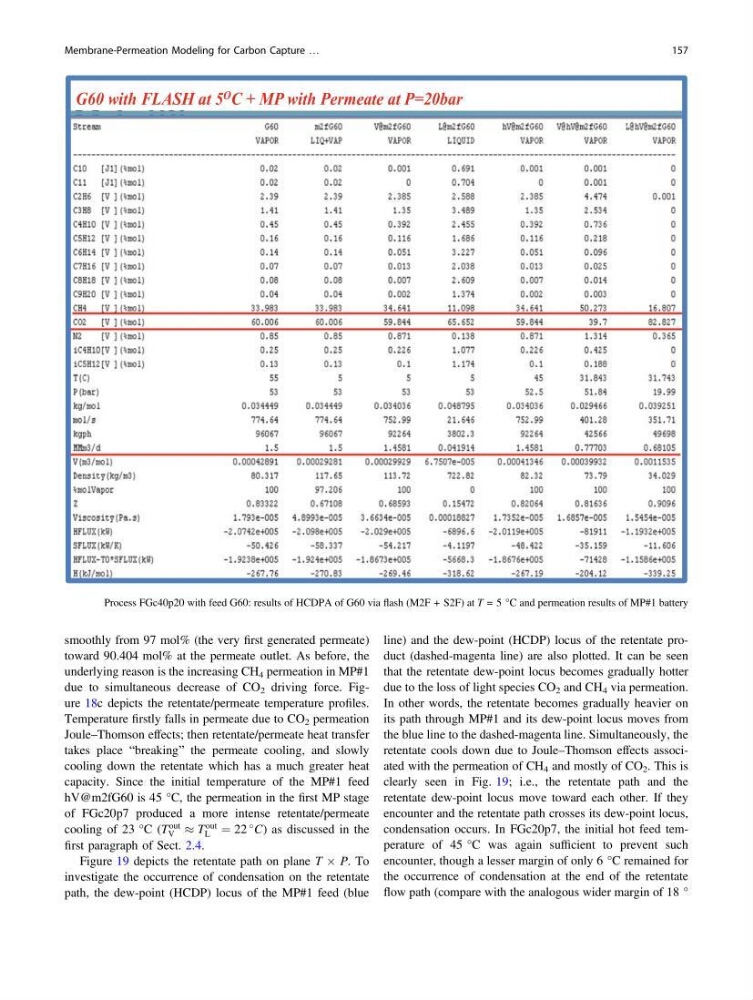
Fig. 12 Process FGc40p20 with feed G60: results of HCDPA of G60 via flash (M2F + S2F) at T = 5 °C and permeation results of MP#1 battery
Membrane-Permeation Modeling for Carbon Capture …
157
toward 90.404 mol% at the permeate outlet. As before, the
underlying reason is the increasing CH 4 permeation in MP#1
due to simultaneous decrease of CO 2 driving force. Figure 18c depicts the retentate/permeate temperature profiles.
Temperature firstly falls in permeate due to CO 2 permeation
Joule–Thomson effects; then retentate/permeate heat transfer
takes place “breaking” the permeate cooling, and slowly
cooling down the retentate which has a much greater heat
capacity. Since the initial temperature of the MP#1 feed
hV@m2fG60 is 45 °C, the permeation in the first MP stage
of FGc20p7 produced a more intense retentate/permeate
cooling of 23 °C (T
out
V % T
out
L ¼ 22
C) as discussed in the
first paragraph of Sect. 2.4.
Figure 19 depicts the retentate path on plane T Â P. To
investigate the occurrence of condensation on the retentate
path, the dew-point (HCDP) locus of the MP#1 feed (blue
line) and the dew-point (HCDP) locus of the retentate product (dashed-magenta line) are also plotted. It can be seen
that the retentate dew-point locus becomes gradually hotter
due to the loss of light species CO 2 and CH 4 via permeation.
In other words, the retentate becomes gradually heavier on
its path through MP#1 and its dew-point locus moves from
the blue line to the dashed-magenta line. Simultaneously, the
retentate cools down due to Joule–Thomson effects associated with the permeation of CH 4 and mostly of CO 2 . This is
clearly seen in Fig. 19; i.e., the retentate path and the
retentate dew-point locus move toward each other. If they
encounter and the retentate path crosses its dew-point locus,
condensation occurs. In FGc20p7, the initial hot feed temperature of 45 °C was again sufficient to prevent such
encounter, though a lesser margin of only 6 °C remained for
the occurrence of condensation at the end of the retentate
flow path (compare with the analogous wider margin of 18 °
G60 with FLASH at 5 O C + MP with Permeate at P=20bar
Fig. 12 Process FGc40p20 with feed G60: results of HCDPA of G60 via flash (M2F + S2F) at T = 5 °C and permeation results of MP#1 battery
Membrane-Permeation Modeling for Carbon Capture …
157