

to improve air quality. The field is at an interesting juncture that may be framed with the
question – “how low is low enough for air
quality standards and guidance?”
Science should have an important role in
addressing that question, however, scientific
knowledge alone will not be sufficient to answer
the question. Epidemiological studies with
improved design and execution may give us
some marginal improvement in estimates of the
health risks associated with exposure to low ambient concentrations of various air constituents. It
will be especially challenging to demonstrate the
shape of the ambient concentration-response relationship at concentrations that include background levels. Rather than a singular focus on
health effects attributable to air pollution as in
the past, future epidemiological studies will better
serve the needs of Society when they consider
more broadly the multiple factors that influence
disease outcomes. A finding of relative risks of 1.1
or less for a specific air pollutant begs the question
of what are the dominant risk factors driving the
baseline health risks.
It has become commonplace for scientists
using cellular and molecular approaches to argue
for more research using their tools to investigate
the mechanisms of action of various air pollutants.
Based on the evidence that air pollution in the
highest income countries of the world is not a
major influence on the health of the population it
is appropriate to ask whether a more detailed
understanding of this specific risk factor, air pollutants, will be of value in guiding critical societal
decisions. An alternative would be to focus on the
broader range of risk factors that influence the
baseline risk.
Irrespective of the specifics of the science
available, it can be anticipated that increasing
attention will focus on how science is used to
decide on the level and statistical form of air
quality standards and guidelines. The issue is relevant to both the setting of Standards and Guidelines, however, it is especially critical as it relates
to standards which are legally binding. A review
of all the existing Guidelines and Standards for
criteria or common air pollutants suggests they
have been based on judgment. In some cases,
those judgments were made exclusively by scientists, that is, the WHO Air Quality Guidelines. In
other cases, as in the setting of National Ambient
Air Quality Standards by the US EPA, the decisions were made by appointed government officials and informed by the science reviewed by the
Clean Air Scientific Advisory Committee. As best
it can be determined none of the Guidelines or
Standards were set at a specific defined level of
risk. This is remarkable since each level (and its
associated statistical form) for a Guideline or
Standard reflects a level of acceptable risk:
above this level and statistical form the health
risks are not acceptable and below this level and
statistical form the health risks of exposure are
deemed acceptable. If scientists argue that there
is a linear, nothreshold relationship between ambient concentrations of an air pollutant and associated health responses down to background
concentrations, then no concentration is free of
some level of calculated excess risk.
In this author’s view, decisions on acceptable
health risks for the public should be informed by
the best science available. However, scientists
alone are not in a position to make broad policy
decisions on acceptable risk. Indeed, pronouncements by individual scientists or scientific committees need to be recognized as a statement of the
individual preference for a particular policy outcome or the collective view of the Committee. The
current worldwide economic crisis results in every
major financial investment made by either public
or private entities being considered in the context
of the future return on the investment in terms of
the public or private good that will result. The
focus increasingly is on choices that must be
made between alternative uses of funds,
Air
Quality
Guidelines
and
Standards,
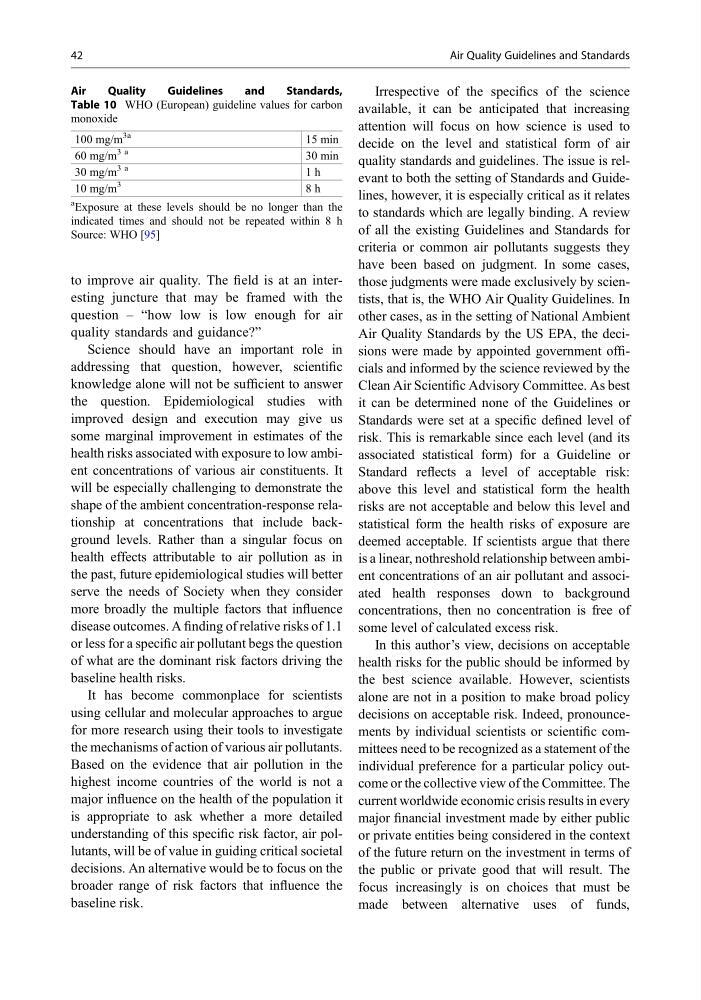
Table 10 WHO (European) guideline values for carbon
monoxide
100 mg/m
3a
15 min
60 mg/m
3 a
30 min
30 mg/m
3 a
1 h
10 mg/m
3
8 h
a Exposure at these levels should be no longer than the
indicated times and should not be repeated within 8 h
Source: WHO [95]
42
Air Quality Guidelines and Standards
question – “how low is low enough for air
quality standards and guidance?”
Science should have an important role in
addressing that question, however, scientific
knowledge alone will not be sufficient to answer
the question. Epidemiological studies with
improved design and execution may give us
some marginal improvement in estimates of the
health risks associated with exposure to low ambient concentrations of various air constituents. It
will be especially challenging to demonstrate the
shape of the ambient concentration-response relationship at concentrations that include background levels. Rather than a singular focus on
health effects attributable to air pollution as in
the past, future epidemiological studies will better
serve the needs of Society when they consider
more broadly the multiple factors that influence
disease outcomes. A finding of relative risks of 1.1
or less for a specific air pollutant begs the question
of what are the dominant risk factors driving the
baseline health risks.
It has become commonplace for scientists
using cellular and molecular approaches to argue
for more research using their tools to investigate
the mechanisms of action of various air pollutants.
Based on the evidence that air pollution in the
highest income countries of the world is not a
major influence on the health of the population it
is appropriate to ask whether a more detailed
understanding of this specific risk factor, air pollutants, will be of value in guiding critical societal
decisions. An alternative would be to focus on the
broader range of risk factors that influence the
baseline risk.
Irrespective of the specifics of the science
available, it can be anticipated that increasing
attention will focus on how science is used to
decide on the level and statistical form of air
quality standards and guidelines. The issue is relevant to both the setting of Standards and Guidelines, however, it is especially critical as it relates
to standards which are legally binding. A review
of all the existing Guidelines and Standards for
criteria or common air pollutants suggests they
have been based on judgment. In some cases,
those judgments were made exclusively by scientists, that is, the WHO Air Quality Guidelines. In
other cases, as in the setting of National Ambient
Air Quality Standards by the US EPA, the decisions were made by appointed government officials and informed by the science reviewed by the
Clean Air Scientific Advisory Committee. As best
it can be determined none of the Guidelines or
Standards were set at a specific defined level of
risk. This is remarkable since each level (and its
associated statistical form) for a Guideline or
Standard reflects a level of acceptable risk:
above this level and statistical form the health
risks are not acceptable and below this level and
statistical form the health risks of exposure are
deemed acceptable. If scientists argue that there
is a linear, nothreshold relationship between ambient concentrations of an air pollutant and associated health responses down to background
concentrations, then no concentration is free of
some level of calculated excess risk.
In this author’s view, decisions on acceptable
health risks for the public should be informed by
the best science available. However, scientists
alone are not in a position to make broad policy
decisions on acceptable risk. Indeed, pronouncements by individual scientists or scientific committees need to be recognized as a statement of the
individual preference for a particular policy outcome or the collective view of the Committee. The
current worldwide economic crisis results in every
major financial investment made by either public
or private entities being considered in the context
of the future return on the investment in terms of
the public or private good that will result. The
focus increasingly is on choices that must be
made between alternative uses of funds,
Air
Quality
Guidelines
and
Standards,
Table 10 WHO (European) guideline values for carbon
monoxide
100 mg/m
3a
15 min
60 mg/m
3 a
30 min
30 mg/m
3 a
1 h
10 mg/m
3
8 h
a Exposure at these levels should be no longer than the
indicated times and should not be repeated within 8 h
Source: WHO [95]
42
Air Quality Guidelines and Standards