

five commercially available electrochemical sensors were investigated to determine their performance relative to more traditional measurement
technologies. The five investigated commercial
low-cost air pollution sensing systems were
designed to measure CO (CO-B4, Alphasense
Ltd), O 3 (OX-B421, Alphasense Ltd), NO
(NO-B4, Alphasense Ltd), NO 2 (NO2-B4,
Alphasense Ltd), and SO 2 (SO2-B4, Alphasense
Ltd). The aim of the studies was to establish the
selectivity of these sensors to their target compounds, quantitatively characterize chemical
interference to other pollutants, and evaluate the
scale of impacts of co-pollutants.
Chemical Interference of Co-pollutant
There is a complex set of interconnections
between the sensors’ response to co-pollutants
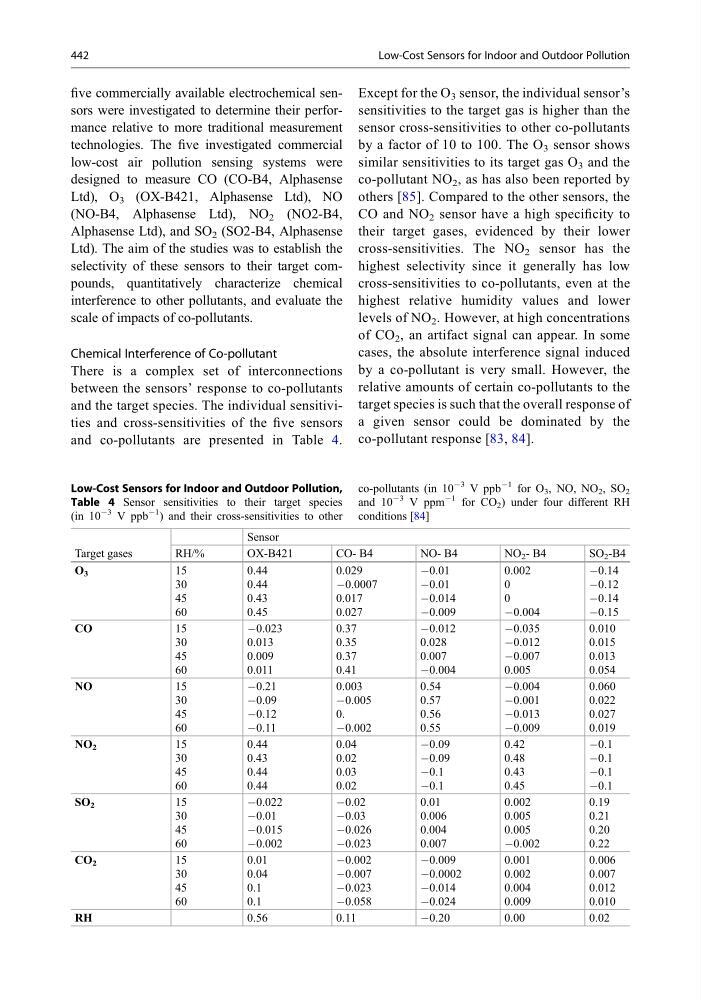
and the target species. The individual sensitivities and cross-sensitivities of the five sensors
and co-pollutants are presented in Table 4.
Except for the O 3 sensor, the individual sensor’s
sensitivities to the target gas is higher than the
sensor cross-sensitivities to other co-pollutants
by a factor of 10 to 100. The O 3 sensor shows
similar sensitivities to its target gas O 3 and the
co-pollutant NO 2 , as has also been reported by
others [85]. Compared to the other sensors, the
CO and NO 2 sensor have a high specificity to
their target gases, evidenced by their lower
cross-sensitivities. The NO 2 sensor has the
highest selectivity since it generally has low
cross-sensitivities to co-pollutants, even at the
highest relative humidity values and lower
levels of NO 2 . However, at high concentrations
of CO 2 , an artifact signal can appear. In some
cases, the absolute interference signal induced
by a co-pollutant is very small. However, the
relative amounts of certain co-pollutants to the
target species is such that the overall response of
a given sensor could be dominated by the
co-pollutant response [83, 84].
Low-Cost Sensors for Indoor and Outdoor Pollution,
Table 4 Sensor sensitivities to their target species
(in 10
À3 V ppb
À1
) and their cross-sensitivities to other
co-pollutants (in 10
À3 V ppb
À1 for O 3 , NO, NO 2 , SO 2
and 10
À3 V ppm
À1 for CO 2 ) under four different RH
conditions [84]
Target gases
Sensor
RH/%
OX-B421
CO- B4
NO- B4
NO 2 - B4
SO 2 -B4
O 3
15
30
45
60
0.44
0.44
0.43
0.45
0.029
À0.0007
0.017
0.027
À0.01
À0.01
À0.014
À0.009
0.002
0
0
À0.004
À0.14
À0.12
À0.14
À0.15
CO
15
30
45
60
À0.023
0.013
0.009
0.011
0.37
0.35
0.37
0.41
À0.012
0.028
0.007
À0.004
À0.035
À0.012
À0.007
0.005
0.010
0.015
0.013
0.054
NO
15
30
45
60
À0.21
À0.09
À0.12
À0.11
0.003
À0.005
0.
À0.002
0.54
0.57
0.56
0.55
À0.004
À0.001
À0.013
À0.009
0.060
0.022
0.027
0.019
NO 2
15
30
45
60
0.44
0.43
0.44
0.44
0.04
0.02
0.03
0.02
À0.09
À0.09
À0.1
À0.1
0.42
0.48
0.43
0.45
À0.1
À0.1
À0.1
À0.1
SO 2
15
30
45
60
À0.022
À0.01
À0.015
À0.002
À0.02
À0.03
À0.026
À0.023
0.01
0.006
0.004
0.007
0.002
0.005
0.005
À0.002
0.19
0.21
0.20
0.22
CO 2
15
30
45
60
0.01
0.04
0.1
0.1
À0.002
À0.007
À0.023
À0.058
À0.009
À0.0002
À0.014
À0.024
0.001
0.002
0.004
0.009
0.006
0.007
0.012
0.010
RH
0.56
0.11
À0.20
0.00
0.02
442
Low-Cost Sensors for Indoor and Outdoor Pollution
technologies. The five investigated commercial
low-cost air pollution sensing systems were
designed to measure CO (CO-B4, Alphasense
Ltd), O 3 (OX-B421, Alphasense Ltd), NO
(NO-B4, Alphasense Ltd), NO 2 (NO2-B4,
Alphasense Ltd), and SO 2 (SO2-B4, Alphasense
Ltd). The aim of the studies was to establish the
selectivity of these sensors to their target compounds, quantitatively characterize chemical
interference to other pollutants, and evaluate the
scale of impacts of co-pollutants.
Chemical Interference of Co-pollutant
There is a complex set of interconnections
between the sensors’ response to co-pollutants
and the target species. The individual sensitivities and cross-sensitivities of the five sensors
and co-pollutants are presented in Table 4.
Except for the O 3 sensor, the individual sensor’s
sensitivities to the target gas is higher than the
sensor cross-sensitivities to other co-pollutants
by a factor of 10 to 100. The O 3 sensor shows
similar sensitivities to its target gas O 3 and the
co-pollutant NO 2 , as has also been reported by
others [85]. Compared to the other sensors, the
CO and NO 2 sensor have a high specificity to
their target gases, evidenced by their lower
cross-sensitivities. The NO 2 sensor has the
highest selectivity since it generally has low
cross-sensitivities to co-pollutants, even at the
highest relative humidity values and lower
levels of NO 2 . However, at high concentrations
of CO 2 , an artifact signal can appear. In some
cases, the absolute interference signal induced
by a co-pollutant is very small. However, the
relative amounts of certain co-pollutants to the
target species is such that the overall response of
a given sensor could be dominated by the
co-pollutant response [83, 84].
Low-Cost Sensors for Indoor and Outdoor Pollution,
Table 4 Sensor sensitivities to their target species
(in 10
À3 V ppb
À1
) and their cross-sensitivities to other
co-pollutants (in 10
À3 V ppb
À1 for O 3 , NO, NO 2 , SO 2
and 10
À3 V ppm
À1 for CO 2 ) under four different RH
conditions [84]
Target gases
Sensor
RH/%
OX-B421
CO- B4
NO- B4
NO 2 - B4
SO 2 -B4
O 3
15
30
45
60
0.44
0.44
0.43
0.45
0.029
À0.0007
0.017
0.027
À0.01
À0.01
À0.014
À0.009
0.002
0
0
À0.004
À0.14
À0.12
À0.14
À0.15
CO
15
30
45
60
À0.023
0.013
0.009
0.011
0.37
0.35
0.37
0.41
À0.012
0.028
0.007
À0.004
À0.035
À0.012
À0.007
0.005
0.010
0.015
0.013
0.054
NO
15
30
45
60
À0.21
À0.09
À0.12
À0.11
0.003
À0.005
0.
À0.002
0.54
0.57
0.56
0.55
À0.004
À0.001
À0.013
À0.009
0.060
0.022
0.027
0.019
NO 2
15
30
45
60
0.44
0.43
0.44
0.44
0.04
0.02
0.03
0.02
À0.09
À0.09
À0.1
À0.1
0.42
0.48
0.43
0.45
À0.1
À0.1
À0.1
À0.1
SO 2
15
30
45
60
À0.022
À0.01
À0.015
À0.002
À0.02
À0.03
À0.026
À0.023
0.01
0.006
0.004
0.007
0.002
0.005
0.005
À0.002
0.19
0.21
0.20
0.22
CO 2
15
30
45
60
0.01
0.04
0.1
0.1
À0.002
À0.007
À0.023
À0.058
À0.009
À0.0002
À0.014
À0.024
0.001
0.002
0.004
0.009
0.006
0.007
0.012
0.010
RH
0.56
0.11
À0.20
0.00
0.02
442
Low-Cost Sensors for Indoor and Outdoor Pollution