

A great deal of research and development is built
on using the patterns of light scattering for particle
characterization. A partial list includes forwardscattering
spectrometer
probe
(FSSP-100)
(Knollenberg 1981) and FSSP-300 (Baumgardner
1992), 90
White Light-Scattering Analyzers
(Umhauer 1983), Particle Counter Sizer Velocimeter
(PCSV) (Holve and Self 1979a), Laser Doppler
Velocimetry (LDV) visibility based (Post 1978),
Phase Doppler Particle Analyzer (PDPA) (Bachalo
and Houser 1984), and Particle Dynamics Analyzer
(PDA) (Saffman 1984). Single particle counters have
some important limitations including collection efficiency and noise/poor counting statistics at low concentrations, the Rayleigh effect for gas molecules,
and saturation at high particle concentration due to
coincidence and dead time. Researchers have developed some solutions to address these limitations. It
has been found that, overall, small particles scatter
light at a larger angle, while larger particles scatter at
a smaller angle. Therefore, forward scattering and
side scattering are not sufficient to characterize light
scattered from nanoparticles. Arakawa et al. [128]
used a collimated light beam in a vacuum sample cell
to reduce the Rayleigh effect from air molecules,
enabling the detection of smaller particles.
Bauer et al. [129] noted that the nanoparticle
measurement methods all remove the nanoparticles
from their original environment, and the particles
will rapidly change in response to the new environment. For example, charging particles, such as
in the charging stage of a DMA, will change their
behavior, and it will change the particles themselves. A charged particle will have different rates
of growth and evaporation relative to a neutral
particle. A similar problem can occur in the mass
spectrometric analysis methods. In addition, Wang
et al. [130] found significant diffusional deposition
of nanoparticles at the bends or elbows of instruments, which may distort results. Therefore,
recently, Bauer et al. [129] introduced a new technique called synchrotron small-angle X-ray scattering (SAXS) in which high-intensity X-ray
beams from synchrotrons make it possible to measure nanoparticles directly in the gas phase, overcoming the drawback. By comparing the results
with those of a differential mobility particle sizer
(DMPS) operated in parallel, they could show that
the SAXS method is able to measure the primary
particles and the aggregates, whereas the DMPS
measured only aggregates. They noted that in situ
direct nanoparticle measurement at ultralow volume fractions of ~10
À10 is feasible with SAXS
under atmospheric conditions.
Nanoparticles have an extremely low polarizability because of their ultra-small size and are
therefore difficult to detect by light scatteringbased techniques [127]. There are physical limits,
for example, when comparing the wavelength of
visible light (ca. 500 nm) with the size of nanoparticles (e.g., 20 nm). Therefore, despite
advances with commercial optical particle counters to maximize the collection of scattered light,
their performance for nanoparticles is not satisfactory. Furthermore, optical devices determine particle size based on the scattered light intensity.
Although this method is faster than other techniques, variations in the refractive index of particles with the same size, which depends on the
morphology and chemical composition of the particle, will always cause variations in the scattered
light intensity [131].
Condensation Particle Counter (CPC)
Since the size distribution that can be determined
from optical techniques is not reliable for particles
with a diameter below 100 nm, aerosol science
had to find a new approach. The condensation
Airborne Nanoparticles: Control and Detection,
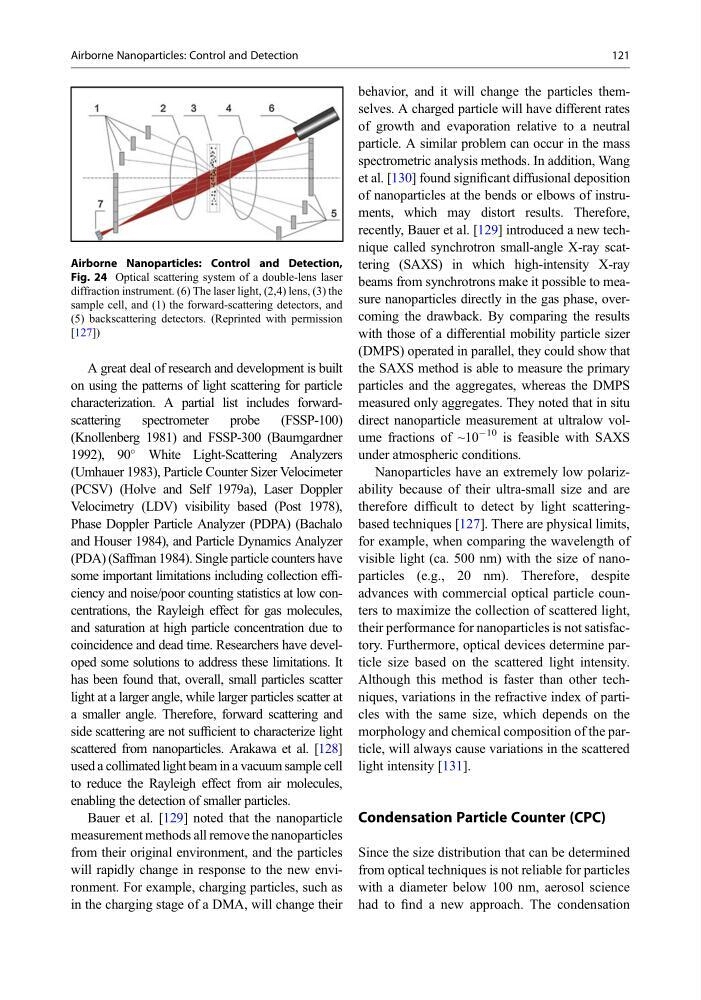
Fig. 24 Optical scattering system of a double-lens laser
diffraction instrument. (6) The laser light, (2,4) lens, (3) the
sample cell, and (1) the forward-scattering detectors, and
(5) backscattering detectors. (Reprinted with permission
[127])
Airborne Nanoparticles: Control and Detection
121
on using the patterns of light scattering for particle
characterization. A partial list includes forwardscattering
spectrometer
probe
(FSSP-100)
(Knollenberg 1981) and FSSP-300 (Baumgardner
1992), 90
White Light-Scattering Analyzers
(Umhauer 1983), Particle Counter Sizer Velocimeter
(PCSV) (Holve and Self 1979a), Laser Doppler
Velocimetry (LDV) visibility based (Post 1978),
Phase Doppler Particle Analyzer (PDPA) (Bachalo
and Houser 1984), and Particle Dynamics Analyzer
(PDA) (Saffman 1984). Single particle counters have
some important limitations including collection efficiency and noise/poor counting statistics at low concentrations, the Rayleigh effect for gas molecules,
and saturation at high particle concentration due to
coincidence and dead time. Researchers have developed some solutions to address these limitations. It
has been found that, overall, small particles scatter
light at a larger angle, while larger particles scatter at
a smaller angle. Therefore, forward scattering and
side scattering are not sufficient to characterize light
scattered from nanoparticles. Arakawa et al. [128]
used a collimated light beam in a vacuum sample cell
to reduce the Rayleigh effect from air molecules,
enabling the detection of smaller particles.
Bauer et al. [129] noted that the nanoparticle
measurement methods all remove the nanoparticles
from their original environment, and the particles
will rapidly change in response to the new environment. For example, charging particles, such as
in the charging stage of a DMA, will change their
behavior, and it will change the particles themselves. A charged particle will have different rates
of growth and evaporation relative to a neutral
particle. A similar problem can occur in the mass
spectrometric analysis methods. In addition, Wang
et al. [130] found significant diffusional deposition
of nanoparticles at the bends or elbows of instruments, which may distort results. Therefore,
recently, Bauer et al. [129] introduced a new technique called synchrotron small-angle X-ray scattering (SAXS) in which high-intensity X-ray
beams from synchrotrons make it possible to measure nanoparticles directly in the gas phase, overcoming the drawback. By comparing the results
with those of a differential mobility particle sizer
(DMPS) operated in parallel, they could show that
the SAXS method is able to measure the primary
particles and the aggregates, whereas the DMPS
measured only aggregates. They noted that in situ
direct nanoparticle measurement at ultralow volume fractions of ~10
À10 is feasible with SAXS
under atmospheric conditions.
Nanoparticles have an extremely low polarizability because of their ultra-small size and are
therefore difficult to detect by light scatteringbased techniques [127]. There are physical limits,
for example, when comparing the wavelength of
visible light (ca. 500 nm) with the size of nanoparticles (e.g., 20 nm). Therefore, despite
advances with commercial optical particle counters to maximize the collection of scattered light,
their performance for nanoparticles is not satisfactory. Furthermore, optical devices determine particle size based on the scattered light intensity.
Although this method is faster than other techniques, variations in the refractive index of particles with the same size, which depends on the
morphology and chemical composition of the particle, will always cause variations in the scattered
light intensity [131].
Condensation Particle Counter (CPC)
Since the size distribution that can be determined
from optical techniques is not reliable for particles
with a diameter below 100 nm, aerosol science
had to find a new approach. The condensation
Airborne Nanoparticles: Control and Detection,
Fig. 24 Optical scattering system of a double-lens laser
diffraction instrument. (6) The laser light, (2,4) lens, (3) the
sample cell, and (1) the forward-scattering detectors, and
(5) backscattering detectors. (Reprinted with permission
[127])
Airborne Nanoparticles: Control and Detection
121