

28
An Introduction to Beam Physics
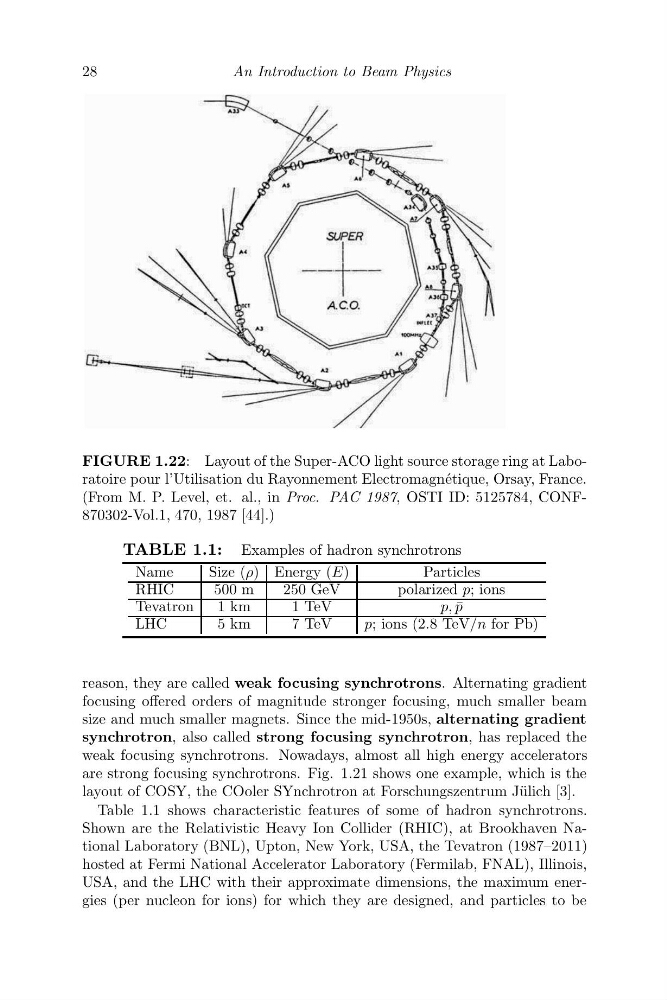
FIGURE 1.22: Layout of the Super-ACO light source storage ring at Laboratoire pour l’Utilisation du Rayonnement Electromagn´ etique, Orsay, France.
(From M. P. Level, et. al., in Proc. PAC 1987, OSTI ID: 5125784, CONF870302-Vol.1, 470, 1987 [44].)
TABLE 1.1: Examples of hadron synchrotrons
Name
Size (ρ) Energy (E)
Particles
RHIC
500 m
250 GeV
polarized p; ions
Tevatron
1 km
1 TeV
p, ¯
p
LHC
5 km
7 TeV
p; ions (2.8 TeV/n for Pb)
reason, they are called weak focusing synchrotrons. Alternating gradient
focusing offered orders of magnitude stronger focusing, much smaller beam
size and much smaller magnets. Since the mid-1950s, alternating gradient
synchrotron, also called strong focusing synchrotron, has replaced the
weak focusing synchrotrons. Nowadays, almost all high energy accelerators
are strong focusing synchrotrons. Fig. 1.21 shows one example, which is the
layout of COSY, the COoler SYnchrotron at Forschungszentrum J¨ ulich [3].
Table 1.1 shows characteristic features of some of hadron synchrotrons.
Shown are the Relativistic Heavy Ion Collider (RHIC), at Brookhaven National Laboratory (BNL), Upton, New York, USA, the Tevatron (1987–2011)
hosted at Fermi National Accelerator Laboratory (Fermilab, FNAL), Illinois,
USA, and the LHC with their approximate dimensions, the maximum energies (per nucleon for ions) for which they are designed, and particles to be
An Introduction to Beam Physics
FIGURE 1.22: Layout of the Super-ACO light source storage ring at Laboratoire pour l’Utilisation du Rayonnement Electromagn´ etique, Orsay, France.
(From M. P. Level, et. al., in Proc. PAC 1987, OSTI ID: 5125784, CONF870302-Vol.1, 470, 1987 [44].)
TABLE 1.1: Examples of hadron synchrotrons
Name
Size (ρ) Energy (E)
Particles
RHIC
500 m
250 GeV
polarized p; ions
Tevatron
1 km
1 TeV
p, ¯
p
LHC
5 km
7 TeV
p; ions (2.8 TeV/n for Pb)
reason, they are called weak focusing synchrotrons. Alternating gradient
focusing offered orders of magnitude stronger focusing, much smaller beam
size and much smaller magnets. Since the mid-1950s, alternating gradient
synchrotron, also called strong focusing synchrotron, has replaced the
weak focusing synchrotrons. Nowadays, almost all high energy accelerators
are strong focusing synchrotrons. Fig. 1.21 shows one example, which is the
layout of COSY, the COoler SYnchrotron at Forschungszentrum J¨ ulich [3].
Table 1.1 shows characteristic features of some of hadron synchrotrons.
Shown are the Relativistic Heavy Ion Collider (RHIC), at Brookhaven National Laboratory (BNL), Upton, New York, USA, the Tevatron (1987–2011)
hosted at Fermi National Accelerator Laboratory (Fermilab, FNAL), Illinois,
USA, and the LHC with their approximate dimensions, the maximum energies (per nucleon for ions) for which they are designed, and particles to be